
Lieferung heute & morgen

Qualitätsgarantie

Willkommens-Angebote freischalten: KOSTENLOSE Lieferung | Bis zu 80 % RABATT | Kostenlose 30-Tage-JoyPlus-Testphase
App herunterladen
A high-quality baking pan is the foundation for any successful bake. However, the market is flooded with products whose true quality only reveals itself after purchase—often when cake batter leaks in the oven or your baked goods stick to the bottom. As your Joybuy Product Recommendation Officer, I'll help you identify the crucial features and sidestep marketing traps, ensuring your next investment in a cake pan leads to consistently great results.
Many home bakers know the disappointment of bakeware that fails to live up to its promise. Three problems are particularly common:
To avoid these issues, it's essential to look at the fundamental characteristics of a baking pan.
Choosing the right baking pan depends on two core factors: the material and the specific design for its intended use.
Each material offers specific pros and cons that make it more or less suitable for certain baking projects.
Besides the material, the shape of the pan is crucial for the success of specific recipes.
Here are a few recommendations tailored to specific user profiles and the quality criteria mentioned above.
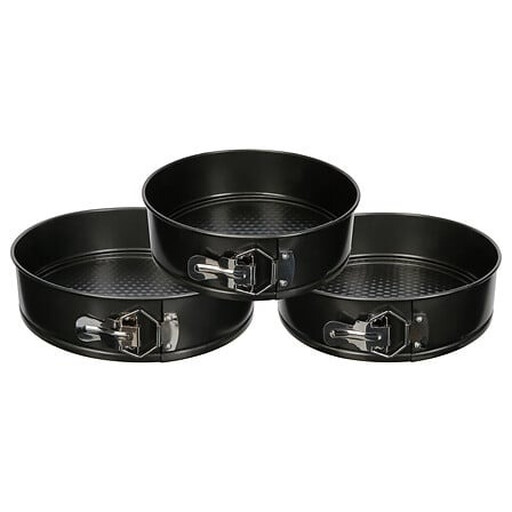
Why This Fits Their Persona: With three common diameters (22, 24.5, and 26 cm), this set covers the basic needs for classic round cakes. It's a practical starter kit for anyone beginning their baking journey and wanting to stay flexible.
The hinge mechanism is designed for a secure closure to minimise the risk of leaks—a common problem with budget-friendly springform pans.
Three sizes for different recipes; stackable for space-saving storage; non-stick coating for easy release.
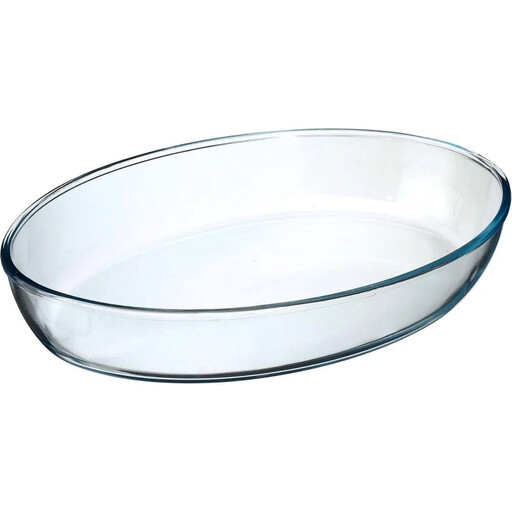
Why This Fits Their Persona: Ideal for families who prepare both sweet cakes and savoury casseroles. This dish can go directly from the oven to the table and is suitable for a wide variety of meals.
Glass has no artificial coating that can peel off. It is naturally robust, scratch-resistant, and durable, making it a reliable long-term investment.
Heat-resistant up to 300°C; suitable for the oven, microwave, and dishwasher; won't absorb odours or stains.
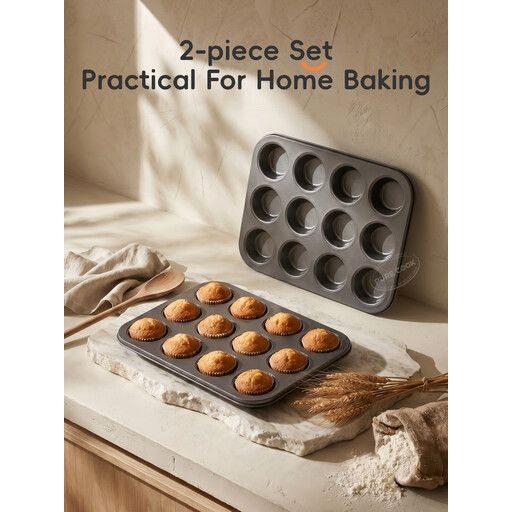
Why This Fits Their Persona: Perfect for baking in larger batches. This muffin tin allows you to prepare 12 small cakes at once, ideal for parties, family afternoon tea, or small-scale commercial baking.
The carbon steel material ensures even heat distribution across all 12 cavities, preventing the problem of unevenly baked muffins that occurs with flimsy tins.
The non-stick coating allows for release without paper liners; uniform design for consistent baking results; lightweight and stackable.
We have compiled a complete, up-to-date list of products that fully meet these strict selection criteria and rigorous safety standards.
To maximise the lifespan of the coating, the pan should be washed by hand with warm water and a soft sponge. Avoid using metal utensils or abrasive cleaners. Most manufacturers advise against cleaning in the dishwasher, as harsh detergents can damage the coating.
Essentially, yes, but there are a few differences. A silicone mould should always be placed on a solid baking sheet for stability before being filled with batter. Since silicone conducts heat differently than metal, baking times may vary slightly. You might find that baked goods brown less in a silicone mould.
The most common causes are a warped ring, a damaged or dirty seal at the base, or a very runny batter. Ensure the latch mechanism is closed firmly and correctly. For very liquid batters, like those in some cheesecake recipes, it can help to wrap the outside of the pan's base with aluminium foil or to line the inside of the base with a custom-cut piece of parchment paper.