
Lieferung heute & morgen

Qualitätsgarantie

Willkommens-Angebote freischalten: KOSTENLOSE Lieferung | Bis zu 80 % RABATT | Kostenlose 30-Tage-JoyPlus-Testphase
App herunterladen
A failed cake is always disappointing, but the recipe isn't always the only culprit. An unsuitable baking pan can ruin even the best batter. Many home bakers invest in products that shine with marketing promises but quickly fall short in practice. Before you buy a new pan, it's helpful to know the most common pitfalls that lead to frustration in the kitchen.
A considered selection that focuses on material and craftsmanship is the key to consistently good baking results.
To avoid the aforementioned problems, you should examine three core aspects of a baking pan. These are crucial in determining the longevity, handling, and success of your baked goods.
The material is the foundation for heat distribution and stability.
The coating determines how easily the cake releases and how simple the cleanup is.
The shape is not just a matter of aesthetics, but also of function.
Instead of presenting an overwhelming list, we have selected products for specific user profiles.
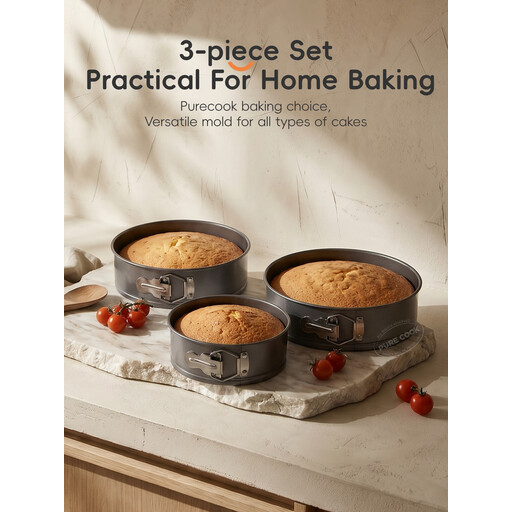
Why This Fits Their Persona: With three different springform pan sizes, this baking pan set offers a versatile starter kit. It's ideal for anyone starting out with baking or wanting to be equipped for various occasions without immediately investing in individual pieces.
The carbon steel material is more warp-resistant than simple sheet metal pans and prevents distortion from heat. The buckle closure is designed to prevent batter leakage better than many basic models.
Good heat conductivity for even baking; set includes three common sizes (18, 20, 24 cm) for high flexibility.

Why This Fits Their Persona: For those who regularly bake bread (especially sourdough) or heavy batter cakes and value durability and perfect results. The robust "Made in Germany" craftsmanship speaks for itself.
The ceramic-reinforced KAIRAMIC coating and the enamelled base are extremely resistant to wear and acidity—a direct counter to the problem of peeling coatings. The thick steel prevents any warping.
Sourdough-resistant and cut-resistant enamel base; very warp-resistant and heat-resistant up to 250 °C.
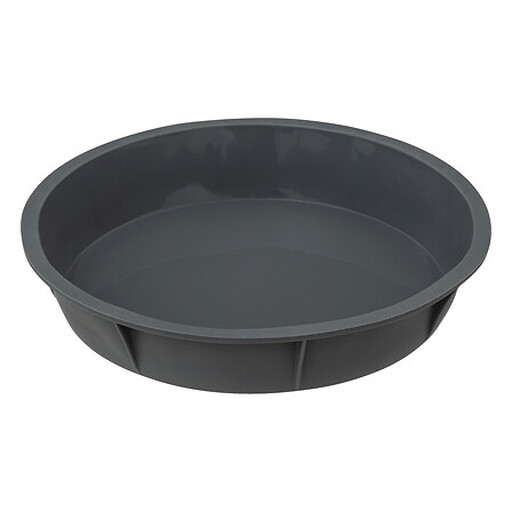
Why This Fits Their Persona: Perfect for those who love to experiment, not just with baking but also with chilled or frozen desserts like mousse cakes or parfaits. The material's flexibility allows for the easy release of even the most delicate creations.
Silicone doesn't require a coating that can wear off. Sticking is prevented by the material's properties. Since the mold is flexible, it cannot permanently warp and always returns to its original shape.
Suitable for a wide temperature range (oven to freezer); effortless release without greasing; stores compactly.
We've compiled a complete, up-to-date list of products that fully meet these strict selection criteria and high safety standards.
1. How do you properly care for a non-stick baking pan to extend its lifespan? Proper care is crucial. After it cools, clean the pan by hand with warm water, a mild dish soap, and a soft sponge. Avoid abrasive cleaning tools or scouring agents. Even if some manufacturers permit it, avoiding the dishwasher helps preserve the coating. Never use metal utensils like knives or forks in the pan.
2. Is a silicone baking mold or a metal baking pan better for cakes? It depends on the desired result. A metal cake pan (especially dark carbon steel) conducts heat more directly, ensuring better browning and a sturdier crust—ideal for classic pound cakes or breads. A silicone baking mold is unbeatable when it comes to easy release and is particularly well-suited for detailed shapes, delicate batters, or chilled desserts where heavy browning is not the priority.
3. How can I identify a good springform pan that won't leak? Look for a precisely crafted latch that closes snugly without any play. The base should sit firmly and flush within the ring. Models made of thicker, warp-resistant material are less prone to distortion and therefore seal more reliably even after frequent use. A wider rim on the base that overlaps the ring provides additional security.