
Lieferung heute & morgen

Qualitätsgarantie

Willkommens-Angebote freischalten: KOSTENLOSE Lieferung | Bis zu 80 % RABATT | Kostenlose 30-Tage-JoyPlus-Testphase
App herunterladen
Purchasing a new baking pan set can be the foundation for many successful cakes, breads, and pizzas. However, the market is filled with offers that promise more than they deliver. Many home bakers invest in extensive sets, only to find that the coating quickly fails, the pans warp, or their baked goods cook unevenly. Before you make a decision, it's crucial to understand the typical pitfalls to find a durable and functional addition to your kitchen.
To avoid a bad purchase, you should focus your attention on a few, but decisive, technical parameters. These determine the longevity and functionality of your cake pan set.
The choice of material has a direct impact on the baking result and the lifespan of the pan.
A good baking set for beginners doesn't need twenty pieces. Focus on the core essentials that you will use regularly. A solid starter kit typically includes:
A pizza pan or a muffin tin are sensible additions if you frequently bake these items. Purchasing individual, high-quality pans can be more beneficial in the long run than a large but low-quality baking pan set.
Pay attention to details that indicate good quality:
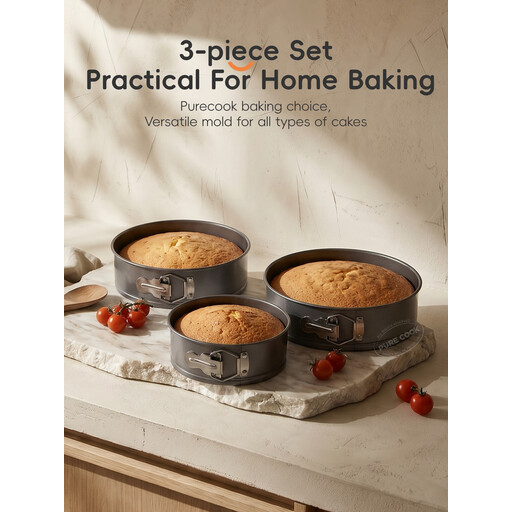
Why This Fits Their Persona: This set provides a solid starter kit for beginners who want to try different cake sizes without a large initial investment. It focuses on the most commonly used type of pan: the round springform.
Instead of an overloaded set, you get three functional sizes of a single pan type. The design with adjustable buckles addresses the leakage problem common in budget springform pans.
The carbon steel set ensures even heat conduction. The buckles allow for a tight seal and easy release of the cake.
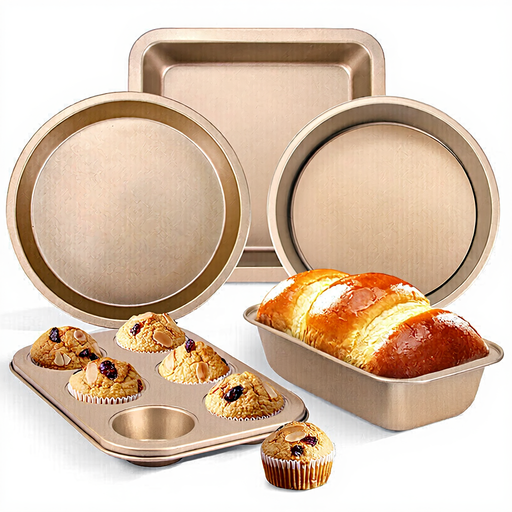
Why This Fits Their Persona: Ideal for bakers who love to experiment and need a core set for various projects—from pizza and bread to muffins. The uniform aesthetic also enhances the look of their kitchen equipment.
This set bypasses the "all-in-one" trap by offering a curated selection of genuinely useful pans like a pizza pan, loaf pan, and muffin tin, instead of useless filler items.
The 5-piece collection covers a wide range of baking projects. According to the manufacturer, the materials are designed for even heat distribution.

Why This Fits Their Persona: For anyone who regularly bakes bread, especially sourdough, a specialised, robust pan is a worthwhile investment. This pan is designed for durability under demanding conditions.
This product is the antithesis of a cheap set component. It solves the problem of a wearing coating by featuring a cut-resistant enamel base and a special acid-resistant ceramic coating.
The KAIRAMIC coating and the glass-like enamel base are, according to the manufacturer, extremely durable and explicitly suitable for sourdough. Made in Germany.
We have compiled a complete, up-to-date list of products that fully meet these strict selection criteria and German safety regulations.
Proper care is crucial for the lifespan of a non-stick coating. Clean the pans by hand with warm water, a mild dish soap, and a soft sponge. Avoid abrasive cleaners, steel wool, or cleaning them in the dishwasher. The high temperatures and aggressive detergents in dishwashers can damage the coating and permanently impair its effectiveness. Dry the pans thoroughly after cleaning to prevent rust from forming on edges or seams.
Both materials have specific advantages and disadvantages. Metal pans (like carbon steel) conduct heat more efficiently, leading to better browning and crispier edges—ideal for breads and many cakes. Silicone pans are unmatched in their flexibility, which makes releasing baked goods extremely easy. They are also shatterproof and easy to store. For intricately detailed shapes, muffins, or frozen desserts, silicone is often the more practical choice.
Sourdough contains natural acids that can attack and break down conventional non-stick coatings over time. A pan declared as sourdough-resistant has a special surface that is impervious to this acid. This is usually a high-quality ceramic or enamel coating. For people who regularly bake sourdough bread, such a pan is a worthwhile purchase as it ensures a much longer lifespan.