
Lieferung heute & morgen

Qualitätsgarantie

Willkommens-Angebote freischalten: KOSTENLOSE Lieferung | Bis zu 80 % RABATT | Kostenlose 30-Tage-JoyPlus-Testphase
App herunterladen
Many baking projects start with great enthusiasm but end in disappointment. Often, the cause isn't the recipe or the baker's skill, but the equipment. A common culprit is the baking pan itself. Marketing claims often lead to purchases that prove unsuitable: the cake sticks despite "non-stick" promises, or the new pan warps after its first use at a high temperature.
This guide will help you identify key quality indicators and avoid the three most common pitfalls when buying a baking pan:
To make an informed decision, it's helpful to understand the three core aspects of a baking pan. These features determine its durability, baking performance, and ease of use.
The material is the basis for any baking pan's performance. Heat conduction and stability are the crucial factors here.
It's easy to call a cake pan non-stick—but the quality of the coating makes all the difference. A high-quality non-stick coating is multi-layered and ideally free of controversial substances like PFOA or PFAS. Such coatings are not only more durable but also offer greater food safety.
For baking with active cultures, like sourdough, a pan explicitly declared as sourdough-resistant is recommended. The acid in the dough can damage simple non-stick layers over time.
The shape determines the function. Different types are better suited for different baking projects:
Instead of a one-size-fits-all recommendation, we present models tailored to specific user profiles.
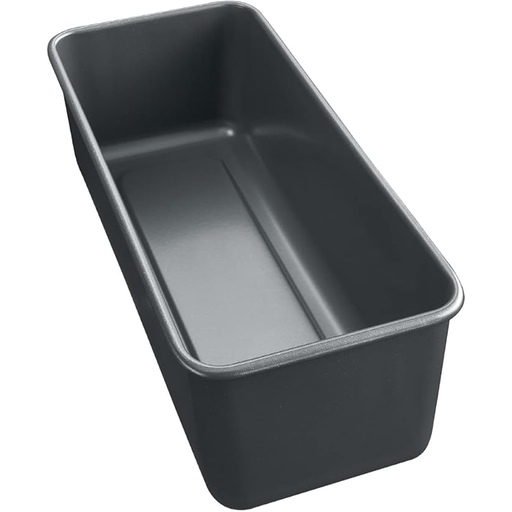
Why It's a Match: Ideal for anyone who bakes frequently and at a high level, especially sourdough bread. The enamelled base is resistant to fruit acids and cuts, making the pan extremely durable.
The robust steel construction prevents warping, while the cut-resistant enamel base avoids surface damage from acid or knives—a common problem with cheaper pans.
The combination of the KAIRAMIC non-stick coating on the sides and the glass-hard enamel base offers both durability and functionality. The manufacturer provides a 10-year warranty on the coating.
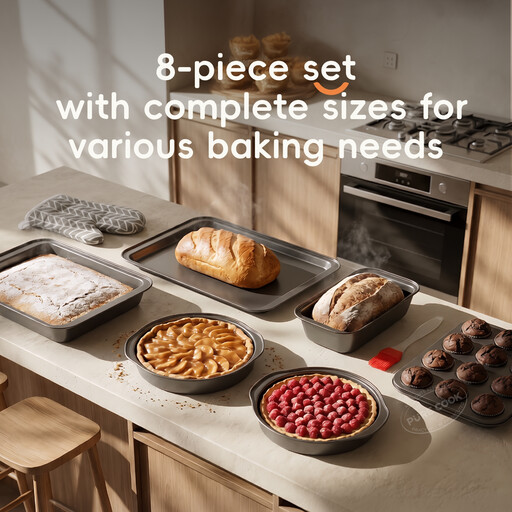
Why It's a Match: This set covers a wide range of baking projects—from brownies and sheet cakes to bread. It's a pragmatic solution for families who enjoy variety in their baked goods.
Instead of buying multiple individual pans of varying quality, this set provides a consistent standard of quality across different shapes and sizes. This ensures reliable results for every project.
Great value with eight different pieces for diverse baking needs. All pans feature a uniform non-stick coating and are made from lightweight yet sturdy carbon steel.

Why It's a Match: The lid ensures a perfectly shaped, evenly baked loaf—a challenge for many beginners. The pan significantly simplifies the process of making classic sandwich bread.
The lidded design prevents common beginner mistakes like an over-risen or unevenly browned loaf. The result is predictable and professional from the start.
The included lid promotes an even baking temperature and creates a uniform, square shape—ideal for perfect sandwich bread. The non-stick coating makes for an easy release.
We've compiled a full, up-to-date list of products that meet these strict selection criteria and current safety regulations.
Proper care is crucial for longevity. Clean the pan by hand with a soft sponge and mild dish soap. Avoid metallic utensils, sharp objects, and abrasive cleaners, as these can damage the coating. Always dry the pan thoroughly after cleaning before storing it.
Look for a heavier weight and visible material thickness. Pans made from heavy-gauge carbon steel are significantly more dimensionally stable. Product descriptions that include terms like "warp-resistant," "dimensionally stable," or "heavy-gauge" are also good indicators of a robust construction.
Yes, especially if you want to bake Pullman-style loaves like sandwich or white bread. The lid traps steam during baking, which results in a particularly moist crumb and a soft crust. It also creates the characteristic, uniform square shape known from store-bought bread.