
Lieferung heute & morgen

Qualitätsgarantie
App herunterladen
Kategorien
A balcony power station enables the decentralised generation of solar power for self-consumption. However, energy production primarily occurs during the day, while electricity consumption in many households peaks in the morning and evening. A balcony power station with storage addresses this discrepancy by storing surplus energy and releasing it when needed. This can increase the self-consumption rate and reduce reliance on the public grid.
The selection of a suitable storage system is based on objective technical parameters. Careful consideration of these criteria is crucial for the efficiency and longevity of the overall system.
Capacity, measured in kilowatt-hours (kWh), defines how much energy the storage unit can hold. A typical size for an 800-watt balcony power station is between 1 and 2 kWh. The optimal size depends on the individual's consumption and generation profile. A capacity that is too small leaves untapped energy potential, while an oversized capacity can extend the payback period.
The dominant technology for modern home storage systems is Lithium Iron Phosphate (LFP or LiFePO4). Compared to other lithium-ion cell chemistries (like NMC), LFP batteries offer higher cycle stability, which translates into a longer lifespan. They are also considered more thermally stable, enhancing operational safety. The number of charge cycles specified by a manufacturer is a direct indicator of the expected service life.
Power, measured in watts (W), indicates how quickly the storage unit can be charged and discharged. The input power should be matched to the output of the solar panels. The output power defines how much electricity can be simultaneously fed into the home grid. For the 800-watt feed-in limit for balcony power stations applicable in Germany since 2024, an 800W storage unit with a corresponding output power is an ideal complement to maximise self-consumption.
A key advantage of modern storage systems is their seamless integration. A plug-and-play solar storage unit is typically connected between the solar panels and the microinverter. Compatibility with the existing inverter and standard MC4 connectors is a central criterion, especially when looking to retrofit a balcony power station with storage.
The lifespan of a storage unit is quantified by the number of guaranteed charge cycles and the manufacturer's warranty. A value of 6,000 cycles, common for high-quality LFP batteries, corresponds to a theoretical lifespan of over 15 years with daily use. The IP rating (e.g., IP65) indicates the level of protection against dust and water and is relevant for outdoor use on a balcony or terrace.
Based on the technical criteria mentioned, we present two models that cater to different user needs.
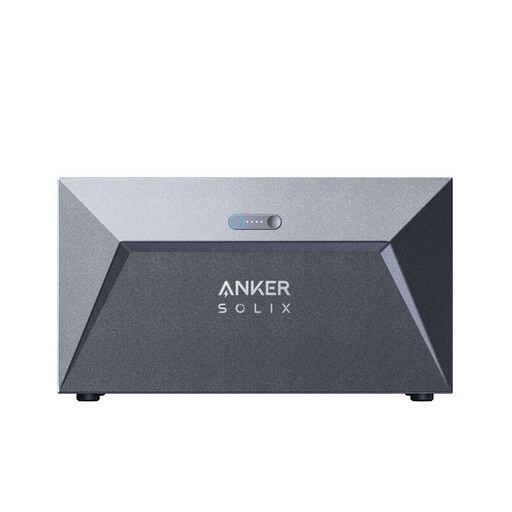
Why we recommend this product The Anker Solix Solarbank E1600 is a pragmatic storage solution that focuses on the core functions: longevity and ease of use. With a capacity of 1.6 kWh and a robust LFP battery designed for 6,000 charge cycles, it provides a solid foundation for most standard balcony power stations. Its high compatibility and straightforward installation make it an attractive option for retrofitting.
Advantages
Who it's for This model is suitable for users seeking a reliable and low-maintenance storage solution for their existing or planned 600/800-watt balcony power station. The focus is on maximising self-consumption without complex configurations.
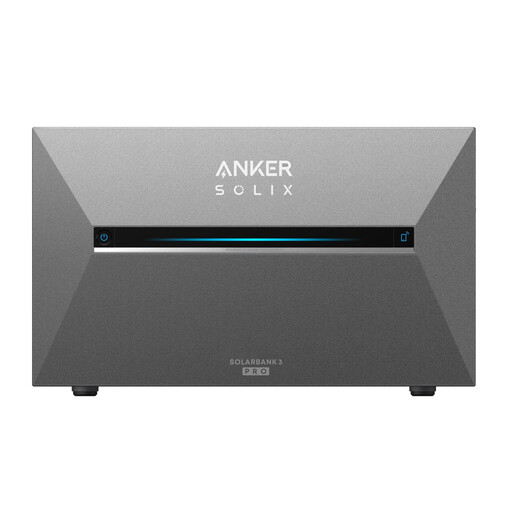
Why we recommend this product The Solar Bank 3 E2700 Pro is an expandable solar storage system designed for demanding users and larger installations. With four MPPT (Maximum Power Point Tracking) inputs, it can optimise the yield from up to eight solar panels with a total output of up to 3,600 watts. The bidirectional charging function and smart control enable the active use of dynamic electricity tariffs, further increasing savings potential.
Advantages
Who it's for This system is aimed at homeowners with larger roof or garden spaces who are looking for a powerful and flexible storage solution. It is ideal for tech-savvy users who want to actively optimise their energy management and be prepared for future expansions.
The market for balcony power station storage is constantly evolving. In addition to the models presented, there is a wide variety of systems with different capacities and feature sets. You can find an overview of other components and accessories in our Storage category.
1. Can I retrofit a storage unit to my existing balcony power station? Yes, retrofitting is possible with most modern balcony power stations. Systems like the Anker Solix Solarbank are explicitly designed as plug-and-play solutions and are connected between the solar panels and the microinverter. It is important to check the compatibility of the connectors (usually MC4) and to match the voltage and current values of the storage unit with your existing components.
2. What capacity does a storage unit for an 800W balcony power station need? For a typical 800-watt balcony power station, a storage capacity of 1 to 2 kWh is generally sufficient to store the surplus electricity from a sunny day for use in the evening. A capacity of around 1.6 kWh, as offered by the Anker Solix E1600, represents a good compromise between investment costs and practical benefit.
3. What does LFP battery storage mean and why is it relevant? LFP battery storage systems use Lithium Iron Phosphate as the cathode material. Compared to other lithium-ion batteries, this technology is characterised by a higher number of possible charge and discharge cycles, which leads to a longer lifespan. Furthermore, LFP cells are considered safer as they have higher thermal stability and are less prone to overheating. For a durable and safe home storage system, LFP is therefore a preferred technology.