
Lieferung heute & morgen

Qualitätsgarantie

Willkommens-Angebote freischalten: KOSTENLOSE Lieferung | Bis zu 80 % RABATT | Kostenlose 30-Tage-JoyPlus-Testphase
App herunterladen
For many coffee lovers, a morning cappuccino or latte macchiato is a sacred ritual. But the path to perfect milk foam with a plant-based alternative is often paved with disappointment. Not every oat milk labelled "Barista" delivers the desired result. This guide explains what to look for when making your selection to avoid bad purchases and prepare café-quality coffee at home.
Before you invest, it's crucial to distinguish between marketing promises and actual product performance. Many consumers encounter the same recurring problems.
To avoid these pitfalls, you should check three core parameters before buying. These determine whether a vegan milk for coffee is truly suitable for sophisticated coffee drinks.
The ability to create a creamy microfoam is the most important characteristic of a barista oat milk. This depends on a precise formulation:
A good oat drink for frothing should support the coffee's flavour, not dominate it. Look for products that have a mild, slightly sweet taste derived from the enzymatic breakdown of oat starch, not from added sugar. The consistency should be milk-like, not watery, so it doesn't get lost in the coffee.
Whether you own a home espresso machine with a steam wand or a bean-to-cup machine with a milk system, performance can vary. Barista editions are designed to remain stable under the heat of a steam wand (temperatures below 65°C are ideal). For automatic machines with a suction system, it's important that the drink has the right viscosity to flow smoothly through the fine tubes and nozzles.
Choosing the right product depends on your individual needs, your equipment, and your taste preferences.
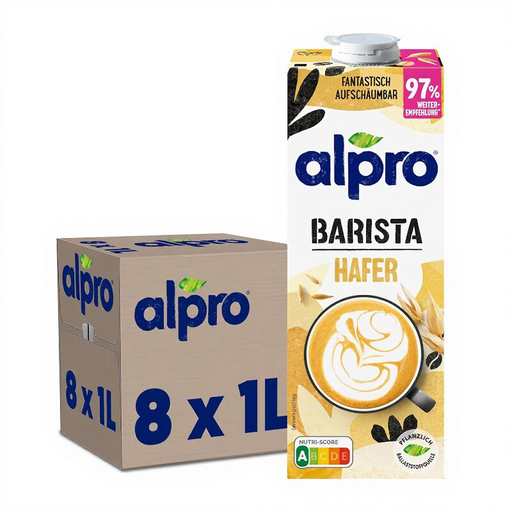
Why This Fits Their Persona: Ideal for users looking for a reliable and widely available barista milk alternative for their daily cappuccino. The flavour is balanced, and the frothing performance is consistently good, both in bean-to-cup machines and with steam wands.
The formula was specifically developed for frothing milk and delivers a stable foam (avoids Pitfall 1). Its mild flavour doesn't overpower the coffee (avoids Pitfall 2).
Consistent foam quality; fortified with calcium and vitamins B2, B12, and D. According to the manufacturer, the oats are sourced from European farms.
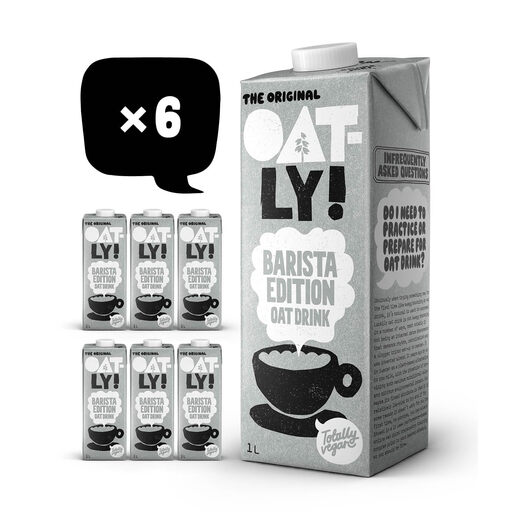
Why This Fits Their Persona: Perfect for coffee aficionados who need excellent microfoam for their latte art tools. This drink is renowned in the coffee scene for its ability to create a silky, pourable foam that closely mimics cow's milk.
Its special recipe with rapeseed oil and an acidity regulator is engineered for maximum foam performance (avoids Pitfall 1). The flavour is designed to complement high-quality coffee beans (avoids Pitfall 2).
Creates an exceptionally fine and stable microfoam, ideal for latte art. Contains added calcium and vitamins (D2, B2, B12).
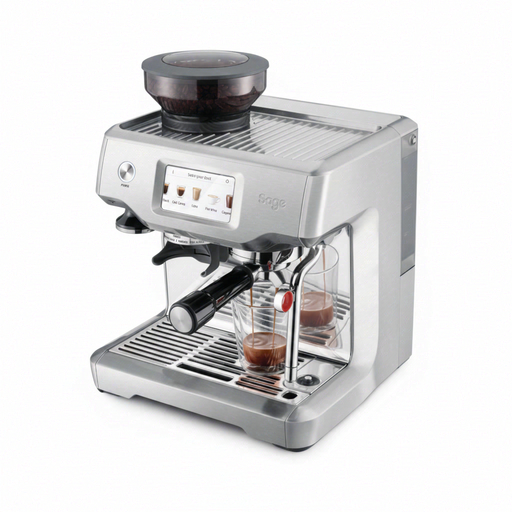
Why This Fits Their Persona: For users seeking not just the right barista oat milk, but also the optimal hardware. This home espresso machine automates the frothing process, ensuring consistent results.
The machine removes the guesswork from frothing. Its automatic milk frother, with adjustable temperature and texture, guarantees a perfect result regardless of the user's skill level.
Integrated conical burr grinder, 3-second heat-up time thanks to the ThermoJet system, and a touchscreen display for easy operation and saving custom coffee creations.
We've compiled a complete, up-to-date list of products that fully meet these strict selection criteria.
The curdling or splitting of oat milk in coffee is caused by a chemical reaction between the coffee's acidity and the proteins in the plant-based drink, which is accelerated by high temperatures. Special barista oat milk editions contain acidity regulators (e.g., potassium phosphates) that stabilise the pH and prevent this issue. If you're not using a barista version, let the coffee cool slightly before adding the oat milk.
For a stable and sweet foam, oat milk should not be heated above 65°C. At higher temperatures, the proteins begin to denature, which destroys the foam structure and can negatively affect the taste, making it bitter or burnt. Many professional coffee machines and milk frothers have corresponding temperature settings.
Technically, most bean-to-cup machines can process any type of oat milk. However, for a satisfying result, especially a creamy milk foam, a barista milk alternative is strongly recommended. Standard oat drinks are often too thin, contain too little protein and fat, and therefore produce only large-bubbled foam or no foam at all. The special formulation of a barista edition is tailored to the demands of automatic milk systems.