
Lieferung heute & morgen

Qualitätsgarantie

Willkommens-Angebote freischalten: KOSTENLOSE Lieferung | Bis zu 80 % RABATT | Kostenlose 30-Tage-JoyPlus-Testphase
App herunterladen
Do you often wake up with a dry throat, a stuffy nose, or irritated skin? Especially during the heating season, indoor humidity levels can drop significantly, negatively affecting your well-being. A humidifier in the bedroom can help improve air quality and create a more comfortable environment.
This article serves as a guide to help you choose the right device. We will highlight key features like technology, noise level, and useful extra functions to help you make an informed decision.
Selecting the right model depends on your individual needs and the specifics of your room. You should consider three key aspects in your decision.
Modern humidifiers use various technologies to distribute water into the air. For the bedroom, an ultrasonic humidifier is often an excellent choice. These devices use high-frequency vibrations to atomise water into a fine, cool mist. The key advantage is their very quiet operation, which won't disturb your sleep. Unlike evaporators that heat water, ultrasonic units also consume less energy and produce no hot steam, making them a safe option for households with children.
A room humidifier should be quiet to ensure an undisturbed night's rest. Pay attention to the decibel (dB) rating provided by the manufacturer. Devices with an operating noise level below 30 dB are generally considered whisper-quiet and are ideal for bedrooms. Many models offer a special sleep mode that not only reduces the fan speed but also turns off the display lighting to minimise any disturbances.
The size of the water tank determines how long the device can run without a refill. For continuous overnight operation, a tank volume of at least 3 litres is recommended. A smart humidifier offers additional convenience with features such as:
Based on the criteria mentioned, we have compiled a selection of models that stand out for their functionality and suitability for bedrooms.
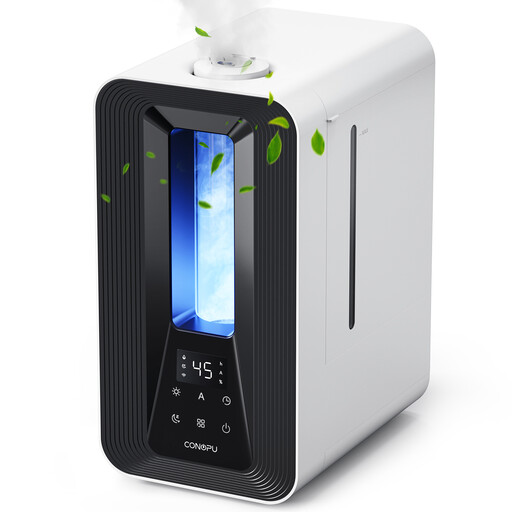
What makes it stand out: This model combines an extra-long runtime with intelligent features. According to the manufacturer, the large 5-litre tank allows for up to 50 hours of continuous operation, making daily refills unnecessary. Two 360° rotating nozzles distribute the mist evenly in rooms up to 40 m?.
Advantages:
Who it's for: Ideal for families and users looking for a low-maintenance device for large bedrooms or a nursery. Its long runtime makes it a practical option as a humidifier for babies, as it works all night to combat dry air.
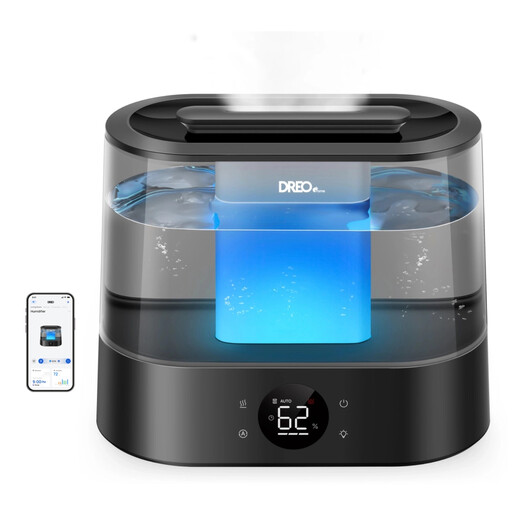
What makes it stand out: The DREO humidifier is aimed at tech-savvy users who value precise control and connectivity. All functions can be conveniently managed from a smartphone via the DREO app. The sensor measures humidity with an accuracy of ±5% (manufacturer's claim) and ensures a stable room climate.
Advantages:
Who it's for: Perfect for users who want smart home integration and wish to manage humidity precisely and conveniently via an app.

What makes it stand out: The Levoit Dual 200S Pro is a compact and smart humidifier that is notable for its ease of use. Despite its small footprint, it offers a runtime of up to 25 hours (manufacturer's claim) and can be controlled via the VeSync app. The top-fill design makes daily use straightforward.
Advantages:
Who it's for: A great choice for individuals or couples with smaller bedrooms who are looking for a discreet, smart, and easy-to-use device.
The models presented here are just a small selection. If you are looking for different specifications or want to compare more devices, you can find a wider selection of humidifier models here.
1. How often should you clean a humidifier in the bedroom? Regular cleaning is crucial to prevent the growth of bacteria and limescale buildup. It is recommended to clean the water tank and base at least once a week according to the manufacturer's instructions. Typically, water and a mild soap solution or a diluted vinegar solution are suitable for this purpose.
2. What is the ideal humidity level in the bedroom? For living rooms and bedrooms, a relative humidity between 40% and 60% is generally considered comfortable and beneficial for your health. Many modern humidifiers have a built-in hygrometer that automatically measures and maintains this level.
3. Can a humidifier help with allergies? Optimal humidity can help keep the mucous membranes in the nose and throat moist, which can soothe irritation. Additionally, higher humidity can cause dust and other airborne particles to settle to the ground more quickly, meaning fewer are inhaled. This can be advantageous for people with allergies.