
Lieferung heute & morgen

Qualitätsgarantie

Willkommens-Angebote freischalten: KOSTENLOSE Lieferung | Bis zu 80 % RABATT | Kostenlose 30-Tage-JoyPlus-Testphase
App herunterladen
A modern body fat scale promises much more than just displaying your weight. It's designed to provide insights into body fat percentage, muscle mass, and other health metrics. However, the market is overwhelming, and many devices don't live up to their marketing claims. Before you make a decision, it's crucial to know the most common pitfalls to avoid a poor investment.
As your Joybuy Product Recommendation Officer, I'm here to help you navigate the marketing noise and make an informed choice based on objective criteria.
Many buyers are disappointed with their new scale after a short time. This is often due to overlooked flaws that only become apparent during daily use.
To avoid these traps, you should check three core technical aspects before buying. These are the primary determinants of the accuracy, user-friendliness, and longevity of your new health scale.
Modern body composition scales use Bioelectrical Impedance Analysis (BIA). This method sends a weak, imperceptible electrical current through the body. Since fat, muscle, and water conduct electricity differently, the scale can calculate the body's composition from the measured resistance. The quality of the sensors is critical here:
A smart scale with an app syncs your data automatically. There are two common technologies for this:
Also, check whether the scale's app is compatible with other health platforms like Apple Health, Google Fit, or Samsung Health to consolidate all your health data in one place.
If multiple people in the household will be using the scale, separate user profiles are essential. Most scales offer storage for 8 or more people and automatically recognise the user when they step on. Also, pay attention to the maximum weight capacity. While 150 kg or 180 kg is sufficient for most users, there are special models available as scales with up to 200 kg capacity that offer greater stability and durability.
Based on these objective criteria, we have identified models that are particularly well-suited for different user groups.
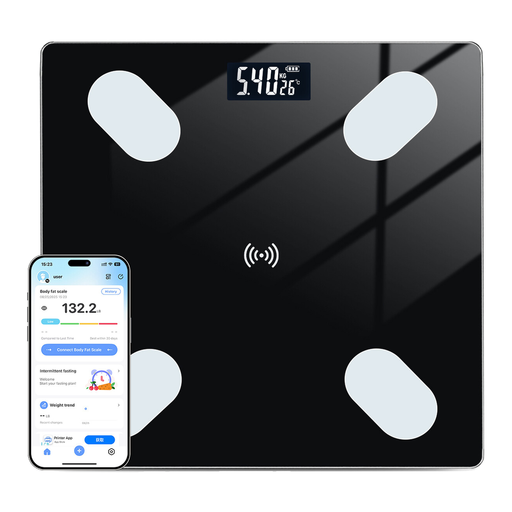
Why This Fits Their Persona: Ideal for users looking for a smart body analysis scale with all the basic functions without a large budget. It provides a solid data foundation for tracking health goals.
Syncing with the OKOK app is done via Bluetooth and doesn't require an expensive subscription for basic functions. Support for multiple user profiles makes it suitable for families.
Offers 13 metrics, including BMI and muscle mass. The automatic user recognition is a convenient feature in this price range.

Why This Fits Their Persona: Perfect for tech-savvy users who want seamless, automated data collection. The combination of solar power, Wi-Fi, and broad app compatibility offers maximum convenience.
Wi-Fi synchronisation eliminates the need to manually open the app, preventing data gaps. Compatibility with established platforms like Apple Health and Google Fit ensures the user retains control over their data.
The ITO coating ensures precise measurements and a sleek design. Solar power eliminates the need for battery changes and is eco-friendly.
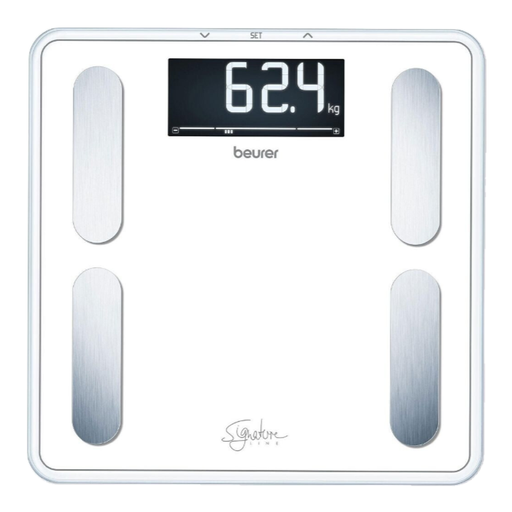
Why This Fits Their Persona: Designed for multi-person households or users who need a higher weight capacity. The focus is on reliability and simple operation directly on the device, with no app required.
Since this model operates without an app connection, any concerns about data privacy, compatibility issues, or hidden subscription costs are completely eliminated. All data remains locally on the scale.
Its high weight capacity of up to 200 kg sets it apart from most competing products. With 10 user memory slots, it's ideal for large families or shared living spaces.
We have compiled a complete, up-to-date list of products that fully meet these strict selection criteria and safety standards.
1. How accurate is a body fat scale for home use? Body fat scales for home use are not intended as medical diagnostic tools. Their strength lies not in providing an absolutely precise measurement of body fat percentage, but in consistently tracking trends. If you use the scale regularly under the same conditions (e.g., in the morning after waking up), you can reliably see whether your body fat percentage is decreasing or your muscle mass is increasing.
2. What kind of surface should a body analysis scale be placed on? For precise measurements, the scale must be placed on a hard, flat surface. Tiles, parquet, or laminate flooring are ideal. Carpets, bath mats, or uneven floors will lead to inaccurate and fluctuating readings because the sensors are not loaded evenly.
3. Do I have to pay for a smart scale's app? The basic functions of the associated apps—such as saving and displaying measurements—are usually free. However, some manufacturers offer optional premium subscriptions that may include advanced analytics, personalised reports, or coaching features. Before buying, check the app's description in the app store to ensure that all functions important to you are available without additional costs.