
Lieferung heute & morgen

Qualitätsgarantie

Willkommens-Angebote freischalten: KOSTENLOSE Lieferung | Bis zu 80 % RABATT | Kostenlose 30-Tage-JoyPlus-Testphase
App herunterladen
A modern body analysis scale promises to show more than just your weight. It's designed to provide insights into body fat, muscle mass, and other health data. However, the market is crowded, and many devices fail to live up to their marketing claims. Before you make a decision, it's crucial to understand the common pitfalls that can lead to inaccurate measurements and frustration.
Many users invest in a smart scale only to find after a few weeks that the displayed values fluctuate wildly or the companion app is unreliable. The three most common problems are:
To avoid these issues, you should check a few technical fundamentals and features before buying.
Instead of being dazzled by a long list of metrics, focus on the core features that are crucial for reliable, long-term use.
The heart of any diagnostic scale is its BIA technology. This method sends a weak, imperceptible electrical current through the body to measure the resistance of different tissue types. The quality of the sensors is critical here.
More important than absolute accuracy, which always has a margin of error in at-home devices, is measurement consistency. A good scale delivers repeatable results under the same conditions (e.g., in the morning after waking up), allowing you to track trends over weeks and months.
A scale with body fat measurement can provide a wide range of data. The most important and meaningful metrics for most users are:
For families or shared households, the number of storable user profiles is a key criterion. Models with automatic user recognition are especially convenient, as the scale identifies the person by their weight and assigns the data to the correct profile.
The stability and durability of a scale depend directly on its construction.
Based on these objective criteria, we have identified several models that represent a smart choice for different user groups.
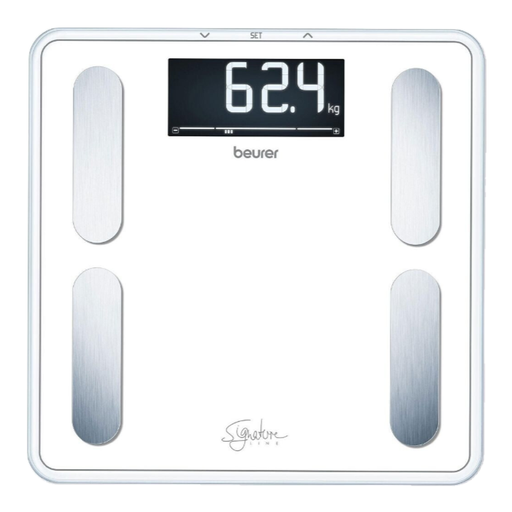
Why it's a good fit: Ideal for families looking for a robust and straightforward scale for multiple people. Its high weight capacity and large number of memory slots make it a central hub for the whole family's health tracking.
With 10 user memory slots and automatic recognition, it solves the problem of many scales designed for only one or two profiles. The maximum weight capacity of 200 kg also offers high safety and suitability for a wide range of users.
The large, illuminated XL display ensures excellent readability without forcing you to use an app. All essential metrics (weight, body fat, water, muscle percentage, bone mass, BMI) are shown directly on the scale.
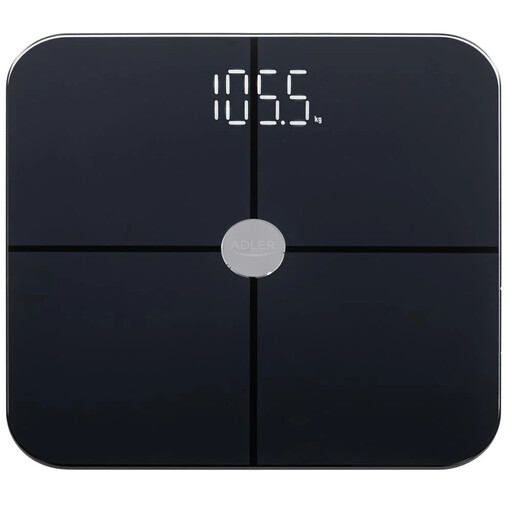
Why it's a good fit: Perfect for users who want to track their health data in detail via an app. The scale offers a wide range of metrics and seamless synchronisation with your smartphone.
According to the manufacturer, the companion FitGo app does not require registration and offers unlimited storage. This directly addresses the privacy and hidden cost concerns associated with many other smart scales.
The scale measures 12 different body parameters, including visceral fat. Its elegant glass surface with an ITO coating has no distracting metal electrodes, creating a modern, minimalist design.
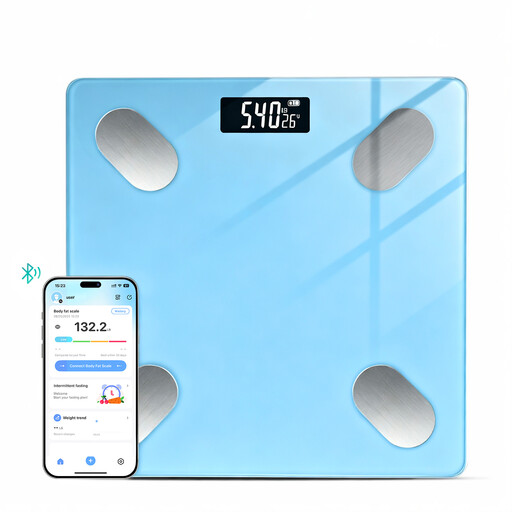
Why it's a good fit: A great choice for anyone who wants the benefits of a smart scale without a large investment. It provides the essential analysis functions and app connectivity for effective health tracking.
This model focuses on the essential 13 body metrics and a straightforward Bluetooth connection to the OKOK app. It avoids the pitfall of overpaying for bloated, unused premium features while still offering solid smart functionality.
The multi-user mode with automatic recognition is a convenient feature in this price range. The scale supports multiple profiles, making it suitable for couples or small families who want to track their progress separately.
We have compiled a complete, up-to-date list of products that fully meet these strict selection criteria and German safety regulations.
The BIA method on at-home devices is primarily for trend analysis, not medical diagnosis. Absolute accuracy can be influenced by factors like hydration level, time of day, or recent meals. For reliable trend data, it's crucial to always weigh yourself under the same conditions—ideally in the morning, right after waking up and using the restroom. This will give you consistent readings to monitor your progress over time.
No. For precise and repeatable measurements, a digital bathroom scale or body analysis scale must always be placed on a hard, flat surface. Carpets, bath mats, or uneven tiles can interfere with the sensors, leading to incorrect weight readings and flawed body analysis data.
That depends on the manufacturer. Many basic apps are free but may offer in-app purchases or subscriptions for advanced analytics or personalised plans. Models like the Adler AD 8187 explicitly advertise an app that works without registration or hidden costs. It's wise to check this in the product description or user reviews before you buy.