
Lieferung heute & morgen

Qualitätsgarantie
App herunterladen
Kategorien
A bread knife is defined by one specific feature: its serrated edge. This toothed blade is designed to cleanly slice through hard bread crusts without crushing the soft interior. Unlike a straight-edge blade, which would slip on the hard surface or compress the bread, the serrations grip the crust and saw through it. The result is a precise, clean slice. Selecting the right knife depends on objective criteria such as blade material, blade length, and handle ergonomics.
The decision to purchase a bread knife should be based on an analysis of its technical specifications. The following parameters are crucial for its function and longevity.
The most common material for bread knife blades is stainless steel. This steel is an alloy known for its corrosion resistance and durability. Within this category, there are differences in composition and hardness, measured in Rockwell (HRC). A higher HRC number indicates greater hardness and edge retention, but it can also increase brittleness. For bread knives, a balance of hardness and flexibility is advantageous. Some manufacturers use special processes like ice-hardening to optimise the steel's molecular structure, further enhancing edge retention and corrosion resistance.
The serrated edge is not standardised. There are two basic variations:
Some knives combine both shapes or use a single-sided grind, which can enable an exceptionally straight cut.
The standard length for bread knife blades is between 20 and 26 cm. This length is sufficient for most standard loaves of bread. For very large, round loaves or for use as a pastry knife to slice cake layers, a longer blade (over 30 cm) can be beneficial. A shorter knife under 20 cm is often called a utility knife and offers more agility for smaller items.
The handle is central to safety and control during cutting. Common materials include:
The ergonomic shape of the handle should ensure safe and fatigue-free handling.
The following products were selected based on their specific technical features and intended use.
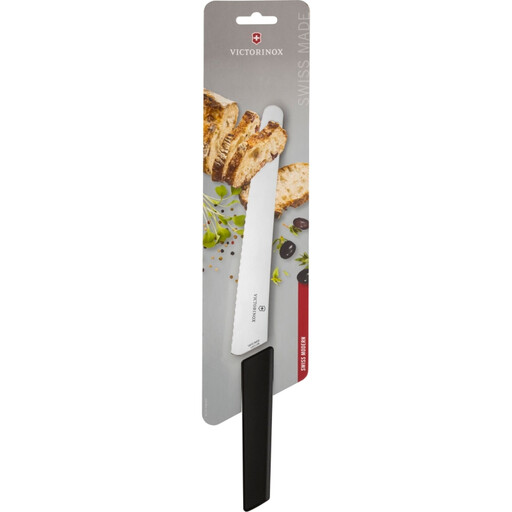
Why We Recommend It The Victorinox Swiss Modern Bread Knife combines a 22 cm stainless steel blade with a lightweight, ergonomic synthetic handle. The blade length is a versatile standard for most types of bread and pastries. According to the manufacturer, the knife is dishwasher-safe, which simplifies daily cleanup.
Pros
Best For Users looking for a functional, low-maintenance, and sharp bread knife for daily use. Ideal for households where efficiency and ease of handling are a priority.
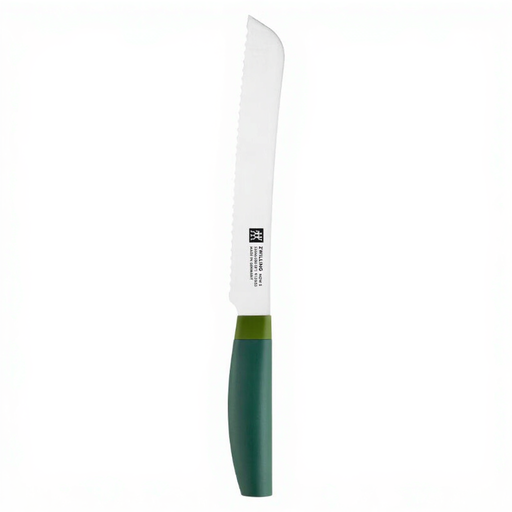
Why We Recommend It This knife comes from Solingen, a location renowned for its blade manufacturing. The 20 cm blade is crafted from a special stainless steel alloy and, according to Zwilling, undergoes an ice-hardening process (FRIODUR) to improve edge retention and corrosion resistance. The ergonomic synthetic handle ensures a secure grip.
Pros
Best For Quality-conscious home cooks and bakers who value material technology and "Made in Germany" manufacturing quality, and who want a durable, sharp knife for regular use.
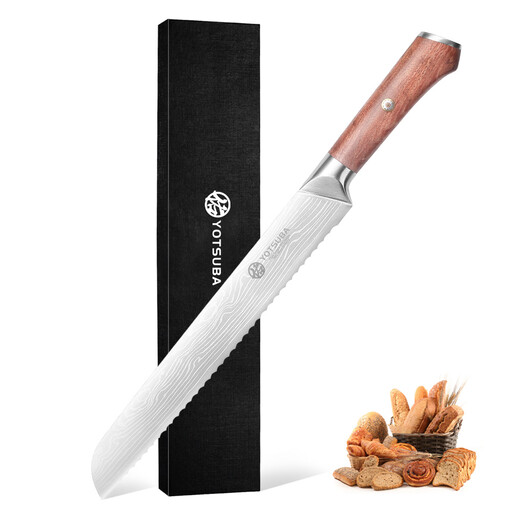
Why We Recommend It The YOTSUBA knife stands out with its hand-forged construction and impressive 38 cm blade length. According to the manufacturer, the blade is made of multi-layered steel and features a hollow-ground edge to reduce food from sticking. The rosewood handle gives the knife a traditional look and a pleasant feel.
Pros
Best For Ambitious home bakers who create large, artisanal breads, as well as users seeking a knife with a traditional aesthetic and special technical features. Also an interesting gift option for cooking enthusiasts.
The models presented here represent a selection that covers different needs. For a more comprehensive overview of various blade lengths, materials, and designs, you can explore our entire range if you're looking to buy a bread knife.
Discover All Bread Knives in Our Collection
1. How do you sharpen a serrated bread knife? Sharpening a serrated edge is more complex than sharpening a straight blade. It requires a special, round sharpening rod to hone each serration individually. For most users, it is advisable to have a bread knife serviced by a professional to preserve the blade's original geometry.
2. What is the difference between a bread knife and a pastry knife? The lines are often blurred. A classic bread knife typically has a more aggressive, deeper serration to cut through hard crusts. A pastry knife is often longer, sometimes more flexible, and has a finer serration or a rounded tip to slice delicate cake layers or pastries precisely without crumbling. Long bread knives like the YOTSUBA model can perform both functions.