
Lieferung heute & morgen

Qualitätsgarantie

Willkommens-Angebote freischalten: KOSTENLOSE Lieferung | Bis zu 80 % RABATT | Kostenlose 30-Tage-JoyPlus-Testphase
App herunterladen
A new bookshelf should create order while also being a visual highlight in the room. But the selection is vast, and not every model delivers on its promise. Flaws often only become apparent after a few months, when shelves start to sag or the structure becomes unstable. As a Joybuy Product Recommendation Officer, I'll help you identify the crucial features to make an informed decision and bypass common purchasing traps.
Before you decide on a model, you should be aware of the most common issues that lead to dissatisfaction. A careful review of these points will save you future frustration and unnecessary expenses.
To make the right choice, focus on three objective criteria. These will help you evaluate the quality and functionality of a shelf, independent of marketing promises.
The longevity of a shelf depends directly on its material.
Always check the manufacturer's specified maximum load capacity per shelf. A rating of 10–15 kg per shelf is a good benchmark for books.
The right type of shelf makes optimal use of the available space.
For a bookshelf for a child's room, safety is the top priority. Look for the following features:
Here are some product recommendations tailored to specific needs and living situations.
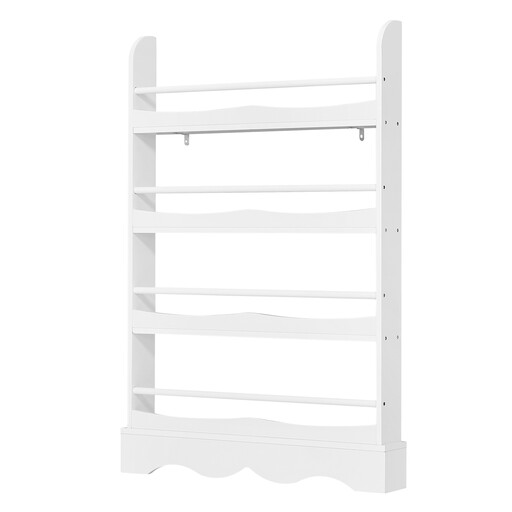
Why This Fits Their Persona: This shelf is tailored to the needs of children. The child-friendly height promotes independence, as books and toys can be reached on their own. The design is functional and safely conceived for a child's room.
It directly addresses the safety trap: an included anti-tip kit for wall mounting and rounded corners minimise the risk of injury. The front rails on the shelves prevent items from falling off.
Made from P2-class MDF boards, it is stable and easy to clean. The slim design with a 12 cm depth is extremely space-saving.
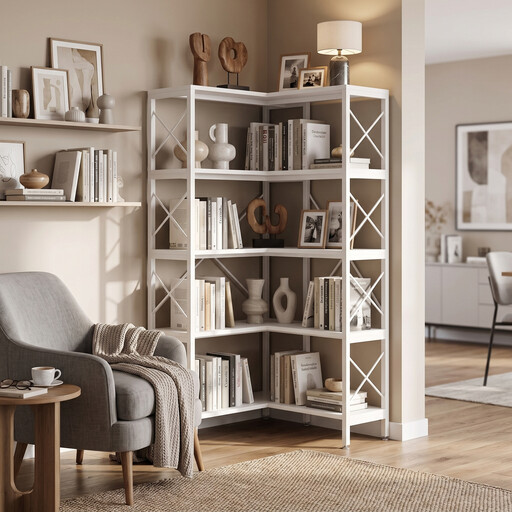
Why This Fits Their Persona: Ideal for renters and homeowners with limited space who want to transform unused corners into functional storage. The industrial design with a metal frame fits well in modern living rooms or home offices.
It solves the problem of instability. The metal frame with X-bracing ensures high stability, while the high load capacity of 20 kg per shelf prevents shelves from sagging. Adjustable feet compensate for uneven floors.
Maximum space utilisation thanks to the corner design. The 10 open compartments offer versatile storage for books, decor, and binders.
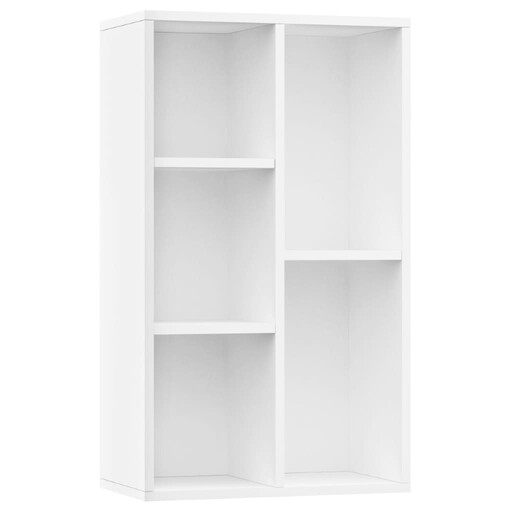
Why This Fits Their Persona: Perfect for anyone who appreciates flexible furniture. This model can be used as a tall, narrow bookshelf or as a low, modern sideboard, depending on your needs and available space.
It bypasses the trap of inflexible design. Instead of committing to one use, this shelf offers two setup options, adapting to changing living needs. The five compartments provide clearly defined storage spaces.
High flexibility through vertical or horizontal use. The simple, white design made of engineered wood is versatile and easy to maintain.
We have compiled a complete, up-to-date list of products that fully meet these strict selection criteria and German safety requirements.
1. How do I securely attach a bookshelf to the wall? Tall or narrow shelves should always be secured to the wall with an anti-tip kit. This is included with many models. Use wall plugs and screws that are appropriate for your wall type (e.g., concrete, plasterboard, brick). The installation should be carried out exactly according to the manufacturer's instructions. Always place heavy items on the lower shelves to lower the centre of gravity.
2. What does MDF mean, and is it a good material for shelves? MDF stands for "medium-density fibreboard." It is an engineered wood product made from finely shredded wood fibres that are pressed together under high pressure. MDF is more homogeneous, denser, and more resistant to bending than conventional particleboard. It is a very suitable material for shelves as it provides a smooth surface for painting and offers good stability.
3. How much weight can a shelf typically support? The load capacity varies greatly depending on the material, the thickness of the shelf, and the construction of the unit. Simple particleboard shelves often only support 5–10 kg. More robust models made of MDF or with metal reinforcement can support 15 kg, 20 kg, or more per shelf. Always check the manufacturer's specified maximum load capacity before purchasing to avoid sagging.