
Lieferung heute & morgen

Qualitätsgarantie

Willkommens-Angebote freischalten: KOSTENLOSE Lieferung | Bis zu 80 % RABATT | Kostenlose 30-Tage-JoyPlus-Testphase
App herunterladen
A good camping grill promises freedom: spontaneous barbecues in the park, by the lake, or on your own balcony. But the market is flooded with models whose practical value is often called into question only after the purchase. Before you make a decision, it's crucial to understand the typical weaknesses that can quickly render a supposedly convenient grill-to-go useless.
This guide focuses on the objective criteria that define a durable and functional portable grill. We'll highlight the most common design flaws and material weaknesses so you can make an informed choice.
Many buyers are swayed by appealing product photos, overlooking critical design details in the process. These three points frequently lead to disappointment:
To avoid the pitfalls mentioned above, you should check three technical aspects before buying. These define the longevity, safety, and functionality of your grill.
The material used has a direct impact on heat retention and the grill's lifespan.
The choice of fuel determines convenience, flavour, and where you can use it.
For a picnic grill or a grill that travels in the boot of your car, compact dimensions and low weight are essential.
Instead of making a one-size-fits-all recommendation, we have matched models based on specific use cases and the quality criteria mentioned above.
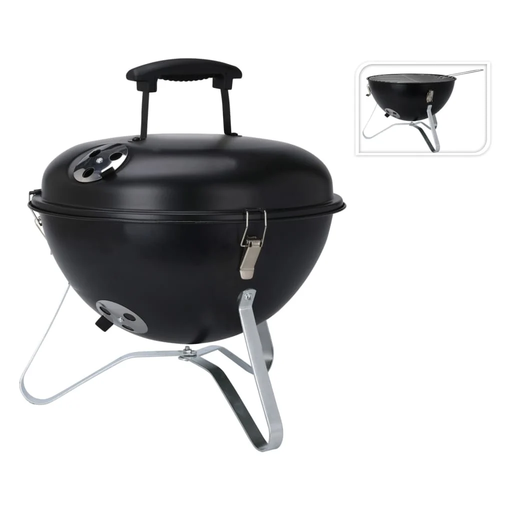
Why it's a good fit: Ideal for spontaneous use on the balcony or at a picnic. This small charcoal grill is extremely compact, easy to transport, and straightforward to handle for 1-2 people.
The kettle grill design with a lid and two air vents allows for basic heat regulation, thus avoiding the trap of uncontrollable heat. The short, sturdy metal frame is more solid than many wobbly folding designs.
Very compact packed size and secure transport thanks to three locking clips. The GS/T?V certification confirms compliance with fundamental safety standards.
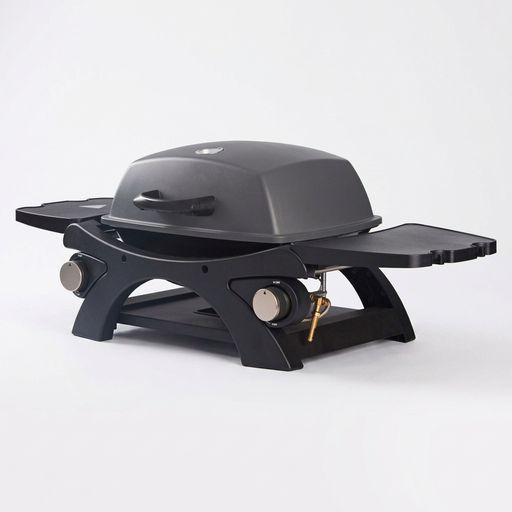
Why it's a good fit: For those who refuse to compromise on performance and convenience, even on the go. With two burners, a cast iron grate, and a thermometer, this gas grill offers the features of a larger model in a compact format.
Two independently controlled burners and a lid thermometer allow for precise heat management. The cast iron grate ensures excellent heat distribution. The material combination of stainless steel and aluminium is robust and weather-resistant.
High total output of 4.2 kW for rapid heating and high-sear cooking. The detachable side shelves provide a practical workspace that is missing from many compact grills.
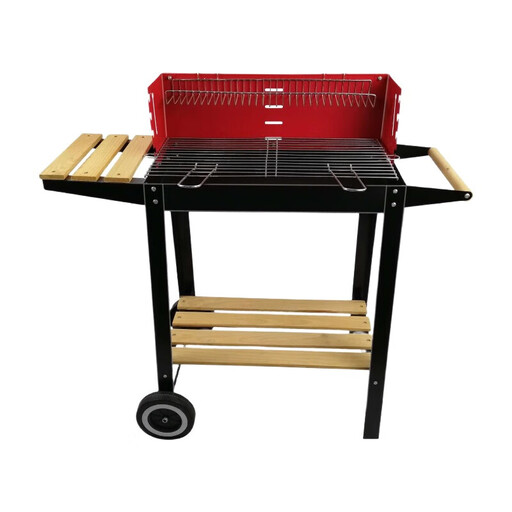
Why it's a good fit: A solution for anyone looking for a mobile grill for the patio or garden that is also large enough for a bigger group. It combines a generous grilling surface with the mobility of a trolley.
The height-adjustable grill rack allows for direct and effective control over the grilling temperature. The integrated windscreen ensures stable embers, overcoming a typical problem of open grills. The construction is designed for stability.
Large grilling surface (47.5 x 24.5 cm) and practical extra features like a wooden side shelf and a bottom shelf for grill accessories and supplies.
We've compiled a complete, up-to-date list of products that fully meet these strict selection criteria and safety regulations.
Using a grill on a balcony depends on the house rules in your lease or homeowners' association agreement. As a general rule, charcoal grills are often prohibited due to heavy smoke and flying sparks. A small gas grill or an electric grill is usually the safer and more neighbour-friendly choice. In any case, check your local regulations and your building's rules beforehand.
This is a direct trade-off that depends on your primary use case. If you plan to carry the grill over long distances (e.g., while hiking or for a picnic in the park), low weight is the priority. For car camping or use on a small patio, a larger grilling surface may be more beneficial, even if it makes the grill heavier. Consider how many people you typically cook for and how you will transport the grill.
Efficient cleaning extends the life of your grill. A proven method is: after grilling, use the residual heat to "burn off" food remnants on the grate. Then, brush the still-warm (not hot) grate with a wire brush. For a charcoal grill, the ash must cool completely before being disposed of in a fireproof container. Only transport the grill once all parts have completely cooled down.