
Lieferung heute & morgen

Qualitätsgarantie

Willkommens-Angebote freischalten: KOSTENLOSE Lieferung | Bis zu 80 % RABATT | Kostenlose 30-Tage-JoyPlus-Testphase
App herunterladen
As a Joybuy Product Recommendation Officer, I see daily how a seemingly simple kitchen tool like a can opener can cause frustration. While more and more canned goods, like Sunlee Cream Style Corn, come with convenient pull-tabs, a reliable manual can opener remains essential for countless high-quality foods. Yet, buying one is often more problematic than you'd think. Many models quickly prove to be a poor investment. Based on common customer feedback, there are three typical pitfalls you should know about.
The 3 Most Common Pitfalls When Buying a Can Opener:
To avoid these problems, it's crucial to pay attention to a few fundamental technical features before you buy.
A durable and safe can opener isn't defined by marketing slogans, but by verifiable features. Look for the following three core parameters to make an informed decision.
The way a can opener cuts is the most important criterion for safety. There are two basic systems:
The choice of material determines durability and hygiene.
Some can openers offer more than just the basic function. An integrated cap lifter turns it into a can opener with a bottle opener, saving space in your kitchen drawer. A built-in pincer for lifting the lid is also a useful and hygienic addition, as it avoids hand contact with the lid.
Instead of making a blanket recommendation, we've selected models tailored to specific user profiles and their priorities.
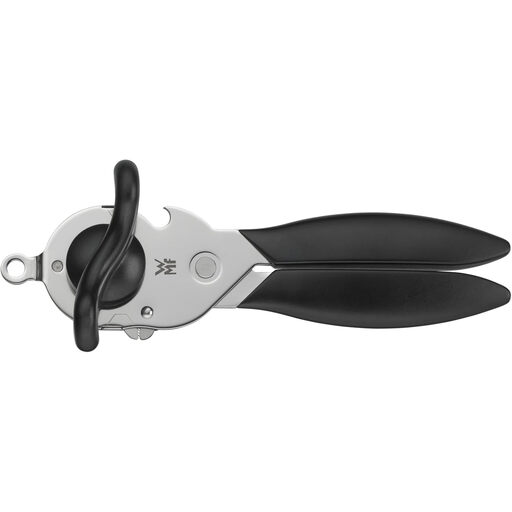
Why This Fits Their Persona: Ideal for users who value brand quality, durability, and thoughtful design. The combination of safety, hygiene, and easy cleaning fits perfectly into a modern kitchen.
The side-cutting mechanism prevents sharp edges (Pitfall 1). The Cromargan 18/10 stainless steel is rust-proof (Pitfall 2), and the wide handles ensure effortless operation (Pitfall 3).
Hygienic design (opener doesn't touch the contents), integrated lid lifter and bottle opener, fully dishwasher-safe.
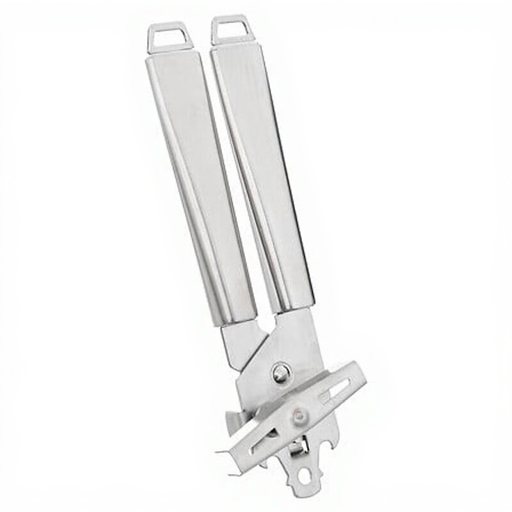
Why This Fits Their Persona: Perfect for families or anyone for whom safety is the top priority. This model focuses on the core function of a safety opener and performs it reliably.
The SUR_BROCHE (side-cut) mechanism is specifically designed to eliminate sharp edges (Pitfall 1). The stainless steel construction prevents rust (Pitfall 2), and the ergonomic design ensures a secure grip (Pitfall 3).
Focused on maximum safety through a clean side cut. Robust and durable stainless steel construction.
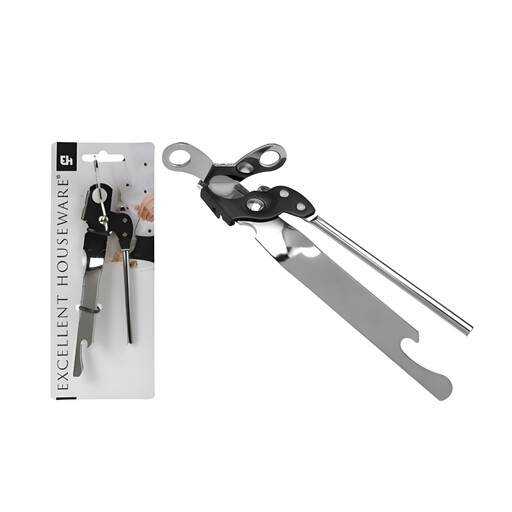
Why This Fits Their Persona: For users looking for a simple, reliable, and affordable tool. Ideal for a first home or as a solid, basic can opener without unnecessary bells and whistles.
Its stainless steel construction is a direct counter to the rust trap (Pitfall 2) common in many budget models. The simple, robust design is less prone to mechanical failure (Pitfall 3).
Combines durable stainless steel material with a very accessible price. Compact size for easy storage.
We have compiled a complete, up-to-date list of products that fully meet these strict selection criteria and German safety standards.
Proper cleaning depends on the material. Models declared as dishwasher-safe, like the WMF can opener, can simply be placed in the dishwasher. For all other models, hand-washing with warm water and mild dish soap is recommended. Pay special attention to cleaning food residue from the cutting wheel and gears. Afterwards, dry the opener thoroughly to prevent even surface rust on stainless steel and to extend the life of the mechanism.
The main difference lies in the cutting method. A conventional opener cuts into the lid from the top, leaving a sharp edge inside the can. A safety can opener, on the other hand, separates the outer seam of the can. This creates no sharp edges on either the can or the lid, making handling and disposal much safer.
A high-quality stainless steel can opener can last for many years, often over a decade, with proper care. Its lifespan is determined by the quality of the steel, the robustness of the turning mechanism, and the frequency of use. Models from established brands are generally designed for long-term durability.