
Lieferung heute & morgen

Qualitätsgarantie

Willkommens-Angebote freischalten: KOSTENLOSE Lieferung | Bis zu 80 % RABATT | Kostenlose 30-Tage-JoyPlus-Testphase
App herunterladen
The turn of an ignition key, but instead of the familiar engine roar, there's only silence—a situation many vehicle owners know all too well, especially on cold winter days or after long periods of inactivity. A weak or dead battery is often the culprit. However, a modern car battery charger is more than just an emergency tool. It's used for proactive maintenance, can extend your battery's lifespan, and ensures your vehicle—whether it's a car, motorcycle, or RV—is always ready to go.
This guide is here to help. It explains the essential features of current chargers and presents a selection of models to make it easier for you to choose the right device.
The market is filled with a wide variety of devices offering different features. The following three points will help you identify the right technology for your needs.
Modern vehicles use different battery technologies, so a one-size-fits-all charger isn't always the right choice. Check which battery type your vehicle uses and ensure the charger is designed for it.
A smart charger often detects the battery type automatically or allows you to set the correct mode manually.
The charging current, measured in amps (A), determines the charging speed. As a rule of thumb, the charging current should be about 10% of the battery's capacity (measured in amp-hours, Ah).
Modern chargers do more than just recharge. These features are particularly useful:
Based on the criteria above, we've put together a selection of devices that stand out for their functionality and range of applications.
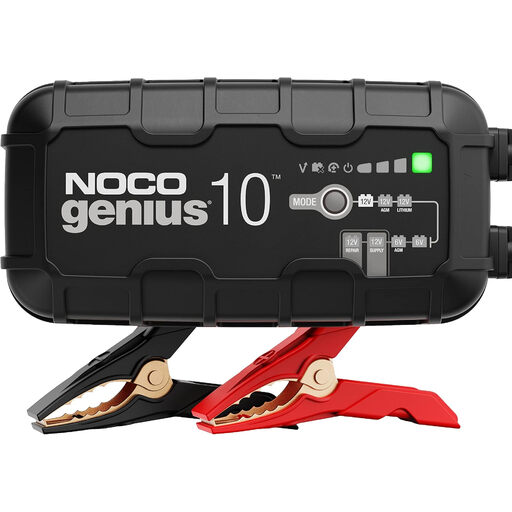
What makes it stand out: The NOCO GENIUS10 is a powerful and versatile charger. With 10 amps of charging current, it's suitable for a wide range of batteries up to 230 Ah. According to the manufacturer, it delivers over 115% more power than its predecessor, the G7200. The integrated temperature sensor automatically optimizes the charging cycle, while its repair mode can revive even deeply discharged batteries with as little as 1 volt. A manual "Force Mode" also allows it to charge batteries with zero remaining voltage.
Pros:
Best for: Owners of cars, vans, RVs, boats, and agricultural vehicles who are looking for a powerful, all-in-one device for maintenance, charging, and repair.
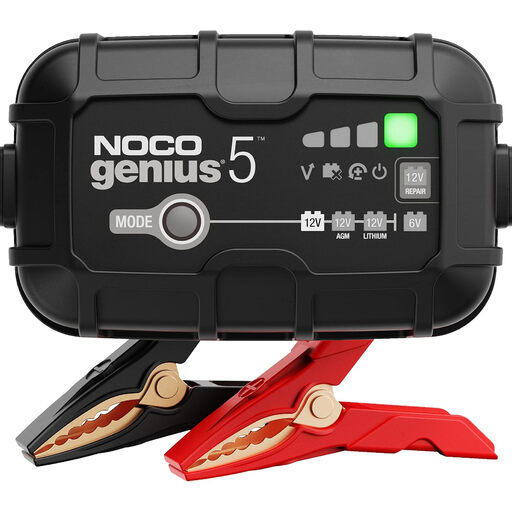
What makes it stand out: The NOCO GENIUS5 is the balanced all-rounder. At 5 amps, it provides plenty of power for most car and motorcycle batteries and features the same smart charging and maintenance functions as the larger model, including compatibility with lithium batteries and a desulfation function. It's a solid choice for everyday use and for winterizing vehicles.
Pros:
Best for: Car and motorcycle owners who need a reliable and versatile charger for regular maintenance and occasional charging needs.
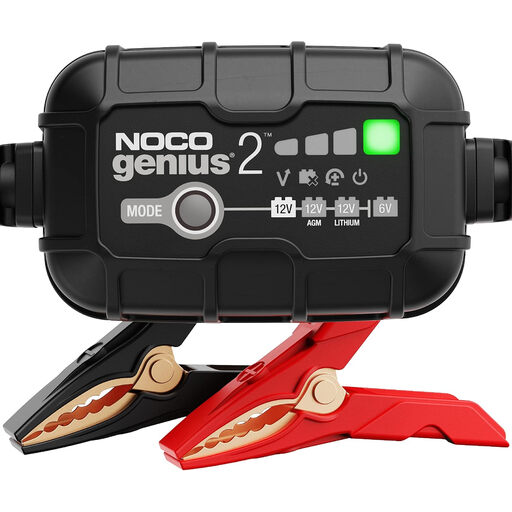
What makes it stand out: The GENIUS2 is the most compact model in the series and, with 2 amps of charging current, is specifically designed for smaller batteries. It is a full-featured smart charger that also offers all the key functions like maintenance charging, desulfation, and temperature compensation. According to NOCO, it's 30% smaller than its predecessor but over 140% more powerful.
Pros:
Best for: Owners of motorcycles, scooters, ATVs, and small cars who are looking for a compact yet fully functional device primarily for maintaining and trickle-charging smaller batteries.
The models featured here cover a wide range of use cases. However, if you have specific requirements or are looking for solutions tailored to modern lithium technologies, it's worth exploring other products.
Explore our comprehensive selection of lithium-ion batteries and find the right accessories for your needs.
Yes, as long as it is a smart charger with a built-in battery maintainer function. These devices continuously monitor the battery's state of charge. If the voltage drops below a certain threshold, a short charging cycle is initiated. This prevents overcharging and keeps the battery in optimal condition during long periods of inactivity.
Desulfation is a maintenance feature for lead-acid batteries. Over time, hard sulfate crystals can form on the battery's lead plates, impairing their ability to hold a charge. A battery desulfator uses targeted current and voltage pulses to dissolve these deposits. According to manufacturers, this can help restore lost capacity and extend the battery's lifespan.
Yes, using a compatible charger is crucial. AGM batteries require a higher charging voltage than conventional lead-acid batteries. Lithium (LiFePO4) batteries require a very precise charging algorithm (CC/CV profile) to avoid cell damage. Modern chargers therefore often offer selectable modes, such as an AGM charger mode or a lithium battery charger mode, to ensure safe and efficient charging.