
Lieferung heute & morgen

Qualitätsgarantie

Willkommens-Angebote freischalten: KOSTENLOSE Lieferung | Bis zu 80 % RABATT | Kostenlose 30-Tage-JoyPlus-Testphase
App herunterladen
A dead battery on your smartphone, tablet, or laptop is more than just an inconvenience on the road—especially when you rely on navigation or need to stay connected. The selection of car chargers is vast, and their technical specifications can be confusing. As your Joybuy Product Recommendation Officer, my job is to provide you with clear guidance. This guide will help you understand how modern car chargers work and make an informed decision based on objective criteria.
To find the right device for your needs, you should consider three key aspects: charging power, available ports, and form factor.
The charging power, measured in watts (W), is crucial for how quickly your devices are powered up. A basic charger with 5 or 10 watts will only slowly charge a modern smartphone. For rapid charging, you should look for a fast car charger that supports modern standards.
Consider how many and what types of devices you need to charge simultaneously.
The physical design of the charger affects its everyday usability.
Based on the criteria mentioned, we have compiled a selection of chargers that cover different use cases.
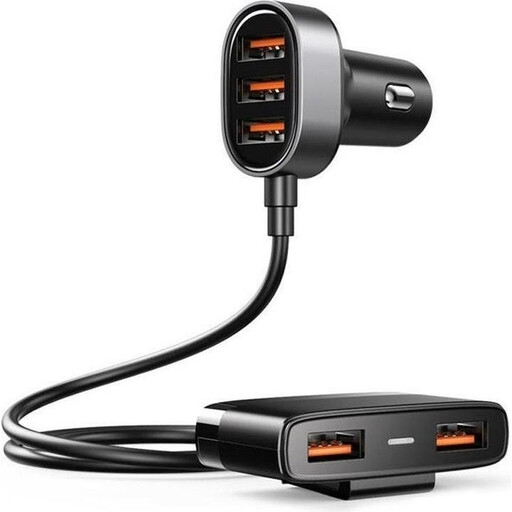
What Makes It Stand Out: This charger is specifically designed for use with multiple passengers. With a total of five USB ports and a 1.5-meter extension cable, both the driver and passengers in the back seat can conveniently charge their devices.
Pros:
Who Is It For? Ideal for families, carpools, or taxi drivers who need a simple and comprehensive charging solution for multiple passengers.
View Details for the JOYROOM 5-Port Charger
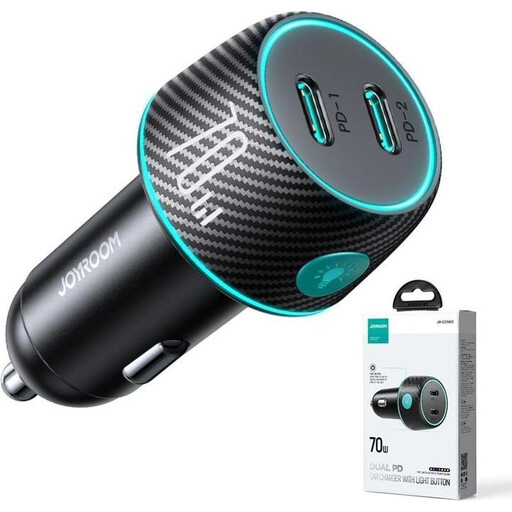
What Makes It Stand Out: A compact and powerful charger that focuses on modern USB-C technology. With two PD ports and a total output of 70 watts, it can fast-charge two devices simultaneously.
Pros:
Who Is It For? Perfect for individuals or couples who own modern devices like the latest iPhones, Samsung smartphones, or tablets and want to charge them on the go at maximum speed.
View Details for the Joyroom 70W Charger
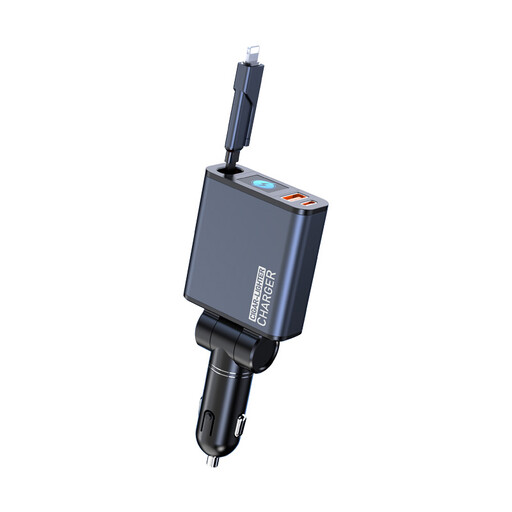
What Makes It Stand Out: This model is a high-performance solution for demanding users. With a total output of 160 watts, three ports, and two integrated retractable cables, it can even power laptops while keeping your console tidy.
Pros:
Who Is It For? The ideal choice for field service professionals, business travellers, and tech enthusiasts who need a car laptop charger and value a tidy and powerful charging hub.
View Details for the ATSHARK 160W Charger
If our selection doesn't include the perfect model for your specific needs, you can find a wider range of options. Every vehicle and user has different needs, whether it's an especially discreet design or support for a specific charging protocol.
Browse our full category of car usb chargers to compare more models.
1. Can a car charger drain my car battery? When the vehicle's engine is running, the charger is powered by the alternator and does not strain the battery. When the engine is off, it depends on the vehicle: many modern cars cut power to the cigarette lighter as soon as the ignition is turned off. In older models or vehicles with an always-on socket, a plugged-in charger can slowly drain the battery. It is recommended to unplug the charger during long periods of parking.
2. What does Power Delivery (PD) mean for a car charger? Power Delivery (PD) is a universal fast-charging standard that works via a USB-C port. Its strength lies in its flexibility: the charger and the end device communicate with each other to negotiate the optimal charging power. This allows a single PD car charger to efficiently and safely charge everything from a smartphone at 15W and a tablet at 30W to a notebook at 60W or more.
3. Are car chargers with retractable cables a good choice? A car charger with a cable that is retractable offers a clear advantage for keeping your vehicle tidy. It prevents cable clutter and the need to carry separate cables. However, the mechanical retraction mechanism can be a potential point of wear and tear. The choice depends on personal preference: Do you prioritise maximum convenience and tidiness, or the durability of a separate, replaceable cable?