
Lieferung heute & morgen

Qualitätsgarantie

Willkommens-Angebote freischalten: KOSTENLOSE Lieferung | Bis zu 80 % RABATT | Kostenlose 30-Tage-JoyPlus-Testphase
App herunterladen
An illuminated check engine light, an upcoming service inspection, or the desire to customise vehicle functions—the reasons for purchasing a car diagnostic tool are many. Whether you run a professional workshop or are an ambitious DIY mechanic looking to save money and maintain control over your vehicle, choosing the right tool is crucial.
This guide is here to help. We will introduce different types of devices, explain important functions, and present a selection of models for various requirements and budgets. Our goal is to provide you with a solid foundation for making an informed decision, so you can find the perfect tool for your needs.
The market for diagnostic tools is vast and can be confusing. To select the right tool, you should consider three core aspects that will determine the utility and longevity of your investment.
The range of functions is the most important criterion. A simple OBD2 scanner is often sufficient for reading and clearing standardised fault codes from the engine control unit. However, for more in-depth analysis and maintenance tasks, a more comprehensive all-systems car diagnostic tool is necessary. Such devices provide access to all of the vehicle's control units (e.g., ABS, airbag, transmission) and enable special service functions. A professional service reset tool is often already integrated. For advanced users, the ability to code is also a key feature. A car coding tool allows you to adapt new components or unlock hidden vehicle features.
Not every device is compatible with every vehicle. Before purchasing, check carefully whether your specific car makes and models are supported. For newer vehicles, especially those from 2020 onwards, modern communication protocols like CAN FD and DoIP are crucial. These enable significantly faster and more stable data transmission, which is essential for complex diagnostics and coding. Many manufacturers provide compatibility lists on their websites, allowing for a precise check.
Classic diagnostic tools are rugged handheld devices with an integrated screen and a wired connection to the vehicle's OBD2 port. They are designed for the daily workshop environment and require no additional devices. A flexible alternative is an OBD2 Bluetooth adapter. This small dongle plugs into the OBD2 socket and connects wirelessly to an app on your smartphone or tablet (iOS/Android). This solution is particularly compact and often more cost-effective, but the full range of functions depends on the accompanying software.
Based on feature set, compatibility, and use case, we have compiled a selection of devices that cater to different needs.
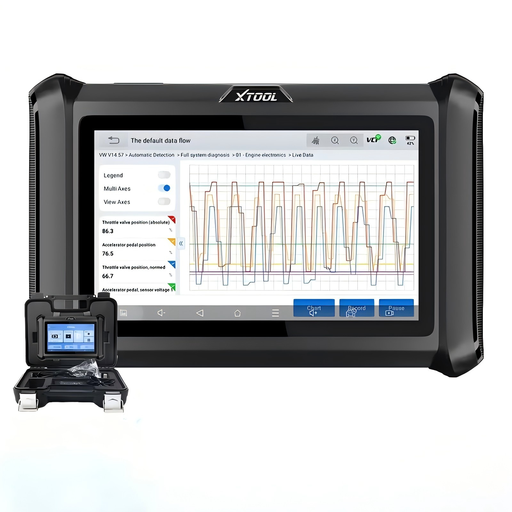
Why it stands out: The XTOOL D7S is a powerful diagnostic tablet that offers features often found only in much more expensive devices. With bidirectional control, you can directly actuate components to test their function. Support for ECU coding and Programmable Module Installation (PMI) makes it a valuable tool for complex repairs and retrofits. Integrated support for CAN FD and DoIP ensures compatibility with the latest vehicle models.
Advantages:
Who is it for? This device is aimed at professional auto mechanics and workshops that need a reliable all-in-one tool for daily use. It is also an excellent choice for ambitious DIY mechanics who want to perform in-depth diagnostics, coding, and maintenance tasks themselves.
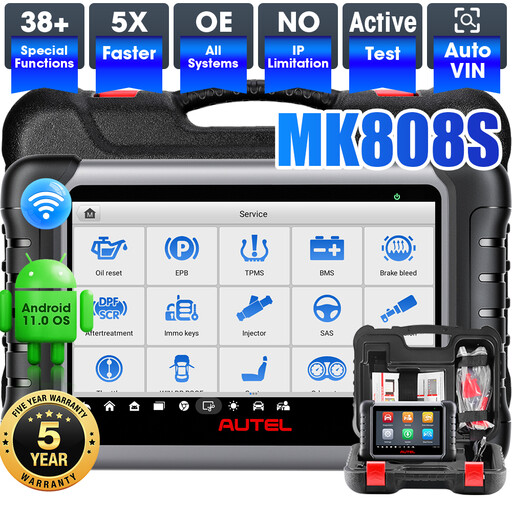
Why it stands out: The Autel MK808S offers remarkable value for money by bringing bidirectional control to a more affordable price point. As an updated version, it runs on a fast processor with Android 11 and has 4GB of RAM, ensuring smooth operation. Its wide vehicle coverage of over 150 brands and support for FCA AutoAuth make it a flexible tool for many users.
Advantages:
Who is it for? The MK808S is ideal for independent workshops and experienced DIYers looking for a diagnostic tool with advanced features like bidirectional control, without having to spend the budget for a high-end professional device.
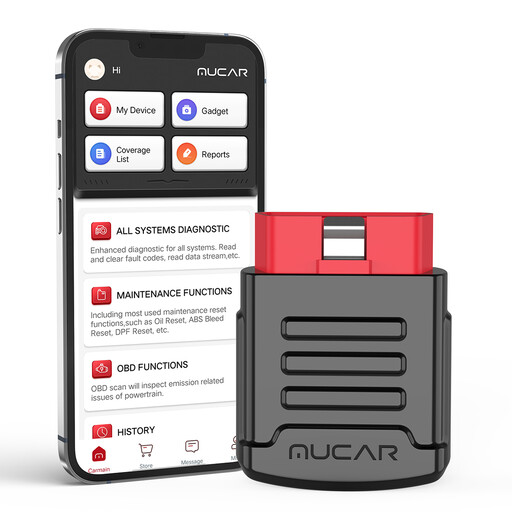
Why it stands out: The MUCAR BT200 Pro is a compact OBD2 Bluetooth adapter that offers lifetime free diagnostics for all vehicle systems. It transforms your smartphone (iOS or Android) into a powerful diagnostic tool. Unlike many other adapters, it is not limited to the engine control unit but provides access to all ECUs, such as ABS, SRS, and transmission.
Advantages:
Who is it for? The BT200 Pro is the perfect choice for car enthusiasts and DIYers looking for a cost-effective and easy-to-use fault code reader. It is ideal for quickly checking fault codes, performing basic maintenance, and monitoring live data.
The models presented here cover a broad spectrum, but requirements can be very specific. If you are looking for other options or specialised tools, you can find a larger selection in our main category.
? Discover our entire range of vehicle scanners here
OBD2 (On-Board Diagnostics 2) is a legally standardised system that primarily focuses on emissions-related components of the engine and powertrain. A simple OBD2 scanner can only access this standardised data. A full system diagnosis, on the other hand, allows access to all manufacturer-specific control units in the vehicle, including ABS, Airbag (SRS), transmission, climate control, comfort electronics, and more. This enables a much deeper and more comprehensive fault analysis.
Yes, most modern diagnostic tools that go beyond basic OBD2 functions include a service reset tool. This allows you to reset the service interval indicator in the instrument cluster after an oil change or inspection. Before buying, check whether the 'Oil Reset' or 'Service Reset' function is supported for your specific vehicle model.
If you own a newer vehicle (generally from 2020 onwards), especially from brands like BMW, Volvo, Land Rover, or the VAG Group, a diagnostic tool with support for CAN FD (Flexible Data-Rate) and DoIP (Diagnostics over Internet Protocol) is highly recommended. These protocols enable a much higher data transfer speed, which is necessary for diagnosing and programming modern, data-intensive vehicle architectures. For older vehicles, this is generally not necessary.