
Lieferung heute & morgen

Qualitätsgarantie

Willkommens-Angebote freischalten: KOSTENLOSE Lieferung | Bis zu 80 % RABATT | Kostenlose 30-Tage-JoyPlus-Testphase
App herunterladen
A dead car battery is more than just an annoyance—it means lost time and potential uncertainty, especially in bad weather or at night. A portable jump starter, also known as a battery booster, promises a quick fix and independence from roadside assistance. But the market is cluttered and full of technical specs that often confuse more than they help. Before you make a decision, you should know the most common pitfalls that can lead to a bad buy.
Choosing a suitable device is often complicated by marketing promises that don't always hold up in practice. Here are three critical points to watch out for to make an informed decision.
To find the right portable jump starter, focus on the following objective criteria instead of pure marketing figures.
The most important factor is compatibility with your engine. A diesel jump starter is needed for a diesel vehicle, which requires significantly more power than a petrol car with the same engine displacement due to higher compression.
Always pay attention to the manufacturer's specifications for the maximum engine size for both petrol and diesel engines.
The capacity determines how many start attempts are possible and how often you can charge your electronic devices with the jump starter power bank.
A high-quality 12V jump starter must be safe. Look for what are known as "smart clamps." These offer essential protection features:
Additionally, solid, fully insulated clamps and thick, flexible copper cables are a clear sign of quality.
Based on these objective criteria, we have identified a few models that are well-suited for specific user groups.
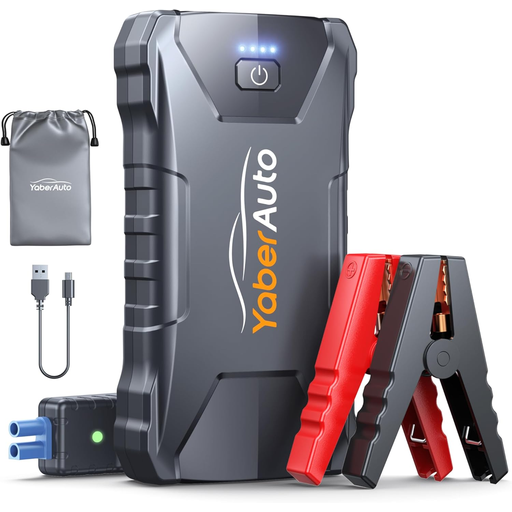
Why it's a good fit: Ideal for drivers of standard petrol and smaller diesel vehicles who need a compact and straightforward solution for the glove compartment. The device is extremely lightweight and small, yet offers enough power for most common passenger cars.
It avoids exaggerated performance claims and focuses on a realistic starting power for engines up to 7.0L petrol/5.5L diesel. Its compact design doesn't compromise on essential safety features.
Extremely compact and lightweight design (0.34 kg) that fits easily in any glove compartment. Integrated safety features and an emergency LED light complete the package.
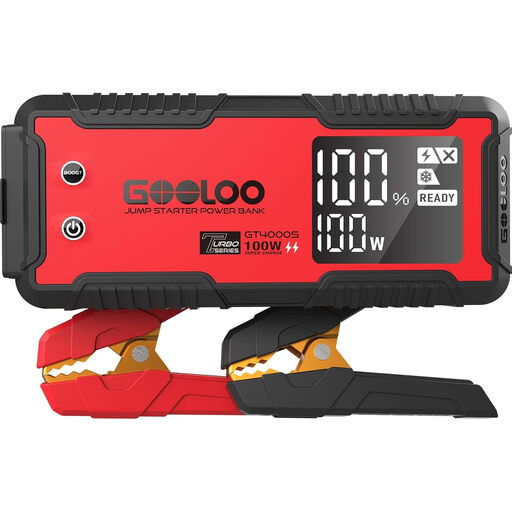
Why it's a good fit: Designed for owners of vehicles with large-displacement engines, such as SUVs, RVs, or vans. It delivers the high starting power needed for diesel engines up to 10.0L and also features extremely fast recharging.
The high peak current of 4000A isn't just a marketing number here; it's a necessity for large engines. The 100W fast-charging function solves the problem of long charging times and self-discharge, as the device can be fully ready to use again in a short time.
100W two-way fast charging allows the device to be fully recharged in about 1.2 hours. Its high power reliably starts diesel engines up to 10.0L. It also serves as a powerful power bank for laptops.
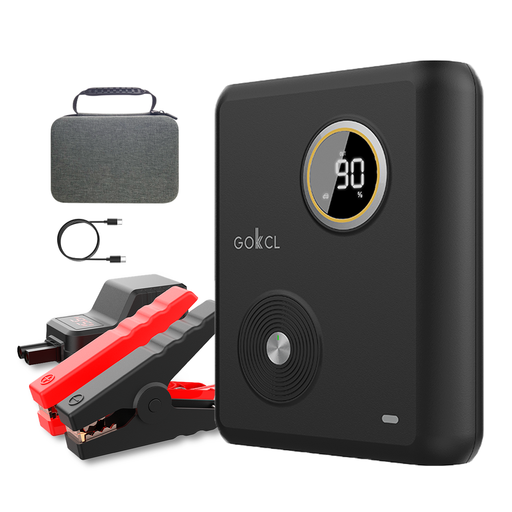
Why it's a good fit: For drivers who demand maximum reliability under all conditions. The sodium-ion technology makes it resistant to extreme cold and heat, ensuring the device is still ready for use even after long-term storage.
It directly addresses the weaknesses of conventional lithium batteries: high self-discharge and limited function in extreme temperatures. According to the manufacturer, the self-discharge rate is only about 1% per month, which bypasses the "dead helper" pitfall.
Extreme operating temperature range from -40°C to +80°C. Very low self-discharge for long standby times and a high cycle life for extended durability. Sodium-ion chemistry is also considered safer compared to lithium.
We have compiled a complete, up-to-date list of products that meet these strict selection criteria and rigorous safety standards.
1. How often do I need to charge a jump starter? This largely depends on the model and the battery technology used. For most lithium-ion devices, it's recommended to check the charge level every 3 to 6 months and top it up if necessary. Models with sodium-ion batteries or very low self-discharge rates need to be charged less frequently, sometimes only every few years. Always refer to the manufacturer's instructions.
2. Can I use a jump starter power bank to start a diesel vehicle? Yes, it's possible, provided the device is designed for it. Diesel engines require a significantly higher cranking current than petrol engines, especially in cold temperatures. Therefore, pay close attention to the manufacturer's specifications regarding compatibility with diesel engines and the maximum supported engine size (e.g., "suitable for diesels up to 7.0L").
3. Is using a battery booster safe for my car's electronics? Yes, modern jump starters with "smart clamps" are designed to protect the vehicle's sensitive electronics. These clamps have built-in protection circuits against reverse polarity, short circuits, over-voltage, and over-current. As long as you use a high-quality device according to the instructions, there is no risk to the Engine Control Unit (ECU) or other electronic components.