
Lieferung heute & morgen

Qualitätsgarantie

Willkommens-Angebote freischalten: KOSTENLOSE Lieferung | Bis zu 80 % RABATT | Kostenlose 30-Tage-JoyPlus-Testphase
App herunterladen
One click, then silence. A dead car battery is more than just an inconvenience—it often means unexpected downtime, missed appointments, and relying on help from others. A modern, portable jump starter, also known as a battery booster, offers an independent and fast solution. However, the market is filled with technical jargon and varying performance specs.
This guide is here to help you navigate your options. We'll explain the crucial criteria for selecting a suitable jump starter and present a selection of models for different needs. This will empower you to make an informed decision based on facts, not marketing promises.
Choosing the right device depends on your vehicle and individual needs. Three main factors are crucial.
The peak current, measured in Amperes (A), is the most important metric. It indicates how much power the device can deliver in a short burst to start an engine. A small car with a petrol engine requires significantly less starting power than a large SUV with a diesel engine.
Always check the manufacturer's specifications for the maximum recommended engine displacement for petrol and diesel engines.
Most portable jump starters use lithium-ion batteries. These offer high energy density in a compact design. A more recent development is sodium-ion technology, which is distinguished by a higher cycle life, a wider operating temperature range, and enhanced safety, as it poses no fire risk even when damaged.
Regardless of the technology, intelligent safety features are essential. Look for protection mechanisms against:
A good jump starter will use LEDs or a display to indicate a correct connection and the device's status.
Modern devices are often more than just jump starters. They can serve as a complete roadside assistance kit. Useful additional features include:
Here is a selection of devices that cover different user profiles—from the compact all-rounder to the professional-grade multifunctional tool.
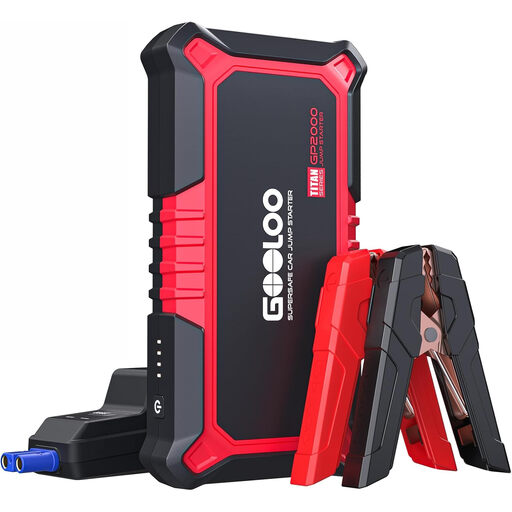
Why It Stands Out: The GOOLOO GP2000 is a well-balanced and compact battery booster that delivers reliable performance for most everyday situations. Its lightweight design and ease of use make it a practical companion.
Pros:
Who Is It For? Drivers of passenger cars, SUVs, and motorcycles who need a reliable and handy portable jump starter for emergencies and also want a power bank function.
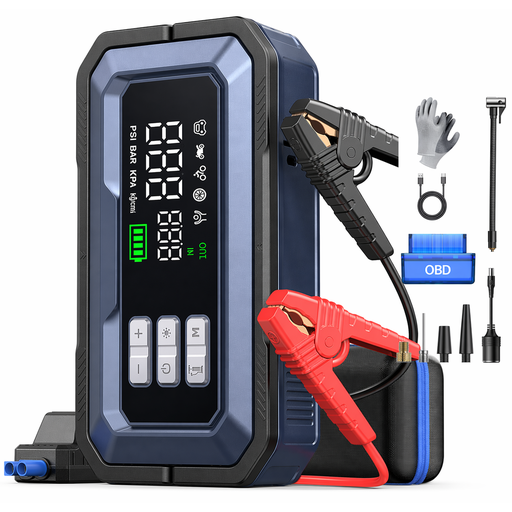
Why It Stands Out: This multifunctional device from UTRAI is a complete roadside solution. With an extremely high peak current, an integrated compressor, and an OBD2 diagnostic function, it is aimed at demanding users and owners of large vehicles.
Pros:
Who Is It For? For owners of motorhomes, vans, agricultural vehicles, and trucks (12V), as well as anyone who wants a comprehensive roadside assistance kit that combines diagnostic and air pump functions in a single device.
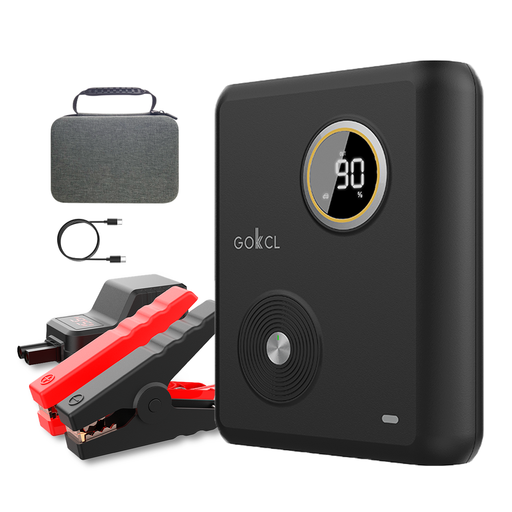
Why It Stands Out: The GOKKCL GK03 uses future-proof sodium-ion battery technology. This enables exceptional longevity, very low self-discharge, and safe operation in extreme temperatures.
Pros:
Who Is It For? For users who value maximum reliability, longevity, and minimal maintenance. Ideal for drivers in regions with extreme temperatures or for those who need a device that is ready to go in an emergency, even after long-term storage.
Our selection covers a variety of use cases. However, if you are looking for specific models or other powerful options, you can find a broader overview in our High-Performance Car Jump Starters category to find the perfect device for your needs.
1. Can a portable jump starter damage my car's electronics? Modern jump starters with intelligent clamps (Smart Clamps) are designed to protect the vehicle's electronics. They prevent damage from reverse polarity, over-voltage, or short circuits. As long as the device is used correctly according to the instructions, the risk to the onboard electronics is minimal.
2. How often do I need to charge a jump starter? This depends on the battery technology. Conventional lithium-ion models should be checked every 3 to 6 months and recharged as needed to ensure they are ready for use. Models with sodium-ion technology, like the GOKKCL GK03, have a significantly lower self-discharge rate and, according to the manufacturer, only need to be checked every few years. Always follow the manufacturer's recommendations.
3. How do I use a jump starter safely? Make sure both the vehicle's ignition and the jump starter are turned off. Connect the red clamp to the positive (+) terminal of the car battery and the black clamp to an unpainted metal part of the engine block or chassis (a ground point), away from the battery. Turn on the jump starter and wait for the ready signal (usually a green LED). Then, start the car. After a successful start, remove the black clamp first, followed by the red clamp.