
Lieferung heute & morgen

Qualitätsgarantie

Willkommens-Angebote freischalten: KOSTENLOSE Lieferung | Bis zu 80 % RABATT | Kostenlose 30-Tage-JoyPlus-Testphase
App herunterladen
A dead car battery is more than just a nuisance—it means you're stranded, often at the most inconvenient time. Whether you're heading to work on a cold morning or returning to your car after a long day, the clicking sound of a failed start is a familiar problem for many drivers. Instead of relying on help from strangers or a roadside assistance service, a portable car jump starter offers an independent and quick solution.
As your Joybuy Product Recommendation Officer, my mission is to provide you with clear, objective information. This guide is designed to help you understand how jump starters work and what key features to look for, so you can make an informed decision for your vehicle and your needs.
The market offers a wide variety of models, and their technical specifications can seem overwhelming at first glance. The following points will help you evaluate the most important features.
The peak current, measured in amperes (A), is the key metric that determines if a jump starter has enough power to start your engine. A larger engine requires a higher starting current.
Modern jump starters are often multifunctional tools. The battery capacity, measured in milliampere-hours (mAh), determines how many times you can jump-start a car or how long you can charge other devices.
A high-quality car jump starter should have comprehensive safety mechanisms to prevent damage to the unit and your vehicle's electronics. Key features include protection against reverse polarity, short circuits, overcharging, overheating, and overvoltage. Smart jumper cables that signal a correct connection before you start the engine offer an extra layer of security.
Based on the criteria above, we've curated a selection of devices that cover a range of different needs.
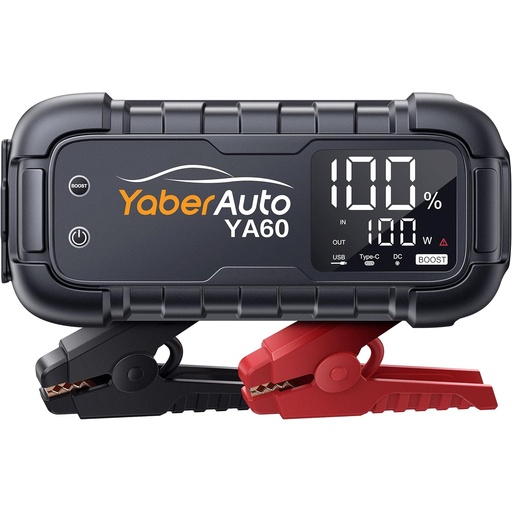
Why it stands out: The YaberAuto YA60 is engineered for maximum power. With a peak current of 8000A and the ability to start even completely dead batteries using a "BOOST" button, it addresses the most demanding scenarios. The 65W two-way fast charging feature allows the unit itself to be fully recharged in just 1.5 hours.
Pros:
Who is it for? This model is an excellent choice for owners of large vehicles like SUVs, vans, RVs, or vehicles with large-displacement diesel engines. It's also ideal for tech-savvy users looking for a powerful and versatile portable jump starter to serve as an emergency power source on the go.
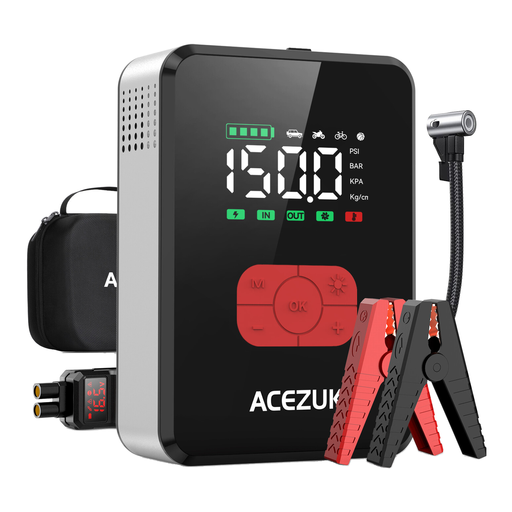
Why it stands out: The ACEZUK M06 combines a very high peak current with an integrated 150 PSI air compressor, making it a true all-in-one emergency tool. The compressor's large 3.3-inch display and auto-shutoff feature ensure precise and easy operation.
Pros:
Who is it for? Ideal for drivers looking for a comprehensive emergency solution. If you see a flat tire as just as much of a potential problem as a dead battery, this practical combo unit is for you. It's highly recommended for campers, outdoor enthusiasts, and families.

Why it stands out: The WOLFBOX 3000A offers a balanced combination of power, portability, and modern charging technology. With 3000A of peak current, it covers most standard passenger cars while remaining compact. Support for 65W PD fast charging means it's quickly ready for action again.
Pros:
Who is it for? This jump starter is a solid choice for drivers of standard cars, station wagons, and smaller SUVs. Anyone looking for a reliable, straightforward, and fast-charging device for everyday use will find this to be a fitting solution.
A jump starter is often just one part of a comprehensive emergency kit. As shown, many of these devices come with powerful LED lights. If you're looking for other lighting solutions for breakdowns, camping, or workshop tasks, you'll find a wide selection of products in our portable lights category to ensure safety and visibility.
1. How do you safely use a jump starter power bank? Always connect the red clamp to the positive (+) terminal of the car battery first, followed by the black clamp to the negative (-) terminal. On many modern vehicles, it's recommended to connect the black clamp to a designated ground point on the chassis. Only start the engine after the jump starter indicates a correct connection. After a successful start, remove the clamps in the reverse order.
2. Can a jump starter start a diesel vehicle? Yes, provided the device delivers a sufficiently high peak current. Diesel engines require significantly more power than gasoline engines due to their higher compression ratio. Pay attention to the manufacturer's specifications regarding the maximum engine displacement for diesel engines (e.g., "up to 12.0L diesel").
3. How often should a jump starter be charged? Even when not in use, a jump starter's battery will slowly self-discharge. Most manufacturers recommend checking the device every 3 to 6 months and fully charging it if needed. This ensures it will deliver its full power in an emergency.