
Lieferung heute & morgen

Qualitätsgarantie

Willkommens-Angebote freischalten: KOSTENLOSE Lieferung | Bis zu 80 % RABATT | Kostenlose 30-Tage-JoyPlus-Testphase
App herunterladen
A click, a sputter, then silence. A dead car battery is more than just an annoyance—it means lost time, missed appointments, and often a reliance on expensive roadside assistance. A modern jump starter, often designed as a compact jump starter power bank, promises a quick and straightforward solution. But the market is crowded and filled with technical specs that confuse more than they clarify. Many drivers invest in a device that fails at the critical moment.
As your Joybuy Product Recommendation Officer, I'll help you identify the typical pitfalls and make an informed decision. We'll focus on the facts that truly matter, so you can find a reliable car jump starter that fits your vehicle and your needs.
Marketing promises often sound tempting, but the devil is in the details. Pay close attention to these three points to avoid a bad purchase:
To make the right choice, let hard facts, not advertising slogans, be your guide. These three technical features are crucial for function and safety.
The most important job of a jump starter for petrol and diesel engines is to deliver enough energy for the starting process. The required power depends directly on your vehicle's engine:
As a rule of thumb: check the manufacturer's specifications for the maximum supported engine size for both petrol and diesel engines. When in doubt, choose a model with a little more power reserve, especially if you live in a region with cold winters.
A modern portable jump starter is more than just an emergency tool. The integrated jump starter power bank is a handy travel companion. Pay attention to:
Handling high currents involves risks. A high-quality car battery booster must therefore have comprehensive protection mechanisms. Essential features include:
Based on these objective criteria, we have identified several models suitable for different requirements and vehicle types.
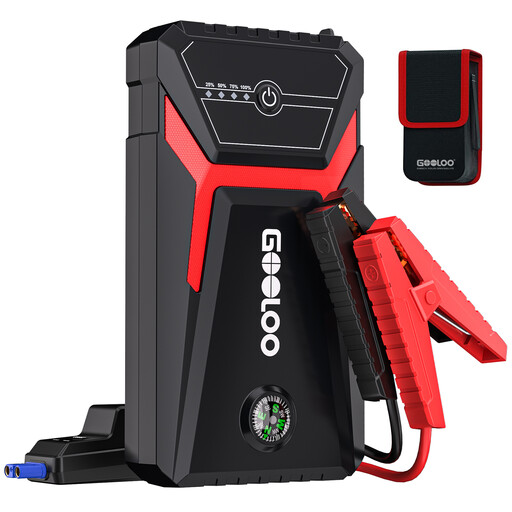
Why This Fits Their Persona: A solid choice for drivers of small to mid-size cars who need a reliable emergency solution without breaking the bank. The device covers the most common petrol and smaller diesel engines.
The device specifies clear engine limits (up to 6.0L Petrol / 4.0L Diesel), preventing the purchase of an underpowered unit. The 10 built-in protection features of the smart cables prevent user error.
Excellent value for money; Compact design; Comprehensive safety package with 10 protection features.
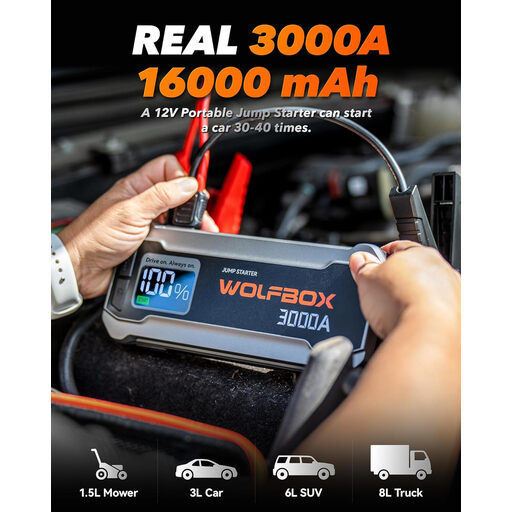
Why This Fits Their Persona: Ideal for commuters and owners of SUVs or larger vehicles who value high performance and rapid readiness. The 65W fast-charging capability makes both the device itself and its power bank function exceptionally practical.
The high 3000A peak current is designed for large engines (8L Petrol / 6L Diesel). The clear LED display with a "READY" indicator minimises user error, while fast recharging makes the power bank function practical for everyday use.
Very high power reserves; 65W PD fast charging for the device itself; Boost function for deeply discharged batteries.
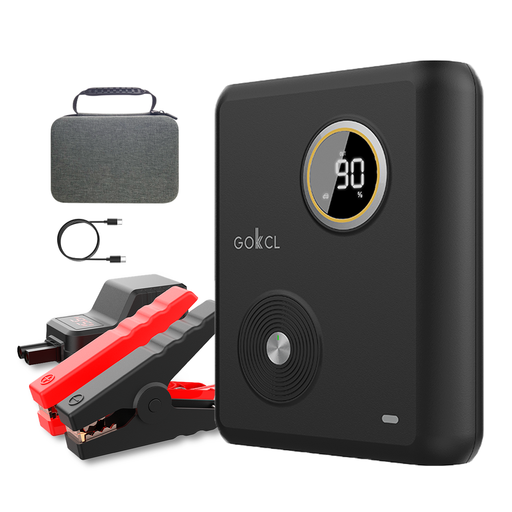
Why This Fits Their Persona: The solution for owners of RVs, boats, or vehicles in cold climates. The sodium-ion technology is designed for extreme temperatures and long standby times, making it ideal for infrequently used vehicles.
This device directly addresses the weakness of cold-weather performance. According to the manufacturer, it operates reliably down to -40°C, bypassing the main problem many lithium-ion starters face in winter.
Excellent performance in extreme temperatures (-40°C to 80°C); Very low self-discharge and long standby time; High cycle life.
We have compiled a complete, up-to-date list of products that fully meet these strict selection criteria and rigorous safety standards.
Most manufacturers recommend charging the device every 2 to 3 months, even if it's not used. This helps maintain battery health and ensures the jump starter is ready for an emergency. Models with very low self-discharge, such as those with sodium-ion technology, may require less frequent charging according to manufacturer specifications.
Yes, many modern jump starters are suitable for both diesel and petrol engines. The key is that the device's power (especially the cranking current) is sufficient for the greater force required by a diesel engine. Always check the manufacturer's specifications for the maximum supported engine displacement for diesel motors before buying a device.
Yes, when used correctly and with a high-quality device featuring intelligent safety clamps, the risk to your vehicle's electronics is minimal. These "smart clamps" protect against reverse polarity, short circuits, and voltage spikes that could damage sensitive electronic components. Always read the manufacturer's user manual before the first use.