
Lieferung heute & morgen

Qualitätsgarantie

Willkommens-Angebote freischalten: KOSTENLOSE Lieferung | Bis zu 80 % RABATT | Kostenlose 30-Tage-JoyPlus-Testphase
App herunterladen
Choosing the right child car seat is one of the most important decisions for your child's safety in the car. With a vast array of standards, models, and features, the search can quickly become overwhelming. This guide is designed to help you make an informed decision by providing objective information and a selection of models for different age groups and needs.
As a Joybuy Product Recommendation Officer, my role is to provide you with clear, factual information to help you find the car seat that best meets your family's requirements.
To make the right choice, it's important to understand a few technical aspects and standards. The following points offer guidance through the complex world of car seat options.
The current European standard for child car seats is UN R129, better known as i-Size. It offers several advancements over the older ECE R44/04 standard:
A car seat with ISOFIX provides a rigid and stable connection to the vehicle's chassis. Installation is often simpler and more foolproof than using the vehicle's seat belt, thanks to standardised anchor points and visual indicators that confirm correct fitting. Many modern vehicles come equipped with ISOFIX mounts as standard. Check your vehicle's compatibility before purchasing.
Car seats can be broadly divided into three categories based on the child's age and size:
Independent tests, such as those conducted by ADAC, can provide additional guidance in your selection. Pay attention to the results for models that meet your criteria.
Based on functionality, safety features, and adaptability, we have compiled a selection of models that cater to different needs.

Why it stands out: The Sirona Gi i-Size is a car seat suitable from birth that can be used up to the age of approximately four years. Its key feature is the 360-degree rotation mechanism, which makes getting your child in and out of the car significantly easier. The model was rated as one of the top products in the 05.24 test by Stiftung Warentest / ADAC.
Advantages:
Who is it for? For parents looking for a convenient and flexible solution right from their child's birth. The seat is ideal for families who value the ease of use provided by the rotation feature and the enhanced safety of extended rear-facing travel.
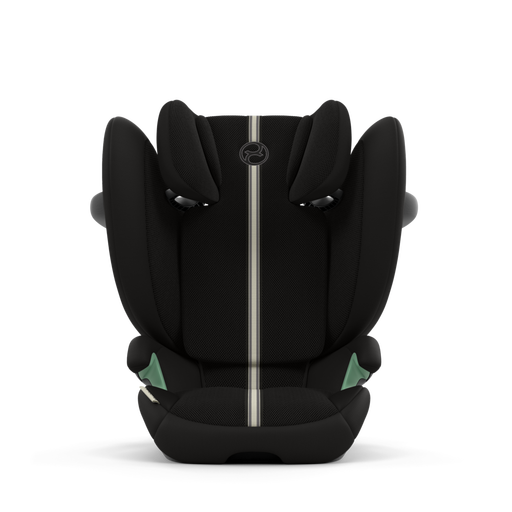
Why it stands out: Designed as a high-back booster seat for children from approximately 3 to 12 years, the Solution G2 i-Fix combines comfort with practical features for life on the go. It is the successor to the ADAC test-winning Solution G i-Fix and is notable for its ability to be folded.
Advantages:
Who is it for? For families with children of kindergarten and school age who need a safe and durable booster seat. Its flexibility and ease of handling make it a great choice for daily use and travel.
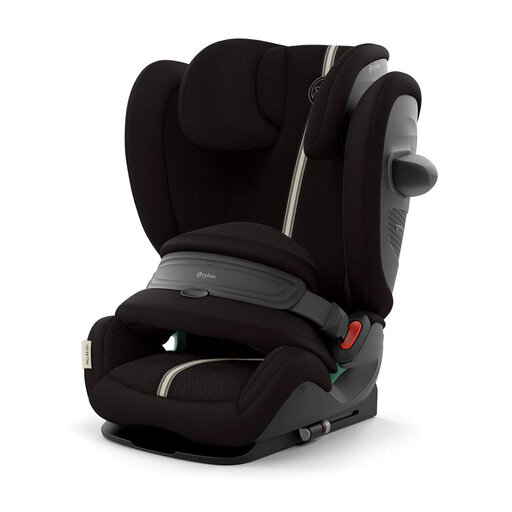
Why it stands out: The Cybex Pallas G3 is a multi-stage car seat that grows with your child from toddlerhood to adolescence (approx. 15 months to 12 years). Its signature feature is the impact shield, which is used instead of a 5-point harness during the first stage of use (up to 21 kg).
Advantages:
Who is it for? For parents looking for a single, long-lasting solution that grows with their child. The impact shield offers an alternative to the traditional harness system and is specifically designed for protection in frontal collisions.
The selection presented here covers common requirements, but every family and every vehicle is different. If you are looking for more options, specific designs, or other brands, you will find a wider variety in our main category.
Discover more models in our Car Seats category.
According to the i-Size standard (UN R129), rear-facing travel is legally required until at least 15 months of age and a height of 76 cm. However, safety experts and manufacturers recommend transporting children in a rear-facing seat for as long as possible, ideally up to the age of four, as this provides the best possible protection for the head and neck in a frontal collision.
The main difference lies in the safety requirements and classification. i-Size (UN R129) classifies seats based on the child's height, requires a passed side-impact test, and makes rear-facing travel mandatory until 15 months. The older ECE R44/04 standard divides seats into weight groups and has less stringent requirements for side-impact protection.
A car seat is too small when the top of the child's head extends beyond the top edge of the headrest or the seat shell. For seats with an integrated harness system, another indicator is the position of the shoulder straps: they should emerge from the backrest at or just above shoulder level, not below. Always observe the maximum height and weight limits specified by the manufacturer.