
Lieferung heute & morgen

Qualitätsgarantie

Willkommens-Angebote freischalten: KOSTENLOSE Lieferung | Bis zu 80 % RABATT | Kostenlose 30-Tage-JoyPlus-Testphase
App herunterladen
As a Joybuy Product Recommendation Officer, I analyse products and market information daily. One thing has become clear: with car travel accessories, true quality is often only revealed in real-world use—usually at the exact moment you can't afford a failure. A long road trip is ahead, and the cooler you bought barely chills, the power inverter overheats, or the jump starter power bank fails in the first cold snap.
To help you avoid such disappointments, we'll highlight the three most common purchasing pitfalls and show you which technical features truly matter.
To avoid these traps, a close look at the core specifications is essential. These objective parameters help you see through the marketing promises and make an informed decision.
A 12V to 230V power inverter is an essential car camping gadget for running mains-powered devices. Two factors are critical:
A modern car jump starter is much more than just an emergency solution. It often doubles as a powerful power bank.
The choice of the right cooler depends on its intended use.
Based on these objective criteria, we have identified some products that are suited for specific user profiles.
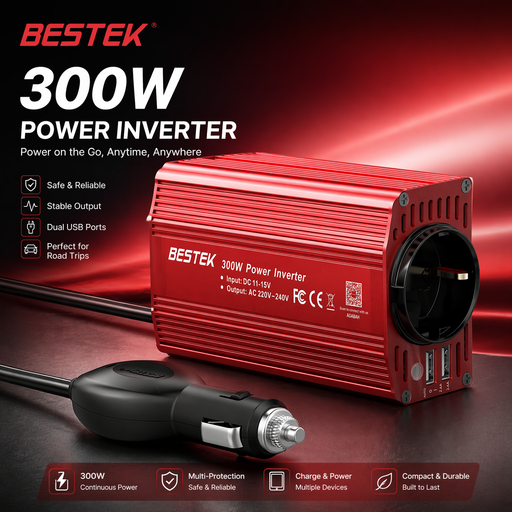
Why This Fits Their Persona: Ideal for anyone who needs to reliably charge a laptop, tablet, or other small devices on the go. Its compact design fits in any glove compartment, turning the vehicle into a mobile office or a charging station for travel.
This device is rated for 300W of continuous power, a figure that is clearly communicated and realistic for operation via the cigarette lighter (for devices up to 150W). It features documented protection against overheating and short circuits.
Features one 230V socket and two USB ports (4.8A total) for simultaneous charging. The robust aluminium housing and quiet fan ensure durability and comfort.

Why This Fits Their Persona: Perfect for multi-day camping trips, fishing excursions, or long family road trips. This cooler allows for the safe storage of meat, drinks, and medication at constant temperatures, even in intense heat.
Thanks to compressor technology, it reliably cools down to -20°C, regardless of the outside temperature. This bypasses the pitfall of insufficient cooling performance found in thermoelectric coolers. The three-stage battery protection also prevents the vehicle's battery from being drained.
Offers an ECO mode for low energy consumption (approx. 45W) and a MAX mode for rapid cooling. App control and quiet operation (approx. 42 dB) enhance convenience.
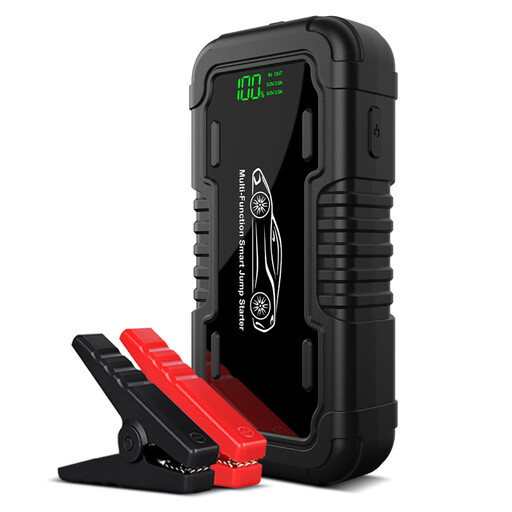
Why This Fits Their Persona: For drivers who want to be prepared for any emergency—whether it's a dead battery on a cold winter morning or in a remote car park. This device provides the peace of mind to stay independent and mobile at all times.
With a peak current of 2000A, this device is powerful enough for larger petrol and diesel engines, avoiding the trap of an underpowered jump starter. The LCD display clearly shows the charge status, ensuring it's always ready for use.
Combines a jump starter with a 20,000mAh power bank featuring QC3.0 fast charging. The integrated LED torch with SOS mode and the IP44 water-resistant casing make it a rugged emergency tool.
We have compiled a complete, up-to-date list of products that fully meet these strict selection criteria and rigorous safety standards.
Modern compressor coolers like the EUHOMY 21L are very energy-efficient. Most models have a built-in, three-stage battery monitor (low, medium, high). This automatically shuts off the cooler before the car battery's voltage drops to a critical level, ensuring your vehicle is always ready to start. In ECO mode, such a cooler can often run for 24 hours or more on a full battery.
For most common electronic devices like laptop power adapters, smartphone chargers, game consoles, or simple lamps, a car power inverter with a modified sine wave is perfectly adequate. However, with highly sensitive electronics, such as professional audio equipment, some medical devices, or devices with electric motors (e.g., certain pumps or tools), it can cause interference or malfunctions. For such applications, a model with a pure sine wave is recommended.
Even when not in use, a lithium-ion battery gradually loses its charge over time. It is recommended to fully recharge the jump starter power bank every 3 to 6 months. Many modern devices feature an LCD display that shows the current charge level. A quick check before a long trip ensures the device will deliver its full power in an emergency.