
Lieferung heute & morgen

Qualitätsgarantie

Willkommens-Angebote freischalten: KOSTENLOSE Lieferung | Bis zu 80 % RABATT | Kostenlose 30-Tage-JoyPlus-Testphase
App herunterladen
A spilled glass of red wine on the new sofa, muddy paw prints on the carpet, or simply the desire for hygienic freshness in your own home – a carpet cleaner promises a quick, deep-down clean. But the market is overwhelming, and many devices don't live up to their advertising claims. As your Joybuy Product Recommendation Officer, I'll help you recognise the common pitfalls and make an informed decision.
Many buyers regret their choice after just a few months. The reasons are often the same and are based on common marketing fallacies:
To avoid a bad purchase, you should focus on objective performance metrics instead of marketing buzzwords. Here are the three most important criteria for selecting a suitable carpet cleaner.
The most important metric is suction power, measured in Pascals (Pa) or Kilopascals (kPa). It indicates how effectively the device can remove the sprayed water and dissolved dirt from the fabric.
A good spray extraction cleaner works with a balanced ratio of spray pressure and suction power. The water is pressed into the fibres with pressure to loosen the dirt and is immediately vacuumed up with force.
A hygienic and efficient cleaning process requires the strict separation of clean and dirty water. Therefore, always look for a dual-tank system.
A carpet cleaner is only as versatile as its accessories. Think carefully about what you will primarily use the device for.
Instead of presenting an overwhelming list, we have selected models that meet specific needs and avoid the pitfalls mentioned above.

Why This Fits Their Persona: Ideal for those who need a quick, straightforward solution for individual stains on sofas, in cars, or on small rugs. Its lightweight, handheld design makes it ready to use instantly.
This device bypasses the "wattage trap" by delivering high suction power of 17 kPa despite its compact 600W motor. This is crucial for effectively extracting dirty water from upholstery and minimising drying time.
Compact, corded handheld unit for consistent power. The dual-tank system is sufficiently sized for spot cleaning and is easy to manage.
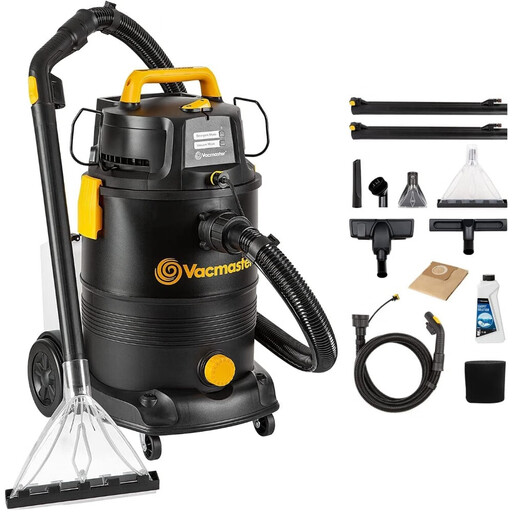
Why This Fits Their Persona: Perfect for homeowners and families who need a robust, all-in-one solution for carpets, upholstery, and even wet and dry vacuuming in the garage or workshop.
This model solves the "impractical tanks" problem with a generous system: a 30-litre collection tank and a separate 6-litre detergent tank. This minimises interruptions during large cleaning jobs.
True 3-in-1 functionality (washing, wet vacuuming, dry vacuuming). The extensive accessory kit and large wheels make it a versatile and mobile helper for the entire home.

Why This Fits Their Persona: For pet owners who need to react quickly to accidents, or for anyone who values maximum, cord-free flexibility when cleaning stairs, cars, or caravans.
This model addresses "hidden maintenance" with a hose self-cleaning function. This flushes out residue after use, preventing odour build-up—a common problem when cleaning up pet-related messes.
Cordless freedom with up to 55 minutes of runtime. The strong suction power of 15 kPa ensures effective dirt and water extraction, even on battery power.
We have compiled a complete, up-to-date list of products that fully meet these strict selection criteria and all relevant safety regulations.
1. How long does it take for a carpet to dry after cleaning with a carpet cleaner? The drying time depends heavily on the device's suction power, the thickness of the carpet, and the room's ventilation. With a device that has good suction (over 15 kPa), the surface is often only slightly damp. As a rule, a carpet should be completely dry within 4 to 8 hours with good room ventilation.
2. Can I use regular detergent in a carpet cleaner? This is strongly discouraged. Standard household cleaners tend to create excessive foam. This foam can get into the device's motor and damage it. Only use special, low-foaming cleaning solutions designed for spray extraction cleaners.
3. How often should I clean my upholstery or carpets with a carpet cleaner? For general maintenance and hygiene, a deep clean is recommended once or twice a year. In households with children, pets, or allergy sufferers, more frequent cleaning every 3 to 6 months may be beneficial, especially in high-traffic areas like entryways or around the sofa.