
Lieferung heute & morgen

Qualitätsgarantie

Willkommens-Angebote freischalten: KOSTENLOSE Lieferung | Bis zu 80 % RABATT | Kostenlose 30-Tage-JoyPlus-Testphase
App herunterladen
Choosing the right carry-on suitcase is often a challenge. Varying airline regulations, a wide array of materials, and functional details can make the decision difficult. The goal of this article is to provide you with objective guidance. We will present clear criteria for selection and showcase models suited for different travel needs, helping you make an informed decision for your next piece of onboard luggage.
Before you decide on a model, several fundamental features should be considered. These criteria will help you find a functional and durable companion.
The most common size for a cabin trolley is 55x40x20 cm. This dimension is accepted as the standard for carry-on luggage by many major airlines like Lufthansa, Eurowings, and Ryanair. Nevertheless, it is essential to check your airline's specific regulations before every flight, as they can vary. Another crucial factor is weight. A lightweight suitcase allows you to use more of your luggage allowance for personal items without exceeding the weight limit. Models under 2.5 kg are particularly advantageous.
Hard-shell suitcases made from materials like polypropylene (PP), ABS, or polycarbonate (PC) offer robust protection for their contents. They are resistant to impacts and protect delicate items more effectively than soft-shell luggage. Polypropylene is known for its high impact resistance combined with low weight, while ABS is an affordable yet sturdy alternative. A textured surface can also reduce the visibility of scratches and maintain the suitcase's appearance for longer.
A 4-wheeled trolley, also known as a spinner, offers 360-degree manoeuvrability. This makes navigating narrow aisles and busy airport terminals significantly easier, as the suitcase can be pushed upright alongside you. For international travel, especially to the USA, a TSA lock is of great importance. This special lock allows security authorities (Transportation Security Administration) to open the suitcase with a master key if necessary, without damaging the lock or the case itself.
Based on the criteria mentioned above, we have compiled a selection of carry-on suitcases that stand out for their material properties, functionality, and compliance with common carry-on dimensions.

Why It Stands Out: This model combines a robust 100% polypropylene construction with a very low weight. The use of a YKK zip, often found in higher-priced luggage, indicates durable craftsmanship.
Pros:
Who It's For: Travellers looking for an especially lightweight yet resilient hard-shell suitcase with high-quality components like a TSA lock and a premium zip.
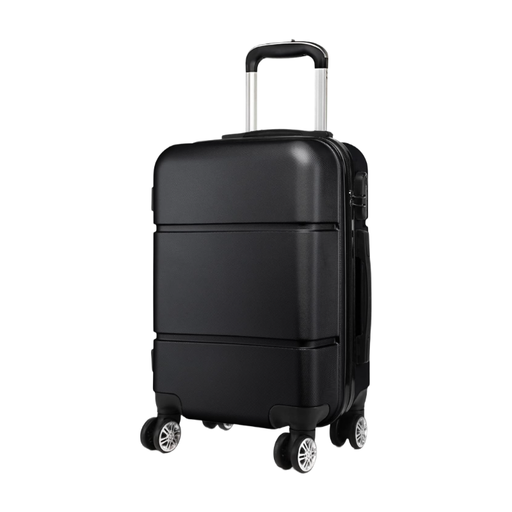
Why It Stands Out: Weighing only 2.35 kg, this model is one of the lightest in its class. The ABS hard shell provides solid protection, making the suitcase an excellent value choice for occasional and short-trip travellers.
Pros:
Who It's For: Value-conscious travellers who need an extremely lightweight and functional cabin trolley for weekend trips or as a supplement to their main luggage.
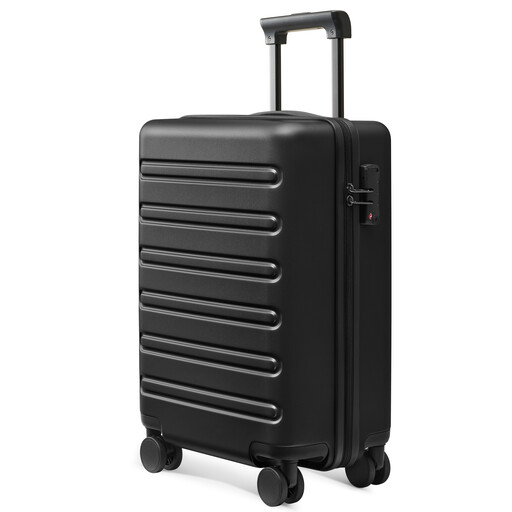
Why It Stands Out: This model uses a composite material of PC and ABS, which promises both elasticity and durability. According to the manufacturer, the suitcase has passed several stress tests, indicating a sturdy build.
Pros:
Who It's For: Travellers who value a demonstrably durable build (according to the manufacturer), well-designed interior organisation, and quiet-rolling performance.
If the models presented here don't quite meet your individual needs, you can find a wider range of products in our category. Discover more models and find the perfect companion for your next journey.
? Discover More Lightweight Hard-Shell Suitcases Here
1. What exactly does the carry-on size 55x40x20 cm mean? These dimensions (height x width x depth) represent a common guideline used by many airlines for luggage permitted in the cabin. However, it is not a universal standard. Low-cost carriers often have stricter or different regulations. Therefore, always check your airline's current rules before your trip.
2. Is a hard-shell suitcase always the better choice? A hard-shell suitcase offers superior protection for fragile items and is often more water-resistant. Soft-shell luggage, on the other hand, is more flexible and sometimes features external pockets for quick access. The choice depends on your personal priorities: maximum protection (hard shell) or flexibility and external pockets (soft shell).
3. What is a TSA lock needed for? A TSA lock is a special lock that can be opened by the U.S. Transportation Security Administration (TSA) with a master key. This is relevant if you are travelling to or through the USA. In the event of a necessary luggage inspection, your suitcase can be opened without the lock having to be broken. Other countries also use similar systems.