
Lieferung heute & morgen

Qualitätsgarantie

Willkommens-Angebote freischalten: KOSTENLOSE Lieferung | Bis zu 80 % RABATT | Kostenlose 30-Tage-JoyPlus-Testphase
App herunterladen
Choosing the right carry-on luggage can be a challenge. Different airlines have varying regulations for size and weight, which complicates the search for a compliant yet practical piece of luggage. This article serves as a guide. It explains the most important selection criteria and presents a range of models suitable for various travel requirements.
To make an informed decision, several key features should be considered. These factors determine how well a piece of luggage will suit your individual travel needs.
The permitted dimensions for cabin baggage are the most critical factor. A common, though not universal, standard size is 55x40x20 cm. However, many airlines, especially budget carriers, have stricter or different requirements. It is therefore essential to check the current regulations directly with your airline before every flight. A lightweight carry-on is also advantageous, as it gives you more allowance for your belongings before reaching the weight limit.
The choice of material affects both the durability and flexibility of the luggage.
Modern luggage offers a range of features that make travelling easier. A carry-on trolley with four 360-degree wheels allows for effortless navigation through airport terminals. An integrated TSA lock is beneficial for travel to the USA and other countries, as it allows security personnel to open the luggage without causing damage. A well-designed interior with packing straps and separate compartments helps keep everything organised.
Here is a curated selection of carry-on luggage that meets various requirements for functionality and design.

Why it stands out: This model combines the flexibility of a backpack with the structured organisation of a suitcase. Its capacity is expandable via a side zipper, allowing it to adapt to different luggage regulations. The water-repellent polyester construction makes it a lightweight and durable companion.
Advantages:
Who is it for? For travellers seeking a flexible and organised solution for short trips or as a supplement to their main luggage. Especially practical for digital nomads and business travellers who switch between different modes of transport.

Why it stands out: This carry-on suitcase is made of 100% polypropylene, a material known for its high impact and scratch resistance, as well as its low weight. With dimensions of 55x40x20 cm, it meets the carry-on requirements of many airlines.
Advantages:
Who is it for? For frequent flyers who prefer a durable, reliable, and easy-to-handle carry-on trolley for business and leisure trips.
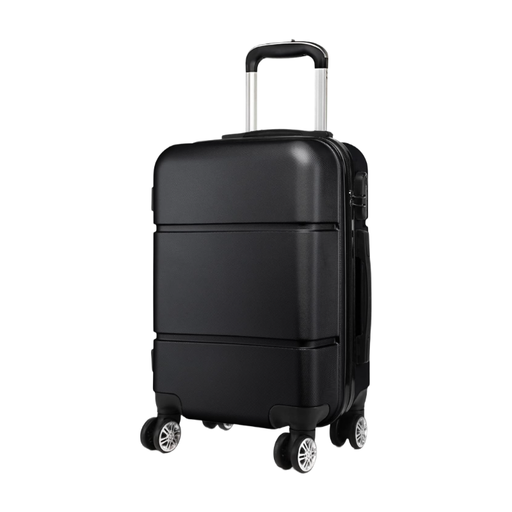
Why it stands out: This model, made from durable ABS plastic, offers a solid set of essential features for travellers. Weighing just 2.35 kg with a 33-litre capacity, it is a very lightweight option for weekend getaways and short trips. Its dimensions of 55x38x22 cm are compatible with the regulations of many major European airlines.
Advantages:
Who is it for? For budget-conscious travellers and occasional flyers who need a functional and extremely lightweight hard-shell suitcase for short holidays or as a secondary piece of luggage.
If you haven't found the right model in our selection or are looking for more specialised solutions tailored to specific airlines or types of travel, it's worth exploring other alternatives. You can find a wider range of products in our Lightweight Carry-On Luggage category.
The permitted size varies significantly by airline. A common reference size is 55 x 40 x 20 cm. However, many airlines, especially in the low-cost sector, enforce smaller dimensions (e.g., 45 x 36 x 20 cm). It is crucial to check the exact regulations on your airline's website before you travel.
Yes, a carry-on backpack is generally permitted as a piece of carry-on luggage, as long as it complies with the airline's size and weight limits. Many travellers prefer a travel backpack for its flexibility and the convenience of carrying it on their back.
The terms carry-on luggage and cabin baggage are largely used interchangeably. Both refer to the piece of luggage a passenger is allowed to take into the aircraft cabin. In some contexts, "carry-on" might also refer to a smaller personal item (like a handbag or laptop bag) that is permitted in addition to the larger piece of cabin baggage.