
Lieferung heute & morgen

Qualitätsgarantie

Willkommens-Angebote freischalten: KOSTENLOSE Lieferung | Bis zu 80 % RABATT | Kostenlose 30-Tage-JoyPlus-Testphase
App herunterladen
A cat tree, often called a cat condo or climbing tree, is more than just a piece of pet furniture. It satisfies a cat's fundamental instincts to climb, scratch, observe, and rest. However, choosing the right model can be a challenge given the vast array of sizes, materials, and features. This guide is designed to help you make an informed decision that meets your cat's needs while fitting into your living space.
As your Joybuy Product Recommendation Officer, I've made it my mission to sift through market information and provide you with practical, objective guidance. The goal is to help you select a suitable cat tree that enhances your cat's quality of life and blends harmoniously into your home.
Before you decide on a model, there are several key criteria to consider. These will help you narrow down the options to products that are right for your specific situation.
A sturdy cat tree is the most important criterion, especially if you have large cats or multiple pets. Look for a wide, heavy base plate that prevents it from tipping over when your cat leaps onto it. For an especially tall cat tree, an additional wall anchor, often included as an anti-tip kit, is a sensible safety measure. The posts should have a sufficient diameter and be firmly connected to the platforms to withstand even vigorous use.
The size of the cat tree should suit both your living situation and your cat. A small cat tree is well-suited for apartments with limited space or as a first model for kittens. A large cat tree, on the other hand, offers more climbing and play opportunities for active or multiple cats.
Multi-functional cat trees are becoming increasingly popular. These models integrate additional elements like sleeping dens, hammocks, toys, or even feeding stations. A cat tree with a litter box enclosure in the lower section is a particularly space-saving solution that discreetly hides the litter box and keeps everything in one place.
The most common materials used for scratching posts are sisal and jute. Sisal is a very durable natural fibre that provides ideal resistance for a cat's claws, encouraging healthy scratching. The lounging surfaces are usually covered with soft plush for comfort and warmth. Ensure the materials are well-finished, with no loose threads or sharp edges.
Based on the criteria mentioned, we have compiled a selection of models that cover different needs—from a floor-to-ceiling climbing paradise to a compact all-in-one solution.

Why It Stands Out: At a height of 206 cm, this model is a true climbing tree for cats. Its multi-level design with numerous platforms, condos, and perches encourages climbing and exploration.
Pros:
Who Is It For? This model is ideal for households with multiple cats, very active and climbing-enthusiast pets, or for owners looking for an especially tall cat tree to make the most of their vertical space.
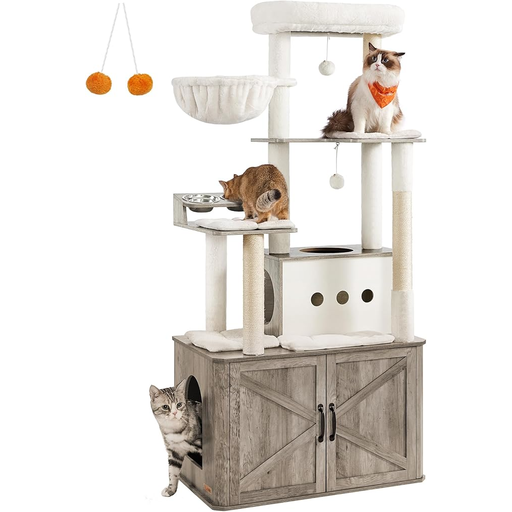
Why It Stands Out: This multi-functional cat tree combines areas for play, rest, eating, and a litter box into a single piece of furniture. It's a thoughtfully designed solution for modern living.
Pros:
Who Is It For? Perfect for cat owners in smaller apartments who are looking for a space-saving and aesthetically pleasing solution. Anyone seeking a cat tree with a litter box enclosure and feeding station in one will find this to be an excellent model.
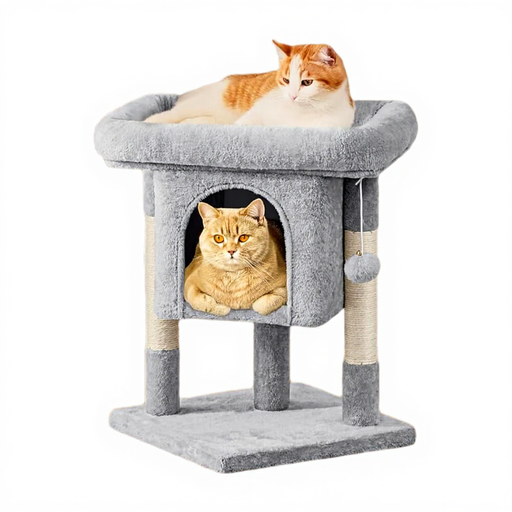
Why It Stands Out: This small cat tree focuses on the essentials, offering everything a young or small cat needs within a compact footprint.
Pros:
Who Is It For? An excellent choice for kittens, small cat breeds, or as a secondary cat tree. It is also suitable for first-time owners looking for a straightforward and affordable solution.
The models presented here already cover a broad spectrum. However, if you haven't found the right model for your individual needs, there are many more variations to discover. From different designs to specific material combinations, the selection is vast.
Explore our full range of Plush Cat Trees and find the perfect model for your home.
Where is the best place to put a cat tree? The ideal location is a place where the family often gathers, such as the living room. Cats are social animals and enjoy observing their surroundings. A spot near a window is also very popular, as it offers a view of the outdoors. Avoid hiding the cat tree in a remote corner.
How do I get my cat used to the new cat tree? Make the new cat tree appealing. You can spray it with catnip, place treats on the different levels, or play with a toy near it. Praise your cat when it uses the tree. If it continues to scratch in unwanted places, gently pick it up and place it on one of the sisal posts.
How tall should a cat tree be for large cats? For large cat breeds like Maine Coons or Norwegian Forest Cats, stability and the size of the perches are more crucial than the absolute height. A sturdy cat tree with a wide base and platforms where the cat can comfortably stretch out is more important than a very tall but wobbly tower. Models from 150 cm in height are often a good choice, provided they have a solid construction and, ideally, a wall mount.