
Lieferung heute & morgen

Qualitätsgarantie

Willkommens-Angebote freischalten: KOSTENLOSE Lieferung | Bis zu 80 % RABATT | Kostenlose 30-Tage-JoyPlus-Testphase
App herunterladen
Many cat owners know the problem: their cat doesn't drink enough from its stagnant water bowl. A cat water fountain can be a smart solution, as the flowing water stimulates their natural drinking instinct. But the market is crowded, and not every model lives up to its promise. As a Joybuy Product Recommendation Officer, I analyze product data and customer feedback daily. In this guide, I'll show you what to look for to make an informed decision and sidestep common pitfalls.
Before you invest, you should be aware of the three most common frustrations that often appear only after a few weeks of using standard, off-the-shelf models.
To avoid the problems mentioned above, you should check three core technical parameters before buying. These define the longevity, safety, and practicality of any water dispenser.
The fountain's material is fundamental to your pet's health and for easy maintenance. Look for BPA-free plastic, ceramic, or stainless steel. These materials are food-grade and do not leach harmful substances into the water. A critical safety feature is the separation of water and electrical components. Modern, high-quality models, such as a cordless water fountain, use induction technology to power the pump. This means there are no power cables in the water container, making cleaning safer and easier.
A good water fountain with a filter significantly improves water quality. Simple foam filters only catch coarse particles like hair. More effective are multi-stage filtration systems, which often use a combination of:
Before purchasing, check the availability and cost of replacement filters. A transparent maintenance schedule is a sign of a well-designed product.
The size of the water tank should suit your household. For a single cat, 2 litres is often sufficient. For multi-cat households or if you're looking for a water dispenser for cats and dogs, a large water bowl with a 3 to 4-litre capacity is more practical.
Other useful features include:
Based on the criteria above, we have identified several products from our range that address the specific needs of pet owners.
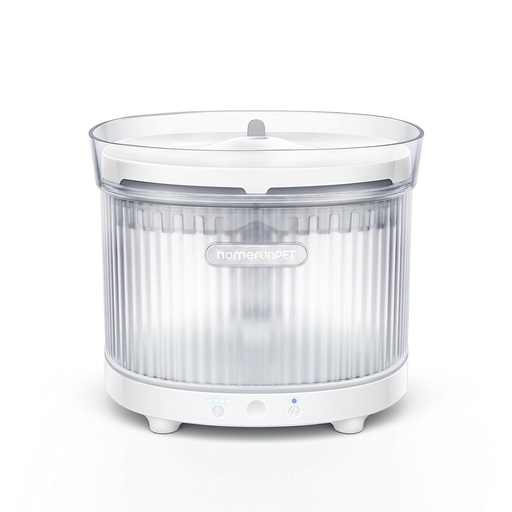
Why This Fits Their Persona: Ideal for users who value cutting-edge technology, safety, and convenience. The cordless design allows for flexible placement anywhere in the home, without being tied to a power outlet. The motion sensor ensures energy-efficient and quiet operation.
The physical separation of water and electricity via induction charging eliminates safety risks and makes cleaning significantly easier. Sensor-based operation prevents constant pump noise.
Fully Cordless: The pump and base are wireless, offering maximum flexibility and safety. Triple Filtration: Ensures clean water with a multi-stage filtration system.
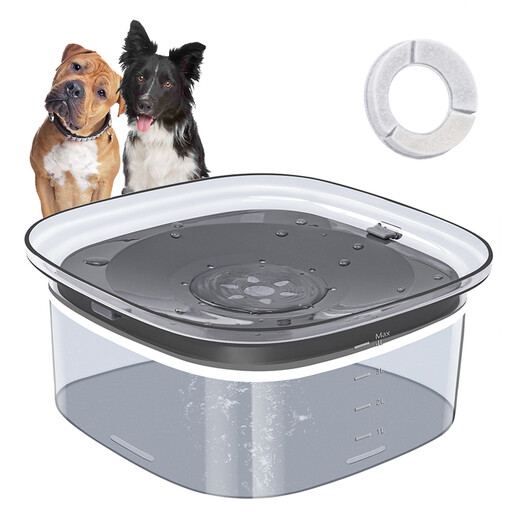
Why This Fits Their Persona: A pragmatic solution for anyone whose dog or cat splashes or drinks too hastily. This bowl isn't an electric fountain, but as an anti-gulp water bowl and splash guard, it effectively solves two common problems without electricity.
Since there's no pump, issues with noise and electricity are eliminated. The simple construction with few parts makes cleaning straightforward and hygienic.
Large Capacity (4L): Ideal for large dogs or multiple pets. Floating Disk: Effectively reduces splashing and slows down drinking speed.
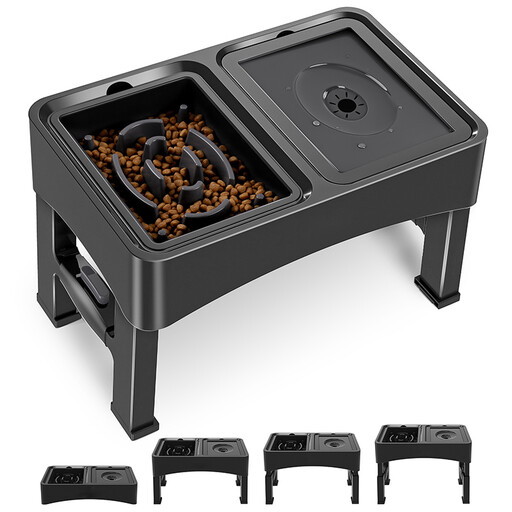
Why This Fits Their Persona: Perfect for owners of puppies, kittens, or pets of different sizes. The four-level height adjustment grows with the pet, and the combination of a food and water bowl creates an organized feeding station.
This set solves the problem of a lack of adaptability. Instead of buying multiple bowls for different growth stages, this model adjusts. The floating water bowl also prevents the typical splashing problem.
4-Level Height Adjustment: Adapts to the size of dogs and cats. Combination Set: Includes a slow-feeder bowl and a floating water bowl.
We've compiled a complete, up-to-date list of products that meet these strict selection criteria and safety requirements.
1. How often should you change the water in a cat fountain? It is recommended to completely change the water every 2 to 3 days to keep it fresh. The fountain itself should be thoroughly cleaned at least once a week, including the pump and all individual parts, to prevent bacterial growth.
2. Are cat water fountains noisy? The noise level depends heavily on the quality of the pump and the water level. High-quality pumps are barely audible during operation. A gentle trickling sound is normal. If the fountain hums loudly, the water level is often too low or the pump needs to be cleaned. Models with a motion sensor only run when needed and are therefore silent most of the time.
3. What is the best material for a water fountain: plastic, ceramic, or stainless steel? All three materials have their pros and cons. BPA-free plastic is lightweight, shatterproof, and often more affordable. Ceramic is heavy, very stable, and hygienic, but can break if dropped. Stainless steel is extremely durable, dishwasher-safe, and very hygienic because its surface is non-porous. The choice depends on your personal preferences regarding weight, maintenance, and budget.