
Lieferung heute & morgen

Qualitätsgarantie

Willkommens-Angebote freischalten: KOSTENLOSE Lieferung | Bis zu 80 % RABATT | Kostenlose 30-Tage-JoyPlus-Testphase
App herunterladen
For many health-conscious cooks, the search for a new frying pan leads to the ceramic pan. It's considered the modern alternative to the classic Teflon-free pan. However, the market is overwhelming, and many manufacturer promises turn into disappointments after just a few months. Before you make a decision, it's crucial to understand the common pitfalls that often lead to a bad purchase.
As your Joybuy Product Recommendation Officer, I'm here to filter the facts from the marketing noise. Here are the three most common problems buyers encounter and how you can avoid them:
A good coated pan is an investment in your kitchen and your health. The following criteria will help you find a model that reliably serves its purpose.
To make an informed decision, you should focus on the technical features that define a durable and high-performance pan.
The PFAS-free label is an important indicator of a healthy pan, as it confirms the absence of potentially harmful per- and polyfluoroalkyl substances. But the quality of the ceramic coating itself and the material of the pan's body are just as critical for performance.
A pan's versatility determines how often it gets used in your daily routine.
The most common sizes are 20/24 cm (8/9.5 inches) for egg dishes and small portions, and 28 cm (11 inches) for family meals. A comprehensive ceramic pan set with different sizes can be a practical starter kit. A high rim also transforms a frying pan into a sauté pan, ideal for dishes with sauce.
Here are a few models that represent a considered choice for specific user profiles, based on their objective features.

Why This Fits Their Persona: With its 28 cm (11-inch) diameter, this pan is ideal for preparing family-sized meals. It's suitable for all stovetops, including induction, and the heat-resistant Bakelite handle ensures safe handling during daily use.
The thickened base is designed for fast and even heat distribution, which counteracts the "hot spot" trap. The clear PFAS-free declaration and easy hand-washing help maximize the coating's lifespan.
Universal stovetop compatibility (incl. induction) and an easy-to-clean surface described as scratch-resistant make it a straightforward all-rounder.
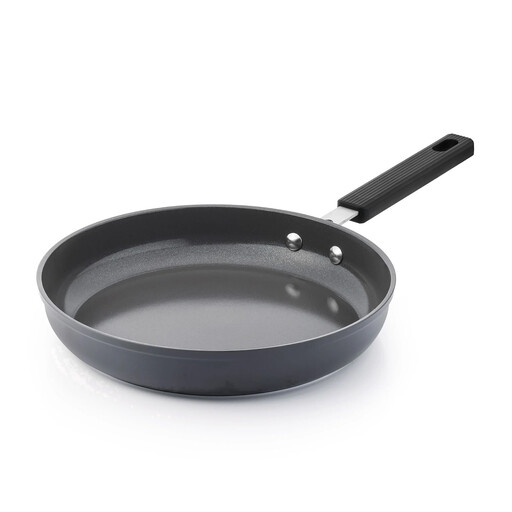
Why This Fits Their Persona: This model places a clear focus on health and safety. The convenient 24 cm (9.5-inch) size is perfect for one to two-person households or for preparing egg dishes and side dishes.
The manufacturer's specifications explicitly state that the coating is free of PFAS, lead, and cadmium. This directly addresses the main concern of health-conscious buyers and builds a clear foundation of trust without exaggerated marketing claims.
Specified as free of harmful substances and induction-compatible in a compact, easy-to-handle size. The stay-cool handle provides additional safety.
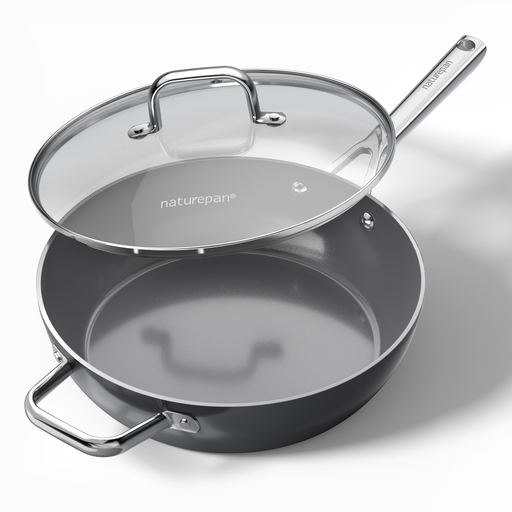
Why This Fits Their Persona: This model offers maximum versatility. The high rim, included lid, and high oven-safe temperature of up to 260°C (500°F) enable advanced cooking techniques from searing and braising to baking in the oven.
According to the manufacturer, the ceramic coating, reinforced with diamond and titanium particles, is designed for enhanced durability, thus countering the problem of rapid wear and tear. The high, specified oven-safe temperature is a clear performance feature, not a vague promise.
Very high heat resistance (oven-safe up to 260°C / 500°F), reinforced coating, and a multifunctional design with a high rim and lid.
We have compiled a complete, up-to-date list of products that fully meet these strict selection criteria and safety regulations.
The lifespan of a ceramic coating depends heavily on its quality, use, and care. With proper handling—meaning no metal utensils, avoiding overheating, and gentle hand washing—a high-quality ceramic pan can retain its non-stick properties for several years. Cheaper models often show significant wear after just one year.
No, this is not recommended. Even if some manufacturers advertise high scratch resistance, the ceramic layer is susceptible to scratches from metal. Such damage is irreparable and destroys the non-stick effect. Only use cooking utensils made of wood, silicone, or heat-resistant plastic.
You can identify a good ceramic pan for induction by three features: