
Lieferung heute & morgen

Qualitätsgarantie

Willkommens-Angebote freischalten: KOSTENLOSE Lieferung | Bis zu 80 % RABATT | Kostenlose 30-Tage-JoyPlus-Testphase
App herunterladen
A high-quality chef's knife is the cornerstone tool in any kitchen. But the market can be overwhelming: marketing jargon, vague material specifications, and exaggerated claims make the selection process difficult. Many ambitious home cooks invest in a supposed professional chef's knife, only to find that the edge dulls quickly or the handle is uncomfortable.
As your Joybuy Product Recommendation Officer, I'm here to help you avoid these pitfalls. This guide focuses on the objective criteria that truly matter, so you can make an informed decision and buy a durable, sharp knife that meets your needs.
Before we dive into the important features, let's uncover the most common marketing traps that often lead to bad purchases.
To find the right chef's knife, you should focus on three core aspects. These determine performance, durability, and handling.
The foundation of every good knife is its steel. There are two basic manufacturing methods:
Pay attention to the steel type. The stainless steel X50CrMoV15 is a proven standard for high-quality German knives, offering a good balance of sharpness, corrosion resistance, and ease of resharpening.
The shape of the blade should match your preferred cutting technique.
An ergonomic handle is crucial for safe and fatigue-free work. The transition from the blade to the handle should be seamless to prevent the build-up of bacteria. A full tang, where the steel runs through the entire handle, provides stability and a balanced weight distribution. Handles made of high-quality synthetic materials are easy to clean and durable, while wooden handles offer a pleasant feel but require more maintenance.
Based on these objective criteria, we have put together a selection of knives suitable for different needs and cooking styles.
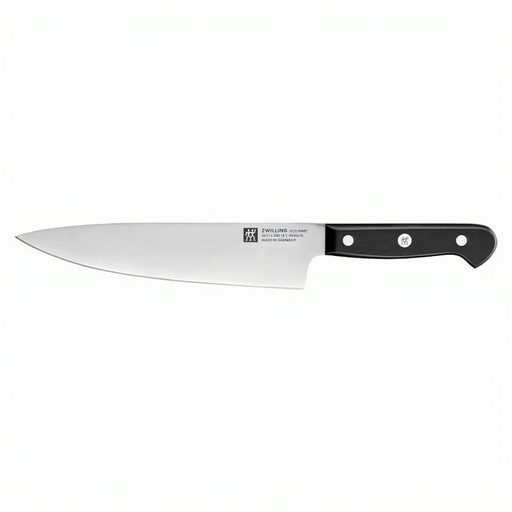
Why this knife is a great fit: Ideal for home users looking for a versatile and durable tool for daily prep. The classic 20 cm blade masters meat, fish, and vegetables with ease. As a Solingen chef's knife, it represents proven German quality.
Instead of vague terms like "German steel," Zwilling specifies the use of special formula stainless steel and the FRIODUR ice-hardening process. These are verifiable quality features.
Balanced and ergonomic three-rivet handle for fatigue-free work. The blade offers good edge retention while being easy to resharpen.
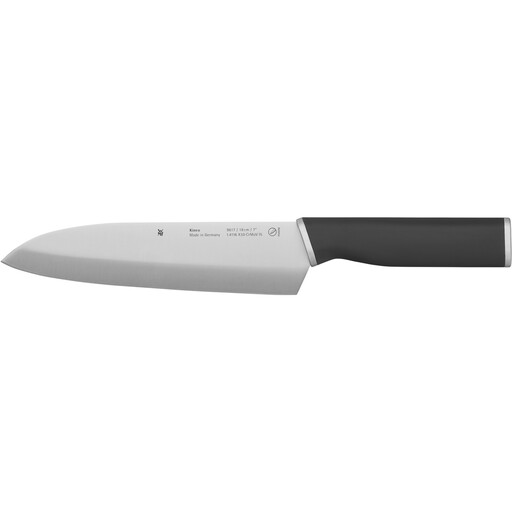
Why this knife is a great fit: The Santoku shape is perfect for precise, fine cuts on vegetables and fish. This WMF chef's knife combines Japanese design with German engineering, making it ideal for wok dishes or sushi preparation.
WMF doesn't just promote the look, but the verifiable Performance Cut technology. According to WMF, this provides twice the sharpness compared to the industry standard and long-lasting edge retention.
Made in Germany from specially hardened blade steel. The kinetic handle design ensures comfortable and secure handling for precise cutting tasks.
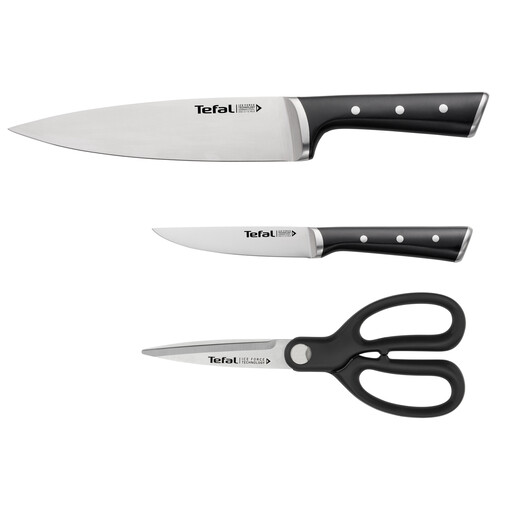
Why this set is a great fit: This set provides a solid starter kit for beginners. It includes a chef's knife, a utility knife, and kitchen shears, covering the most important kitchen tasks without breaking the bank.
Instead of advertising with pure aesthetics, Tefal highlights its Ice Force technology, where the German stainless steel blades are cooled to -120°C. This is a concrete process for improving sharpness.
Excellent value for a complete starter set. The manufacturer's 10-year warranty on the blade steel signals confidence in the material's durability.
We have compiled a complete, up-to-date list of products that meet these strict selection criteria and German quality standards.
The frequency depends heavily on usage. For daily use in a home kitchen, it is recommended to maintain the edge weekly with a honing steel. This realigns the fine burr of the blade and preserves its sharpness. A complete resharpening on a whetstone is often only necessary once or twice a year with proper care.
The choice depends on your preferred cutting technique. A chef's knife with its curved blade is ideal for the rocking chop, where the knife is rolled across the board. It is an excellent all-rounder. A Santoku knife with its straighter edge is better suited for chopping and pulling cuts and particularly shines when precisely processing vegetables.