
Lieferung heute & morgen

Qualitätsgarantie

Willkommens-Angebote freischalten: KOSTENLOSE Lieferung | Bis zu 80 % RABATT | Kostenlose 30-Tage-JoyPlus-Testphase
App herunterladen
The search for the right children's toy can quickly become overwhelming. Countless products promise maximum fun, but they often end up unused in a corner after a short time. As a Joybuy Product Recommendation Officer, I'm here to help you navigate the marketing jungle and make an informed decision. In this guide, we'll highlight common pitfalls and show you which criteria truly matter.
Many well-intentioned purchases turn out to be poor investments. Watch out for these three typical problems to avoid disappointment:
To avoid a bad purchase, you should check three core aspects before making a decision. These will help you objectively evaluate a product's quality and long-term play value.
Safety is the top priority. A fundamental indicator is the CE marking, with which the manufacturer declares that the product complies with applicable EU regulations, particularly the Toy Safety Directive (EN 71).
Good toys stimulate the imagination and promote skills without being prescriptive.
Consider where and how the toy will be used. Are you looking for a compact travel toy for on the go, a sturdy outdoor toy for the garden, or a versatile plaything for the child's room? Products that "grow" with the child, such as an adjustable go-kart or expandable construction sets, offer particularly high long-term value.
Based on the criteria above, we have curated a selection of products for various needs and age groups.
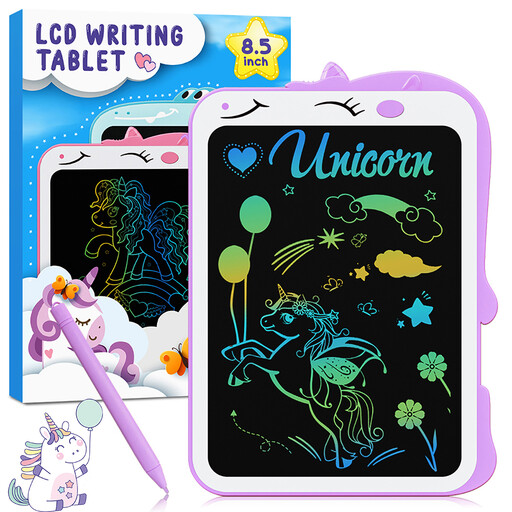
Why this product is a great fit: Ideal for parents looking for a mess-free and reusable activity for car rides, restaurant visits, or waiting times. It is extremely lightweight and fits into any backpack.
This product avoids the "short-lived fad" trap. As a blank canvas for endless drawings and notes, it offers an open-ended play concept instead of a single, repetitive function. It is an ideal travel toy.
Promotes creativity without the mess of pens or paper. The screen can be instantly cleared at the touch of a button. The ABS plastic casing is robust and moisture-resistant.
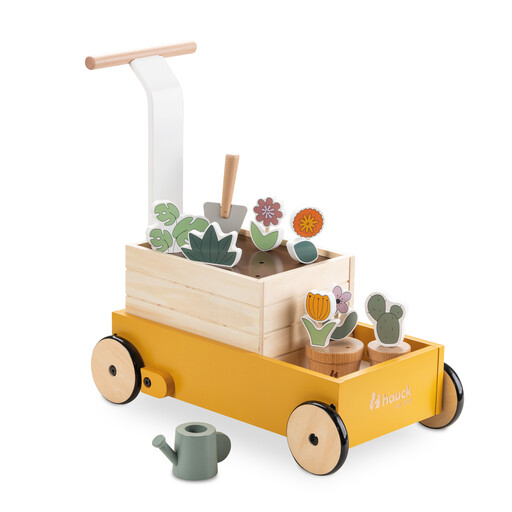
Why this product is a great fit: For quality-conscious parents seeking a sustainable and multifunctional motor skills toy to support their child's first steps.
This product addresses the pitfall of poor durability. It is made from FSC-certified wood and offers long-lasting play value through its integrated play elements and its use as a doll's pram.
The speed of the wheels can be individually adjusted via a braking system, which enhances safety. The product combines walking support with role-playing elements.
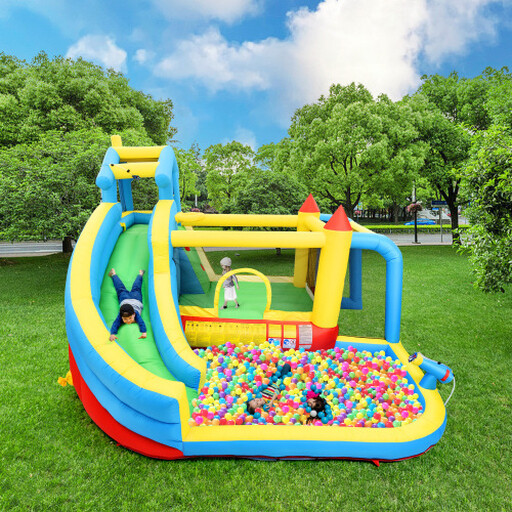
Why this product is a great fit: For families with a garden who are looking for a versatile outdoor toy that entertains multiple children at once and encourages active movement.
By combining five play zones (bouncing area, slide, water pool, climbing wall, football net), the bouncy castle offers varied and long-lasting fun, thus avoiding the trap of one-dimensional use.
The product can be used both dry and wet (with a garden hose connection). It is designed for up to 3 children (max. 135 kg total load) and is made of tear-resistant PVC Oxford fabric.
We have compiled a complete, up-to-date list of products that fully meet these strict selection criteria and German safety regulations.
Look for the CE marking as a basic requirement. For added assurance, the voluntary GS mark ("Geprüfte Sicherheit" or "Tested Safety") is a good indicator. Check the toy for sturdy construction, rounded edges, and the absence of small parts that could pose a choking hazard for children under three. For battery-operated toys, the battery compartment must be securely screwed shut.
The manufacturer's specifications are a good guideline but should be cross-referenced with your child's individual developmental stage.
Wooden toys are durable but require proper care. Clean them with a slightly damp cloth and mild soapy water. Avoid harsh cleaning agents or full immersion in water, as the wood can swell and crack. Allow it to air dry completely after cleaning.