
Lieferung heute & morgen

Qualitätsgarantie

Willkommens-Angebote freischalten: KOSTENLOSE Lieferung | Bis zu 80 % RABATT | Kostenlose 30-Tage-JoyPlus-Testphase
App herunterladen
The path to excellent coffee doesn't start with the coffee machine—it starts with the grind. A high-quality electric coffee grinder is the foundation for unlocking the full flavour potential of your beans. However, the market is overwhelming, and many devices promise more than they can deliver. Before you make a decision, it's crucial to understand the common pitfalls that lead to unsatisfying results and unnecessary expenses.
As your Joybuy Product Recommendation Officer, I'm here to help you separate the wheat from the chaff. This guide focuses on the objective criteria that distinguish a great coffee grinder from an inadequate one.
Many coffee lovers invest in expensive beans but are puzzled by a flat or bitter taste. The cause often lies in an unsuitable grinder. Watch out for these three widespread problems:
To avoid these problems, you should carefully examine three technical features. These define the performance and longevity of a coffee grinder.
The burr set determines the quality of the grind. The two most common types for home use are:
For both types, the material is critical. Burr sets made of hardened steel or ceramic offer greater durability and precision than simple metal alloys.
The adjustability of the grind size isn't a marketing gimmick; it's a functional necessity.
A solid metal construction, as opposed to plastic, not only ensures a longer lifespan but also provides more stability during the grinding process, which improves the consistency of the grounds. Modern grinders also integrate anti-static technologies, such as an ioniser at the chute, to minimise the scatter of coffee grounds.
Based on these objective criteria, we have identified several models that represent a suitable solution for different user profiles.
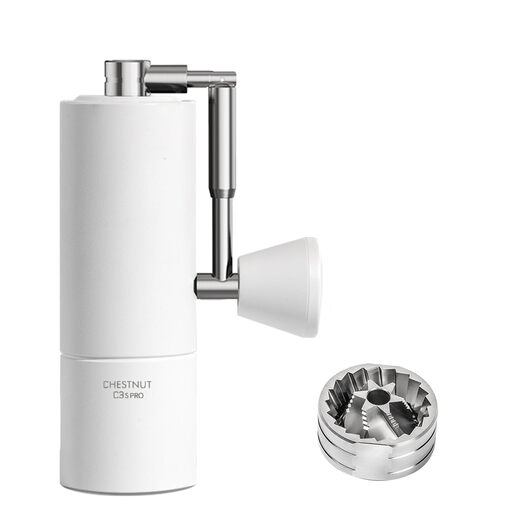
Why This Fits Their Persona: Ideal for beginners who value grind quality from the start but aren't ready to invest in a large electric grinder. This manual coffee grinder offers control and a tactile experience.
Instead of an imprecise blade system, it uses a precise S2C stainless steel conical burr set. The stepped, yet fine, adjustment delivers consistent results for filter coffee and is even viable for espresso.
High-quality build with an aluminium body and stainless steel burrs. The foldable handle makes it compact and travel-friendly.

Why This Fits Their Persona: Designed for portafilter machine users who need maximum control over their grind size to perfect their espresso extraction.
Solves two core problems: The stepless fine adjustment with 0.01mm precision enables perfect espresso shots. A built-in plasma generator effectively eliminates static, preventing coffee ground scatter.
Large 55mm conical burr set made of a titanium alloy for consistent grounds. The solid, CNC-milled aluminium body ensures stability and longevity.
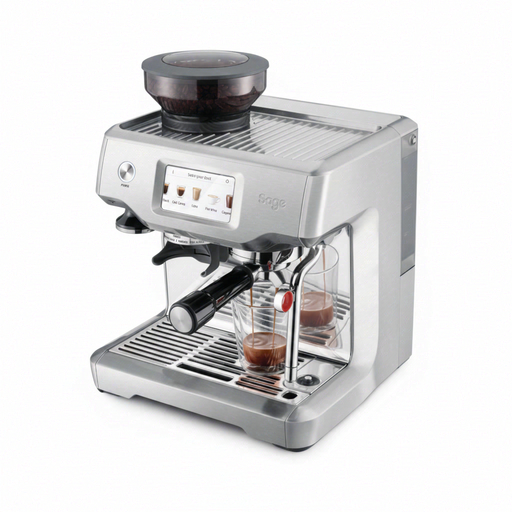
Why This Fits Their Persona: For users who appreciate the convenience of an all-in-one solution and want to prepare high-quality coffee drinks at the touch of a button, without dealing with separate devices and their calibration.
This integrated system bypasses compatibility issues. The built-in conical burr grinder is calibrated to the machine and delivers consistent grinds directly into the portafilter via touchscreen control.
Seamless bean-to-cup workflow. The ThermoJet heating system is ready to go in 3 seconds, according to the manufacturer, and the automatic milk frothing simplifies cappuccino preparation.
We have compiled a complete, up-to-date list of products that fully meet these strict selection criteria.
For consistent flavour quality, it is recommended to clean the bean hopper and grounds container weekly. The burr set itself should be cleaned of coffee oils and fine particles every 2-4 weeks. Use a dedicated cleaning brush or special cleaning pellets for this. Water should never come into direct contact with the burr set to prevent rust and damage to the electronics.
Both burr types can produce excellent grounds for espresso, provided they are of high quality and allow for precise adjustment. Conical burrs are more common in the home-use market as they tend to be quieter, more compact, and generate less heat. More crucial than the type is the quality of the construction, the stability of the design, and the capacity for fine adjustment.
Preparing espresso is a precise process where the smallest changes in grind size can significantly affect the extraction time and, consequently, the taste. A stepless coffee grinder allows for micro-adjustments to control the flow-through time of water through the coffee grounds with extreme precision—often to within a second. Stepped grinders do not offer this level of finesse, making it difficult or impossible to achieve a consistently great result.