
Lieferung heute & morgen

Qualitätsgarantie

Willkommens-Angebote freischalten: KOSTENLOSE Lieferung | Bis zu 80 % RABATT | Kostenlose 30-Tage-JoyPlus-Testphase
App herunterladen
A fully automatic coffee machine or a high-end espresso machine is an investment in daily enjoyment. However, the hard water found in many regions inevitably leads to limescale deposits, which not only impair the taste of your coffee but can also shorten the appliance's lifespan. Choosing the right descaler is therefore crucial. Yet, the market is overwhelming and filled with marketing promises that often create more confusion than clarity. Before you make a decision, you should be aware of the most common pitfalls.
The 2 Most Common Pitfalls When Buying Descalers:
To find the right descaler for your coffee machine, you should be guided not by advertising slogans, but by objective criteria. Two factors are of central importance.
The effectiveness and material compatibility of a descaler depend on the acid used. The most common types are:
Both formats have their merits and cater to different user preferences:
For maintenance, especially during the warranty period, following the manufacturer's recommendations (e.g., using De'Longhi descaler for De'Longhi machines or Jura descaler for Jura machines) is a safe approach to ensure compatibility and secure the longevity of your fully automatic coffee machine.
Instead of making a blanket recommendation, we have identified products that suit specific needs and machine types.
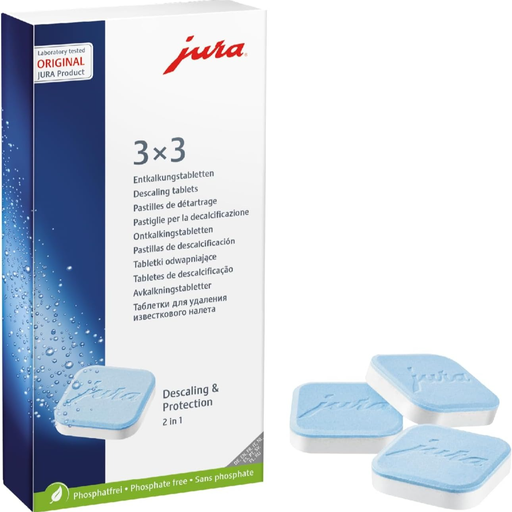
Why this product fits: For owners of a high-end JURA bean-to-cup machine who want to preserve the value of their investment. They trust the original manufacturer's product to meet warranty conditions and ensure perfectly tailored care.
Sidesteps the "universal" trap, as the tablets are specifically developed for JURA machines. The dissolving time and active ingredient combination are precisely matched to the materials and programs of these machines.
Offers a 2-phase action: Phase 1 removes the limescale, while Phase 2 seals the fluid system and protects against corrosion. According to the manufacturer, the hygiene is T?V-certified.
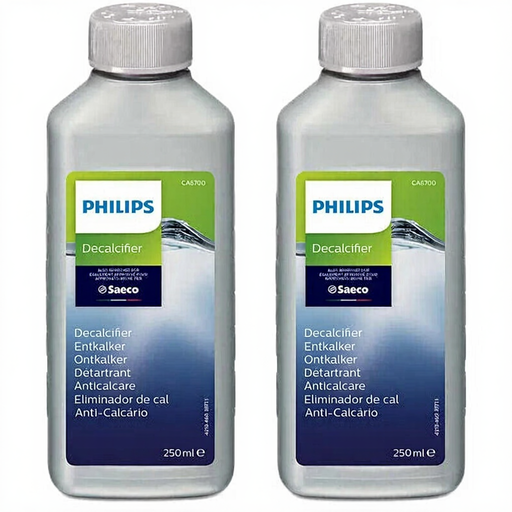
Why this product fits: Ideal for owners of widely-used coffee and espresso machines (e.g., Philips, Saeco) who are looking for a straightforward and reliable solution from an established brand. The liquid form allows for quick and easy application.
Addresses the pitfall of unclear costs. The pack contains two units, which makes planning and calculating the cost per descaling cycle transparent. The citric acid-based formula is a safe choice for many common machines.
As a liquid descaler, it is ready to use immediately and dissolves in water without any waiting time. According to Philips, it is suitable for all Philips espresso machines, which clarifies the compatibility question for this user group.
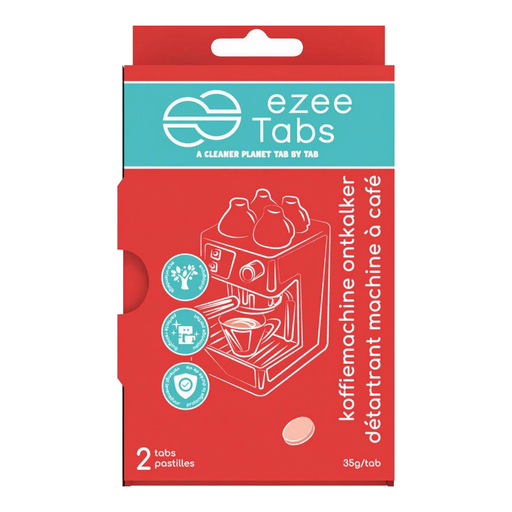
Why this product fits: For users who want to combine effective descaling with a smaller ecological footprint. The tablet form reduces packaging material and transport weight.
Avoids superficial "eco-marketing." The product provides concrete arguments: the formula is described as 100% vegan, free of microplastics, and biodegradable. The concentrated tablet form is a verifiable contribution to reducing CO2 emissions.
The format as descaling tablets is space-saving and potentially more cost-effective per application. Its suitability for all fully automatic and espresso machines makes it a flexible option for households with different appliances.
We have compiled a complete, up-to-date list of products that fully meet these strict selection criteria and German safety regulations.
The frequency depends on two factors: the water hardness in your area and how often you use the machine. Most modern appliances have a built-in reminder function that indicates the optimal time. As a general guideline:
This is generally not recommended. The acetic acid in vinegar is relatively aggressive and can attack the sensitive seals, hoses, and metal parts (especially aluminium) inside modern machines. Furthermore, an unpleasant vinegar taste can linger in the coffee, which is difficult to remove. Special coffee machine descalers use acids with formulas that are tailored to be compatible with the materials of the appliances.
Although both processes are part of machine maintenance, they target different issues:
For consistently high coffee quality and a long lifespan for your machine, both procedures are necessary at regular intervals.