
Lieferung heute & morgen

Qualitätsgarantie

Willkommens-Angebote freischalten: KOSTENLOSE Lieferung | Bis zu 80 % RABATT | Kostenlose 30-Tage-JoyPlus-Testphase
App herunterladen
The search for the right coffee machine can quickly become overwhelming. The market is filled with devices that promise everything from simple drip coffee to complex barista creations. But behind glossy marketing messages often lie compromises that can sour the coffee experience at home. As your Joybuy Product Recommendation Officer, I'll help you identify the crucial features and avoid common purchasing traps, ensuring your investment pays off in the long run.
Before we dive into the technical details, it's important to know the most common pitfalls that often lead to disappointment and unnecessary expense.
To make an informed decision, you should focus on a few critical technical features. These are the primary determinants of the quality of the coffee in your cup.
For an authentic espresso machine or a fully automatic coffee machine, brewing pressure is a key factor. A pressure of at least 9 bar at the brew group is necessary to optimally extract the aromas and oils from the coffee grounds and create a stable crema. Many devices advertise 15 or 19 bar of pump pressure, but what matters is the pressure that actually reaches the coffee. Equally important is a constant brewing temperature between 90 and 95°C. Significant fluctuations can quickly make the coffee taste bitter or watery. For a drip coffee maker, on the other hand, pressure is irrelevant; here, only the water temperature is decisive.
If you opt for a coffee machine with a built-in grinder, its quality is the heart of the device. A high-quality conical or flat burr grinder made of stainless steel or ceramic is crucial. It grinds the beans evenly and with low heat generation, which preserves the aromas. Pay attention to the number of adjustable grind settings. There should be at least 5-8 levels to adapt the grind size to different bean types and preparation methods. A good grinder is often a better investment than countless extra features.
For lovers of cappuccino or latte macchiato, a coffee machine with a milk frother is indispensable. There are two main systems:
Here are some models that represent a suitable solution for different user profiles based on objective criteria.
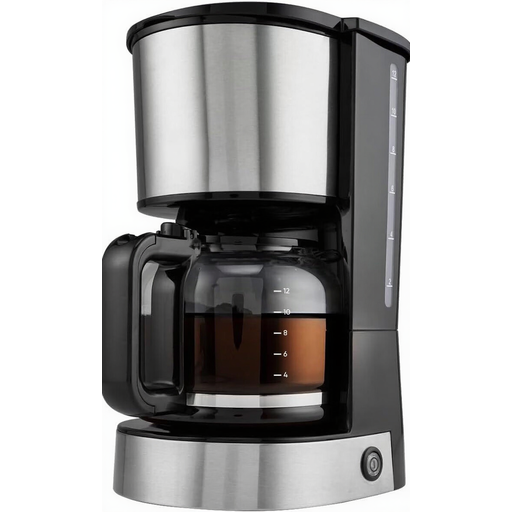
Why This Fits Their Persona: Ideal for families or the home office where large quantities of classic drip coffee are needed quickly and easily, without high follow-up costs or complex maintenance.
Focuses on one core function—brewing drip coffee. Completely bypasses the capsule cost trap and avoids the complexity of overloaded combination devices.
Large capacity (up to 14 cups), warming plate with automatic shut-off, and a very accessible price point.
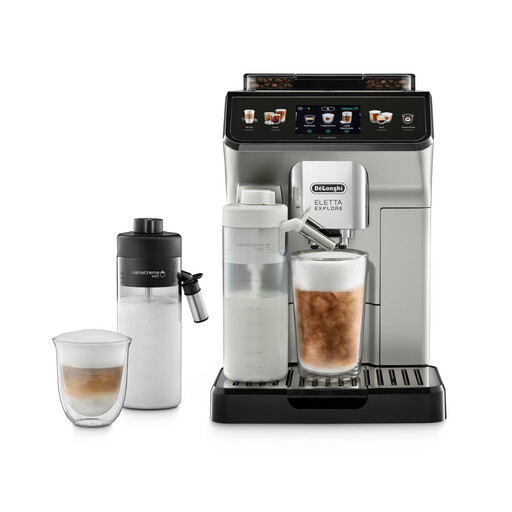
Why This Fits Their Persona: Perfect for users who want to enjoy a wide variety of hot and cold coffee and milk specialities at the touch of a button, without having to deal with the preparation process.
As a high-quality fully automatic machine, it offers a true all-in-one solution where the grinder (13 settings), brew group, and milk system are perfectly coordinated and function reliably.
LatteCrema Hot & Cool System for hot and cold milk foam, over 40 beverages via touch display, and automatic cleaning programs for easy maintenance.
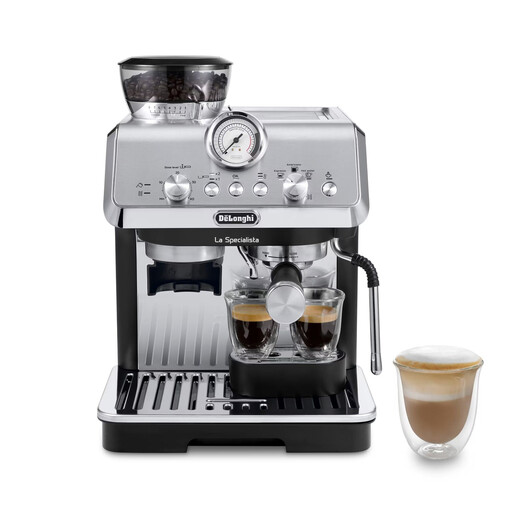
Why This Fits Their Persona: Offers the control and ritual of a portafilter machine but supports entry into the world of high-level espresso with an integrated grinder and barista kit.
Prevents the frustration of overwhelming professional machines through intuitive operation and helpful tools (e.g., dosing guide) that lead to consistent results.
Integrated conical burr grinder with 8 settings, My LatteArt system for manual milk frothing, and a complete barista kit (tamper, mat, etc.) included.
We have compiled a complete, up-to-date list of products that fully meet these strict selection criteria and German safety regulations.
1. How often does a coffee machine need to be descaled? The frequency depends on the water hardness in your area and your usage. Most modern fully automatic and capsule machines have a built-in indicator that reminds you to descale. As a rule of thumb: with average use and medium water hardness, descaling should be done every 2 to 3 months to ensure longevity and taste.
2. What is the difference between a fully automatic coffee machine and a portafilter machine? A fully automatic coffee machine is designed for convenience. It grinds the beans, brews the coffee, and often froths the milk at the touch of a button. It is ideal for the quick, uncomplicated enjoyment of various coffee specialities. A portafilter machine (or espresso machine) gives the user full control over every step: grind size, coffee amount, tamping pressure, and extraction time. It is aimed at enthusiasts who see the preparation process as a ritual and want to perfect the result down to the last detail.
3. Which grind size is suitable for which coffee machine? The choice of grind size is crucial for extraction.