
Lieferung heute & morgen

Qualitätsgarantie

Willkommens-Angebote freischalten: KOSTENLOSE Lieferung | Bis zu 80 % RABATT | Kostenlose 30-Tage-JoyPlus-Testphase
App herunterladen
By Joybuy Product Recommendation Officer, July 28, 2026
The coffee machine market is saturated and dominated by marketing promises. Manufacturers advertise impressive technical specifications and supposedly innovative features, but not every new development offers real value. Many buyers only realise after their purchase that their new device is difficult to clean, fails to deliver the desired coffee quality, or has hidden flaws. This guide highlights the most common pitfalls and shows you which objective criteria truly matter when making your choice.
To find the right coffee machine, you should focus on a few key, objective parameters instead of advertising claims.
A frequently advertised feature is a high pump pressure of 15 or even 20 bars. However, for a classic espresso machine, an extraction pressure of around 9 bars at the brew group is considered ideal. Significantly higher pressure can lead to over-extraction, where too many bitter compounds are dissolved from the coffee grounds, resulting in an unbalanced flavour. More important than the maximum pressure is the machine's ability to build up this pressure stably and maintain it throughout the entire brewing process.
The heating system determines how quickly the machine is ready for use and how consistent the water temperature remains.
The quality of the materials used has a direct impact on durability and taste. Pay special attention to components that come into direct contact with coffee and water. A brew group and a portafilter made of stainless steel are preferable to plastic parts. Stainless steel is not only more robust and durable but also more temperature-stable and flavour-neutral. A solid housing also indicates higher overall quality.
Based on these objective criteria, we present a selection of different coffee machine types suitable for specific needs.
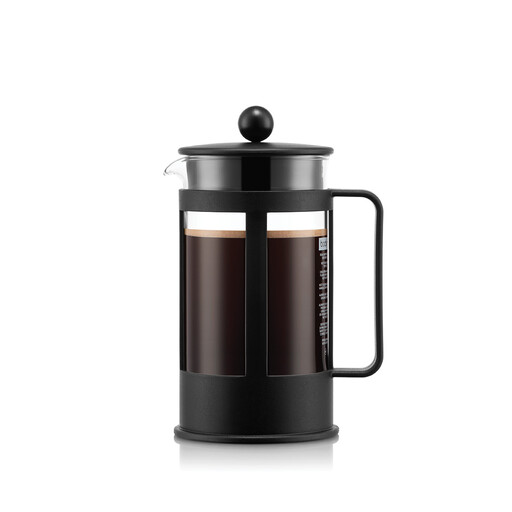
Why This Fits Their Persona: This French Press is ideal for anyone who appreciates pure, full-bodied coffee and wants to avoid complex technology. The preparation is straightforward, allows full control over brewing time and strength, and requires no electricity at all.
As a purely mechanical coffee maker, this model completely bypasses the pitfalls of complex electronics and high-maintenance milk systems. The focus is on the essential: the coffee.
The stainless steel filter system preserves the coffee's natural oils, which are often lost with paper filters. The 1-litre capacity is suitable for preparing multiple cups.
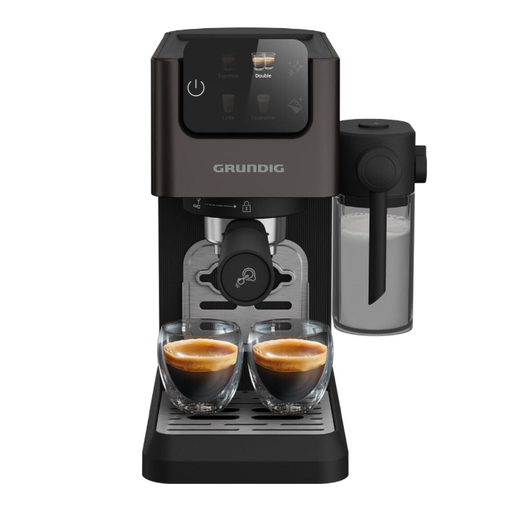
Why This Fits Their Persona: This semi-automatic portafilter machine offers a great combination of manual control and convenience for home use. It allows the use of freshly ground coffee for authentic espresso, while the integrated coffee machine with a milk frother simplifies the preparation of cappuccino or latte macchiato.
Although it has an integrated milk system, the manufacturers state that technologies like CreamyPro and removable components are designed to simplify handling and cleaning. For users who value convenience but are aware of the need for regular maintenance, this is a practical compromise.
The machine combines a high-pressure pump (up to 20 bars, according to the manufacturer) with a touch display for intuitive operation and an automatic milk frothing function.
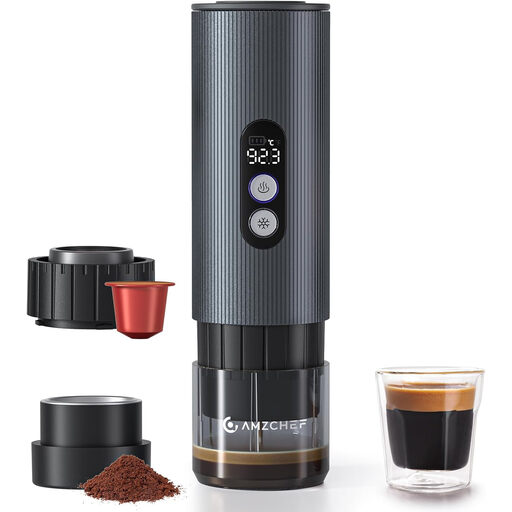
Why This Fits Their Persona: This portable coffee machine is designed for use on the go. Thanks to its integrated battery and heating function, it can prepare hot espresso from capsules or ground coffee anywhere, without an external power source.
This is a specialised device that uncompromisingly meets the need for mobility. Instead of a bulky home machine that is difficult to transport, its compact design and powerful battery are specifically tailored for travel, camping, or the office.
A large 9000 mAh battery allows for multiple preparations, according to the manufacturer. The 2-in-1 function for capsules and ground coffee offers maximum flexibility on the go.
We have compiled a complete, up-to-date list of products that fully meet these strict selection criteria and German safety regulations.
The frequency of descaling depends on the water hardness in your area and how often you use it. As a rule of thumb, descaling every two to three months is recommended. Many modern machines have an automatic reminder function. Regular descaling is crucial for the machine's longevity and consistent coffee quality.
For a high-quality espresso, a constant pressure of about 9 bars at the brew head is crucial. While many manufacturers advertise 15 or 20 bars, this value usually refers to the maximum output of the pump, not the actual pressure during extraction. Stable pressure in the ideal range is more important than a high maximum value.
A machine with an integrated grinder offers the advantage of freshly grinding the beans for each cup, which can significantly enhance the aroma. This is convenient and saves space. However, these combination devices are often more expensive, and the cleaning effort can be greater. For purists, a separate, high-quality coffee grinder often offers more precise grind size adjustments.