
Lieferung heute & morgen

Qualitätsgarantie

Willkommens-Angebote freischalten: KOSTENLOSE Lieferung | Bis zu 80 % RABATT | Kostenlose 30-Tage-JoyPlus-Testphase
App herunterladen
Excavators digging deep pits, giant cranes lifting loads high into the air, and loud trucks hauling materials—construction sites are deeply captivating for children. The right construction toys can bring all that excitement directly into the playroom. However, the selection is vast, and not every model lives up to its promises. Many parents know the disappointment of an expensive toy lying unused in a corner after just a short time.
The most common pitfalls are easy to spot:
This guide will show you the objective criteria to look for to find durable and engaging construction toys that match your child's age and interests.
To avoid a bad buy, you should check three key aspects before making a decision. These will help you objectively evaluate a product's quality and play value.
A toy's longevity depends directly on the materials used. Durability is especially crucial for construction vehicles, which are often used in the sandbox or garden.
A good construction vehicle toy mimics the functions of its real-world counterparts. The more interactive possibilities it offers, the more engaging it remains for a child.
The manufacturer's age recommendation is a crucial starting point. An educational construction toy should challenge a child without being overwhelming.
Based on these criteria, we have identified several products that are an excellent choice for different needs and age groups.
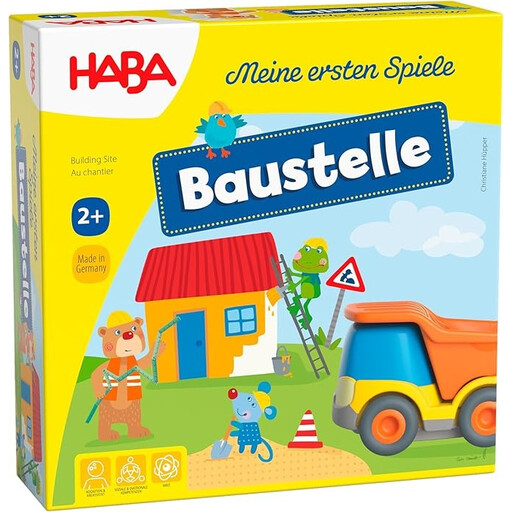
Why This Fits Their Persona: Ideal for introducing toddlers to the world of construction. It combines a simple game mechanic with a sturdy wooden vehicle, playfully promoting an early understanding of rules and teamwork.
The materials (wood and thick cardboard) are extremely durable and safe for toddlers (avoids Pitfall 1). The cooperative game objective is age-appropriate, preventing frustration from overly complex rules (avoids Pitfall 3).
Encourages cooperative play over competition. The included Kullerbü vehicle is compatible with all HABA Kullerbü tracks, expanding its play value.
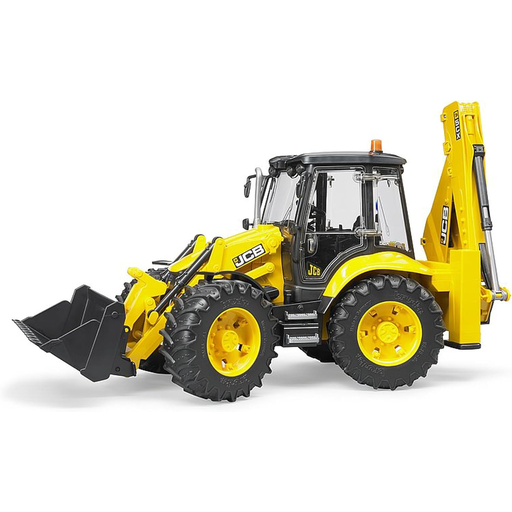
Why This Fits Their Persona: Perfect for children who want to meticulously recreate real construction site scenarios. This model offers a multitude of realistic functions for sophisticated play, both indoors and out.
Made from high-quality ABS plastic, this model is exceptionally robust and designed for active play (avoids Pitfall 1). Its dual function as a wheel loader and backhoe offers immense play value, preventing boredom (avoids Pitfall 2).
A detailed 1:16 scale model with a fully functional front loader and backhoe, a rotating driver's seat, and four-wheel steering for a tight turning radius.
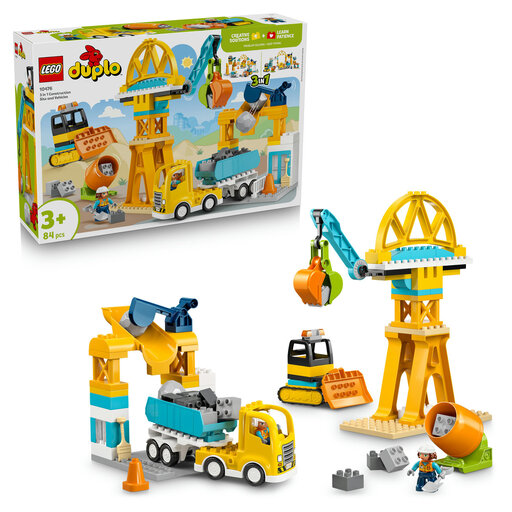
Why This Fits Their Persona: For kids who don't just want to play, but also want to create and build. This set fosters creativity, fine motor skills, and spatial reasoning through countless building possibilities.
The 3-in-1 concept provides extremely high and long-lasting play value through constant rebuilding opportunities (avoids Pitfall 2). The proven LEGO DUPLO quality guarantees stability and durability (avoids Pitfall 1).
Includes 84 pieces, featuring a crane, cement mixer, and two construction vehicles that can be rebuilt into different scenarios like a loading ramp or a house. Actively promotes problem-solving skills.
We've compiled a complete, up-to-date list of products that fully meet these strict selection criteria and rigorous safety standards.
For outdoor use, material and construction are critical. Choose models made from robust, UV-resistant plastic like ABS to prevent fading and brittleness from sun exposure. The toy should not have any electronic components or stickers that could be damaged by moisture. A simple design without too many small crevices makes it easier to clean off sand and dirt.
Most models from manufacturers like Bruder are recommended for children aged 3 or 4 and up. At this age, fine motor skills are typically developed enough for children to operate the mechanical functions (e.g., cranks, levers). Their capacity for role-playing is also more advanced. Always check the manufacturer's specific age recommendation on the packaging, as it is tailored to the toy's complexity and any potential small parts.
Educational construction toys support child development on multiple levels. Grasping, connecting, and building trains fine motor skills and hand-eye coordination. Planning and constructing buildings or vehicles fosters spatial awareness and problem-solving skills. Through free, imaginative play, children invent stories and scenarios, which stimulates creativity and language development. Cooperative building sets also teach social skills like teamwork and communication.