
Lieferung heute & morgen

Qualitätsgarantie

Willkommens-Angebote freischalten: KOSTENLOSE Lieferung | Bis zu 80 % RABATT | Kostenlose 30-Tage-JoyPlus-Testphase
App herunterladen
A convertible tricycle promises to be a faithful companion for several years—from the first parent-pushed strolls to a child's first independent riding attempts. However, the market is saturated with models whose promises don't always hold up in practice. As a Joybuy Product Recommendation Officer, I'll help you identify the crucial features and navigate common pitfalls, so you can make an informed decision for your child.
Many parents invest in a multi-function vehicle only to find it falls short of expectations after a short time. Watch out for these three common problems:
To avoid a bad purchase, you should focus your attention on three critical product features. These determine the vehicle's durability, safety, and real-world usability.
A good convertible tricycle adapts to the child's developing motor skills. Check that the transitions between stages are logical and practical to execute. Typical developmental phases that such a vehicle can support include:
The choice of materials has a direct impact on safety and durability.
For a toddler tricycle, safety features are non-negotiable. Pay attention to the following:
Instead of making a one-size-fits-all recommendation, we have curated models for various needs and age groups.
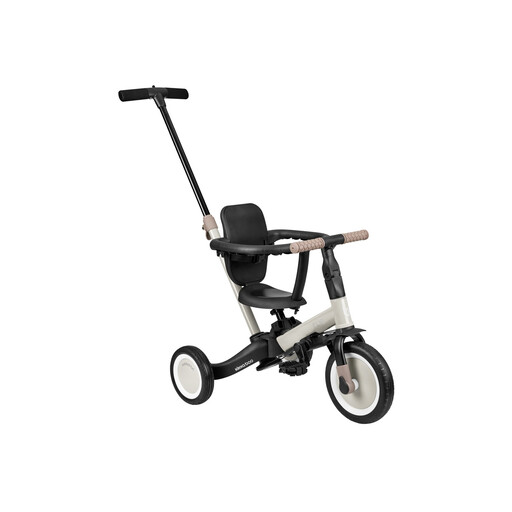
Why this model is a great fit: Perfect for families seeking a long-term solution. This model covers the entire developmental journey from 1 to 5 years, combining all key vehicle types into one product. It's a classic Kikka Boo tricycle designed for versatility.
The robust carbon steel frame counteracts the problem of subpar materials. Its five clearly defined modes are practically designed, avoiding the 'all-in-one' dilemma where some functions are unusable.
Its long lifespan of up to 5 years and the combination of push, tricycle, and balance bike modes make it a cost-effective investment.
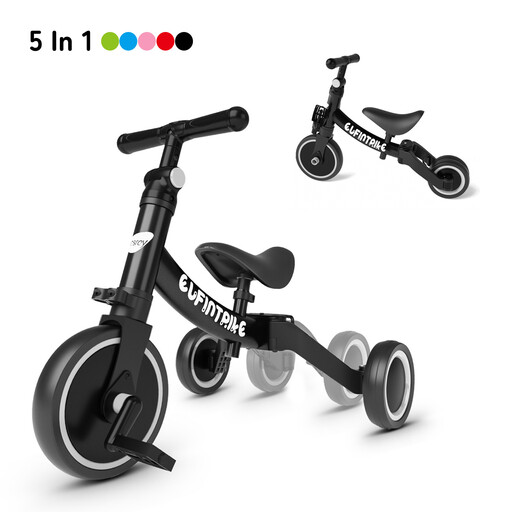
Why this model is a great fit: For parents who want a straightforward, stable vehicle for their child's first steps and rides. It focuses on the core functions of a walking aid and first tricycle without unnecessary extras.
This model sidesteps the complicated conversion pitfall by focusing on simple, intuitive handling. Its design is engineered for stability and safety for children aged 1 to 4.
The dual function as a walking aid and tricycle provides targeted support during crucial stages of motor skill development.
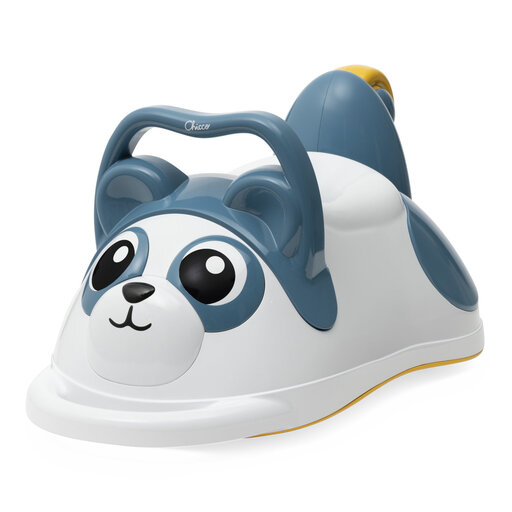
Why this model is a great fit: An alternative to the classic tricycle for the very youngest riders. As a stable ride-on toy, it supports children from 12 months in developing gross motor skills and balance while seated, long before they are ready for pedals.
This product doesn't pretend to be a tricycle. It focuses on what it does best: being a safe ride-on, a push-walker, and a shape-sorter. This avoids the compromised nature of many multi-function tricycles.
It promotes motor development from as early as 12 months and offers additional play and learning value with its Montessori-inspired storage compartment.
We've compiled a complete, up-to-date list of products that fully meet these strict selection criteria and UK/EU safety standards.
A tricycle from 1 year is typically designed as a push-along with a harness system and parental control via a push handle. At this age, the child can sit securely and explore their surroundings. The ability to pedal independently usually develops between the ages of two and three.
The effort involved varies greatly by model. Look for descriptions like "tool-free conversion" or "click-in systems". Ideally, pedals, the push handle, and other attachments should be removable or attachable in a few simple steps. A complicated conversion process significantly reduces its practical value in daily life.
For mixed use, wheels made of PU (polyurethane) or solid rubber are an excellent choice. They are quiet enough for indoor use without damaging floors, yet robust enough for rides on pavement or paved paths. Pure hard plastic wheels are often noisy and less suitable for indoors.