
Lieferung heute & morgen

Qualitätsgarantie

Willkommens-Angebote freischalten: KOSTENLOSE Lieferung | Bis zu 80 % RABATT | Kostenlose 30-Tage-JoyPlus-Testphase
App herunterladen
Assembling a new shelf or cabinet can quickly go from a small project to a test of patience when you don't have the right tool. A good cordless screwdriver is often the solution. But the market is flooded with models whose marketing promises create more confusion than clarity. Many buyers invest in tools that are unsuitable for their needs, only to be frustrated by hidden costs or an impractical design.
Before you make a decision, you should know the three most common traps that lead to a bad purchase:
This guide will help you avoid these pitfalls and find a tool that truly fits your requirements.
To make an informed choice, it's important not just to read the technical specifications, but to understand them. Focus on the parameters that are relevant for everyday household tasks.
The battery voltage, measured in Volts (V), determines the general power of the motor. For most DIY projects like assembling furniture or mounting shelves, devices with 3.6V to 12V are perfectly adequate. An 18V model is often a cordless drill driver, designed for more demanding drilling and screwdriving tasks in harder materials.
The torque, measured in Newton-meters (Nm), describes the rotational force applied to the screw. High torque is useful for large screws in solid wood, but it can cause damage to soft materials like particle board. Therefore, look for a cordless screwdriver with an adjustable torque setting. This feature allows you to precisely limit the force and prevent over-tightening the screws. For furniture assembly, values between 3 and 5 Nm are typically ideal.
An electric screwdriver is only as good as its attachments. A good cordless screwdriver set should include a selection of the most common bits to prepare you for various tasks. These include:
A magnetic bit holder or an extension is also very useful for holding screws securely and reaching awkward spots.
Handling is an often-underestimated factor. A lightweight and compact mini cordless screwdriver fits better in the hand and allows for fatigue-free work, even over extended periods. Models with an adjustable handle offer additional flexibility in tight environments.
Other practical features to look for:
Based on the criteria mentioned, we have identified a few models that are well-suited for specific user profiles and their needs.
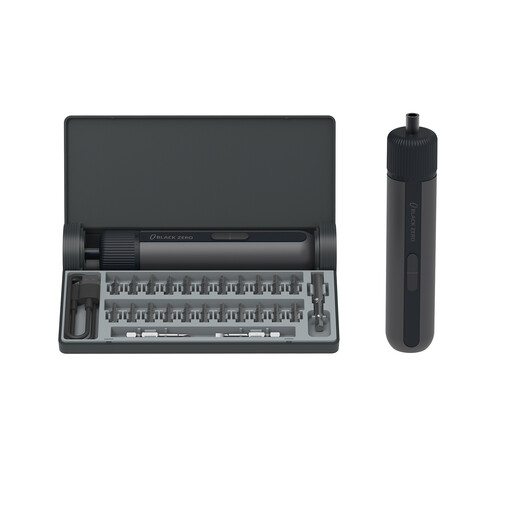
Why This Fits Their Persona: Ideal for those who need a straightforward tool for occasional furniture assembly or quick household repairs. Its light weight and compact design make it very easy to handle.
This model avoids the accessory trap with its comprehensive 24-piece bit set. The moderate power with adjustable torque (up to 8 Nm) prevents the power trap and protects furniture surfaces.
Complete set for immediate use; lightweight (approx. 296 g) and compact for easy handling; USB charging for added convenience.
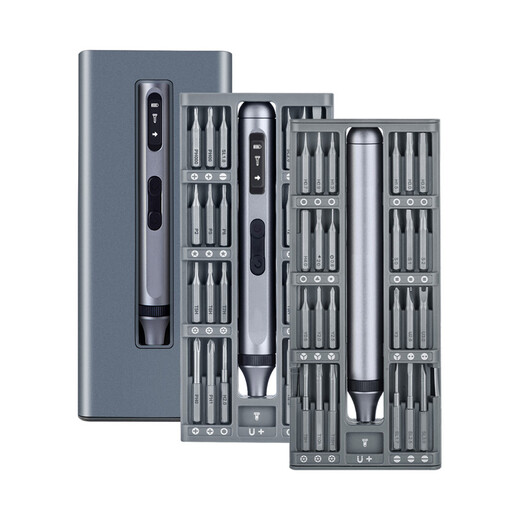
Why This Fits Their Persona: Perfect for hobbyists who work on PCs, laptops, or other electronics. Its pen-like shape and low torque are designed for precision, not brute force.
This set is the antithesis of the power trap: its low electric torque (0.3 Nm) is specifically designed for delicate components. With 48 specialty bits, it's also ideal for intricate screws.
Highly precise control for electronics repair; extensive 48-piece bit set; high-quality aluminum body and a manual mode for higher torque (3.5 Nm).
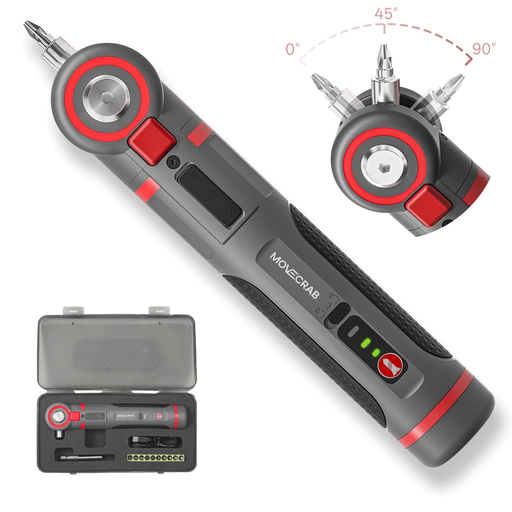
Why This Fits Their Persona: For DIYers who frequently work in tight corners or awkward spaces, such as when assembling kitchen cabinets or making repairs under a desk.
This model solves the ergonomics trap with its head that adjusts to 0°, 45°, and 90°. This makes it possible to drive screws around corners or in tight niches where a rigid tool would fail.
High flexibility thanks to the adjustable angle; three-stage torque setting (3-5 Nm) for different materials; dual LED lighting for a shadow-free view.
We've compiled a complete, up-to-date list of products that fully meet these strict selection criteria and German safety regulations.
1. How much torque (Nm) does a cordless screwdriver need for furniture assembly? For assembling furniture made of particle board or softwood, a torque between 3 Nm and 5 Nm is ideal. This force is sufficient to tighten screws securely without damaging the material. An adjustable torque limit is a very useful feature for achieving consistent results and preventing damage.
2. What is the difference between a cordless screwdriver and a cordless drill driver? A cordless screwdriver is primarily designed for driving and removing screws. It is usually lighter, more compact, and has lower torque. A cordless drill driver is a more versatile tool that can both screw and drill. It typically has a higher voltage (often 12V to 20V), higher torque, a chuck for holding drill bits, and usually two gears—a slow one for screwdriving and a fast one for drilling. For screwdriving-only tasks, a dedicated cordless screwdriver is often more manageable.
3. How do I properly maintain my cordless screwdriver's battery to extend its lifespan? Modern cordless screwdrivers use lithium-ion batteries. To maximize their lifespan, you should avoid letting the battery fully discharge. Recharge it when you notice a significant drop in performance. Store the tool and battery in a cool, dry place and avoid extreme temperatures (heat in summer, frost in winter). If you don't plan to use the tool for an extended period, a charge level of around 50-70% is optimal for storage.