
Lieferung heute & morgen

Qualitätsgarantie

Willkommens-Angebote freischalten: KOSTENLOSE Lieferung | Bis zu 80 % RABATT | Kostenlose 30-Tage-JoyPlus-Testphase
App herunterladen
A good cutting board is the foundation of any kitchen. Yet, the market is flooded with products that over-promise and under-deliver. A board that warps after a few weeks, dulls your knife blades, or proves to be unhygienic is not just an annoyance—it's a poor investment. As your Joybuy Product Recommendation Officer, I'll help you identify the common pitfalls and make an informed decision.
Many buyers fall into two common traps:
Before you decide on a model, you should check two core parameters that determine functionality and durability.
The choice of material significantly influences how gentle the board is on your knives, its hygiene, and the maintenance it requires.
A good cutting board is more than just a flat slab. Look for these features:
Here are some recommendations tailored to specific user profiles that meet the quality criteria mentioned above.
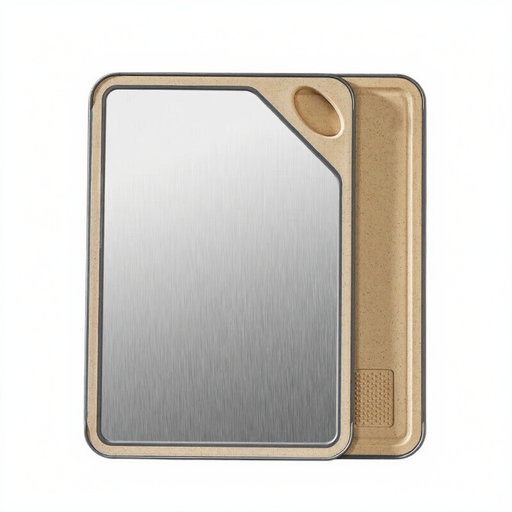
Why This Fits Their Persona: Ideal for anyone who needs a hygienic and versatile solution for daily kitchen tasks. This board elegantly solves the problem of cross-contamination.
Instead of a vague "antibacterial" promise, it offers a clear functional separation: the non-porous stainless steel side is for raw meat and fish, while the wheat straw side is gentler on knives for fruits and vegetables.
Two materials in one board for maximum hygiene and flexibility. The stainless steel side is rust-proof, durable, and doesn't retain odours.

Why This Fits Their Persona: For chefs who value aesthetics, natural materials, and high functionality. This large board serves as both a workspace and a stylish serving platter.
With a thickness of 1.9 cm and the use of high-quality bamboo, this board is robustly constructed to resist warping. The integrated juice groove makes it a practical tool, not just a decorative object.
Generous work surface (45 x 30 cm) and a full-perimeter juice groove for clean work. The bamboo material is resilient and gentle on knife blades.
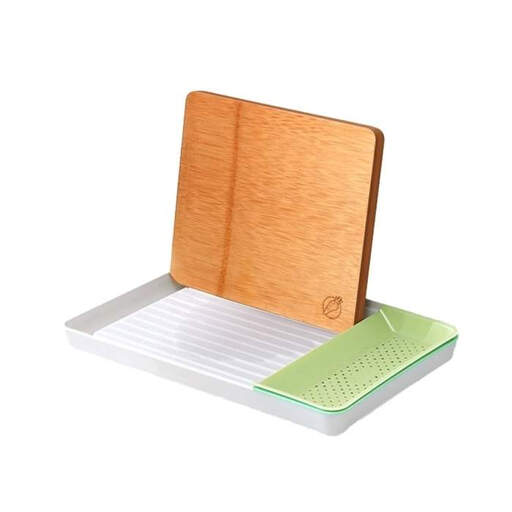
Why This Fits Their Persona: Perfect for cooks who want to streamline their workflow. This system allows for chopping and sorting ingredients and waste in a single, organised step.
This board solves a practical problem that many standard boards ignore: countertop organisation. Instead of just offering a cutting surface, it provides a complete meal prep system.
The integrated, removable trays allow for clean separation of ingredients and waste, which speeds up preparation and keeps the kitchen tidy.
We have compiled a complete, up-to-date list of products that fully meet these strict selection criteria and German safety regulations.
The frequency depends on usage. As a rule of thumb, a wooden cutting board should be maintained every 4 to 6 weeks. Clean the board thoroughly, let it dry completely, and then apply a thin layer of food-safe mineral oil. Let it soak in overnight and wipe off any excess oil the next day.
Wood, especially end-grain wood (where the wood fibres face up), is the gentlest on high-quality knife blades. Edge-grain wood and bamboo are also good options. Plastic boards are middle-of-the-road. Materials like glass, stone, or marble should be avoided for cutting, as they will dull blades extremely quickly.
The term can be misleading. An antibacterial cutting board made of plastic does not prevent bacteria from accumulating in deep knife cuts. The key to hygiene is a non-porous surface and proper cleaning. Stainless steel is naturally non-porous. A well-maintained wooden board also has a germ-reducing effect due to its tannic acid. The most important hygiene rule remains: clean your board thoroughly after each use and separate raw meat from other foods, ideally by using different boards or a double-sided model.