
Lieferung heute & morgen

Qualitätsgarantie

Willkommens-Angebote freischalten: KOSTENLOSE Lieferung | Bis zu 80 % RABATT | Kostenlose 30-Tage-JoyPlus-Testphase
App herunterladen
A good cutting board is the foundation of every kitchen. Yet, the selection is vast, and many products fail to deliver on their promises. An unsuitable board can not only ruin expensive knives but also pose a hygiene risk. As a Joybuy Product Recommendation Officer, I'll help you identify the crucial features and bypass marketing traps, so you can make an informed decision.
Before we turn to the solutions, let's identify the most frequent frustrations that arise with low-quality cutting boards.
To avoid these problems, you should check three key aspects before buying: the material, the construction, and the functionality.
The choice of material directly impacts hygiene, blade-friendliness, and durability. Each material has specific advantages and disadvantages.
Besides the material, it's the details that define a good kitchen board.
Here are some product recommendations tailored to specific user profiles and their requirements.
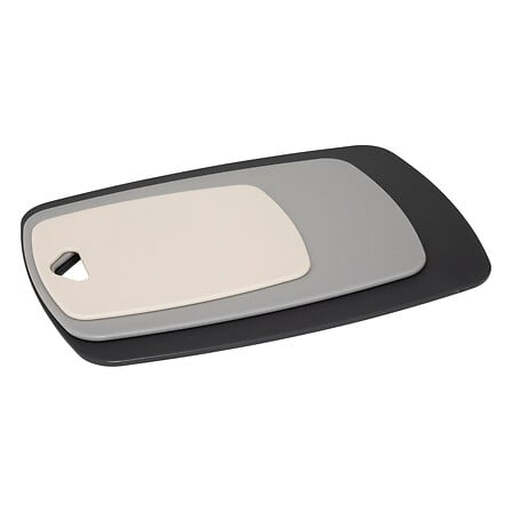
Why This Fits Their Persona: This set provides a straightforward and affordable starter kit. The three sizes and different colors enable hygienic food separation from the very beginning, without requiring a large investment. Ideal for novice cooks or students.
The set directly addresses the "Hygiene Illusion" by making food separation simple. Furthermore, plastic is resistant to water and does not warp as easily as untreated, cheap wood.
Easy-care polypropylene (PP), dishwasher-safe. Three different sizes for various tasks.
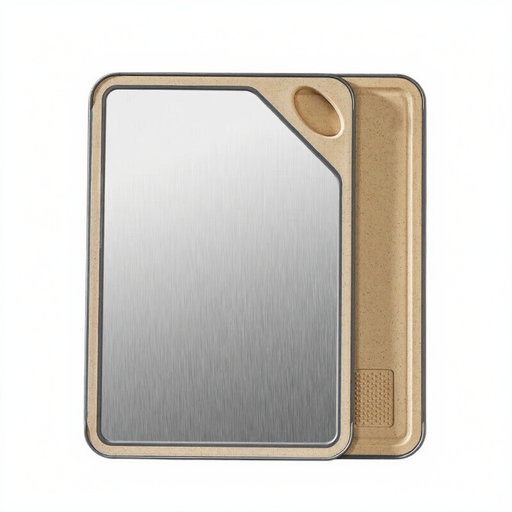
Why This Fits Their Persona: This board is ideal for families where hygiene is the top priority. The double-sided design allows for strict separation: the non-porous 304 stainless steel side for raw meat and fish, and the more blade-friendly wheat straw side for fruits and vegetables.
The stainless steel side is an effective solution against the "Hygiene Illusion" as it doesn't absorb cuts and is easy to disinfect. The wheat straw side is a compromise that is gentler on blades than pure steel.
Double-sided design for maximum hygiene. Durable stainless steel resists rust and odors. Easy to clean.
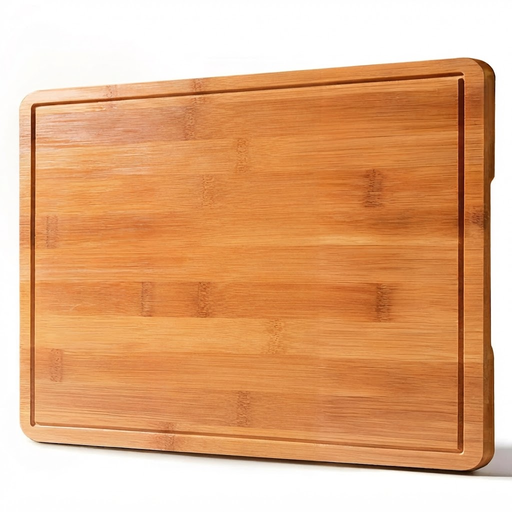
Why This Fits Their Persona: Those who cook frequently and with passion need a robust, large, and functional board. This model made of carbonized bamboo is particularly durable. The integrated juice groove and handles are practical details that streamline the workflow when preparing larger meals.
According to the manufacturer, the high-temperature carbonization process reduces moisture absorption and increases durability, directly counteracting the "Warping Trap." Bamboo offers a good compromise between hardness and blade-friendliness.
Increased stability due to carbonization. Deep juice groove and practical handles. Generous work surface (40.6 x 29.2 cm).
We have compiled a complete, up-to-date list of products that fully meet these strict selection criteria and German safety regulations.
Clean a wooden cutting board after use with a damp cloth and a little mild dish soap. Briefly rinse it under running water and dry it thoroughly with a cloth immediately. Stand it upright to dry completely. It should never be left to soak in water or cleaned in the dishwasher. Every few weeks, rub it with a food-safe mineral oil to condition the wood and protect it from drying out.
Wood, especially end-grain wood (where the wood fibers face upwards), is considered the most blade-friendly material. The blade sinks between the fibers instead of cutting through them, which preserves sharpness longer. Softer plastics are also a good option. Materials like glass, marble, granite, or ceramic should be avoided for cutting, as they dull blades extremely quickly.
Yes, using a set is highly recommended from a hygiene perspective. By using different boards for different food groups—for example, one board for raw meat and poultry, another for vegetables and fruit, and a third for bread—the risk of cross-contamination is significantly reduced. Many sets offer different colors or symbols for easy differentiation.