
Lieferung heute & morgen

Qualitätsgarantie

Willkommens-Angebote freischalten: KOSTENLOSE Lieferung | Bis zu 80 % RABATT | Kostenlose 30-Tage-JoyPlus-Testphase
App herunterladen
Functional cycling sunglasses are essential for safety and comfort on every ride. They not only protect you from UV radiation, wind, and insects but also improve your vision and reduce eye fatigue. However, the market is flooded with models whose marketing promises often fall short in practice. Many cyclists invest in glasses that turn out to be impractical or short-lived.
Before you make a decision, you should be aware of two common pitfalls:
This guide explains the crucial technical features to look for and helps you find a pair of cycling sunglasses that meets your needs.
To make an informed choice, it's important to understand the core functions of sports sunglasses. Three parameters are particularly significant: lens technology, frame material, and field of view design.
The lenses are the heart of any pair of glasses. Their properties determine how well you can see in different conditions.
A good frame must be lightweight, robust, and comfortable. It ensures that the glasses stay securely in place even during intense movement.
Unrestricted vision is vital for quick reactions in traffic or on the trail.
Based on the criteria mentioned, we have compiled a few models for different user profiles.
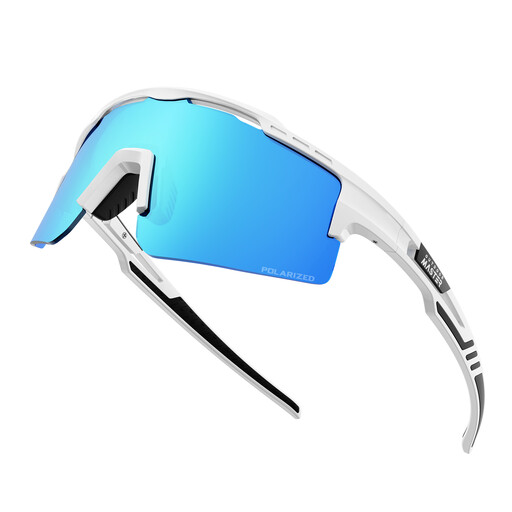
Why it's a good fit: It offers all the essential protective features like polarisation and UV400 protection in a robust TR90 frame at an accessible price point. Ideal for anyone looking for a reliable starter set.
The frame, made of TR90 memory material, is flexible and shatterproof. This avoids the trap of cheap, fragile frames without breaking the bank.
Reliable anti-glare protection from polarised TAC lenses and a complete accessory kit, including a case and glasses strap.
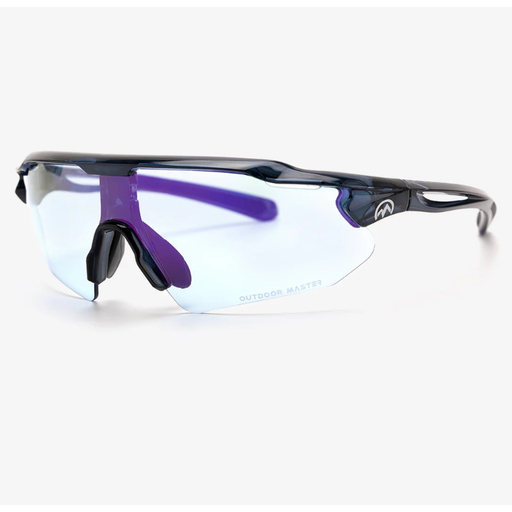
Why it's a good fit: The combination of photochromic and polarised lenses automatically adapts to changing light conditions. Perfect for rides that take you through sun, shade, and dusk.
Unlike basic models, these lenses react reliably to UV light and provide consistent visual quality. This avoids the pitfall of ineffective tint adjustments.
Two technologies in one pair of glasses: anti-glare protection through polarisation and automatic tint adjustment for maximum flexibility.
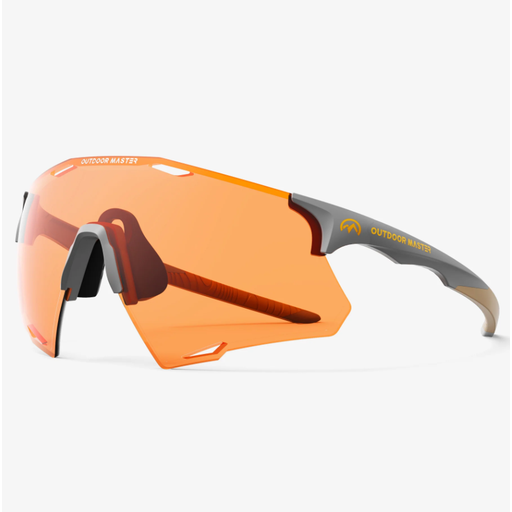
Why it's a good fit: At just 25.5 grams, it's extremely lightweight. The ventilated design and wide peripheral field of view are engineered for high speeds and maximum performance, also making it a great pair of lightweight running sunglasses.
The lightweight TR90 material is built for durability and doesn't compromise on stability. This avoids the "ultra-light" but fragile pitfall.
Minimal weight, an anti-fog design through ventilation, and an expanded field of view for unrestricted focus.
We have compiled a complete, up-to-date list of products that fully meet these strict selection criteria and all applicable safety regulations.
Yes, most high-quality cycling sunglasses are also excellent for other activities. Features like low weight, a secure fit, UV protection, and impact resistance make them a good choice as lightweight running sunglasses or for hiking. Polarised models are also very suitable for driving, as they reduce glare on the road.
The term UV400 protection indicates that the lenses are designed to block UV rays up to a wavelength of 400 nanometres. This includes both UVA and UVB rays. Such protection is crucial for safeguarding the eyes from short- and long-term sun damage and should be a standard feature on any pair of sports sunglasses.
To extend the life of your glasses and keep the lenses scratch-free, you should follow a few simple care steps. Clean the lenses after each ride with the included microfibre cloth. For heavier dirt, you can use lukewarm water and a mild, pH-neutral soap. Avoid aggressive cleaning agents or paper towels, as these can damage the lens coatings. Always store the glasses in the provided hard-shell case to protect them from impacts and scratches.