
Lieferung heute & morgen

Qualitätsgarantie

Willkommens-Angebote freischalten: KOSTENLOSE Lieferung | Bis zu 80 % RABATT | Kostenlose 30-Tage-JoyPlus-Testphase
App herunterladen
As a Joybuy Product Recommendation Officer, I often see how challenging it can be for fans of Asian cuisine to find the right ingredients for authentic dishes. In particular, Dao Xiao Mian, the famous knife-cut noodles, are often difficult to find in the desired quality. Many are searching for that characteristic irregular shape and firm bite that make them so popular in restaurants in Sichuan or Shanxi. This article serves as a guide to simplify your selection and help you find the perfect Chinese knife-cut noodles for your next culinary adventure.
The search for the right noodles can be confusing. To make an informed decision, you should pay attention to a few key features.
The defining characteristic of Dao Xiao Mian is their shape. Unlike uniform, machine-made noodles, traditionally inspired varieties often have an irregular thickness and wavy edges. This structure not only provides an interesting, chewy bite but also allows for excellent sauce adhesion. Look for product descriptions that use terms like "wide," "thick," or "irregular." These wide Asian noodles are ideal for rich sauces and braised dishes.
The drying method has a significant impact on the final cooked texture. Sun-dried noodles undergo a slower, more natural process. This can help preserve the wheat's aroma and achieve a firmer, more elastic texture. Machine-dried noodles are often more readily available but may have a different consistency. A look at the ingredients list is also insightful. Classic Dao Xiao Mian typically consist of only wheat flour, water, and salt. Varieties with multi-grain blends can be a nutritious alternative.
The time you have available plays a role in your choice. If you want to buy handmade noodles to prepare a dish from scratch, dried noodle packs are the right choice. These require a cooking time of several minutes. For a quick meal, there are also Chinese instant noodles in the Dao Xiao Mian style. These packets often include a suitable seasoning sauce and are ready to serve in just a few minutes.
Based on the criteria above, we have curated a selection of products that cater to different needs—from a traditional cooking experience to a quick meal.
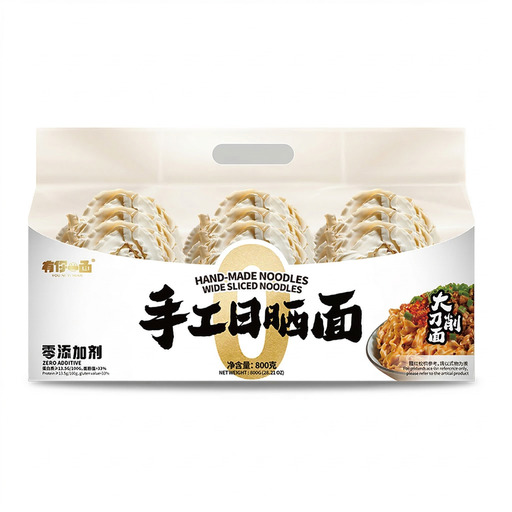
Why they stand out: These noodles are closely modelled on traditional craftsmanship. The wide, thick shape and natural sun-drying process aim to replicate the authentic texture and original wheat flavour found in handmade noodles.
Advantages:
Who are they for? For home cooks who want to recreate the authentic taste of dishes like Sichuan noodles or Biang-Biang noodles as faithfully as possible and who value a traditional noodle texture.
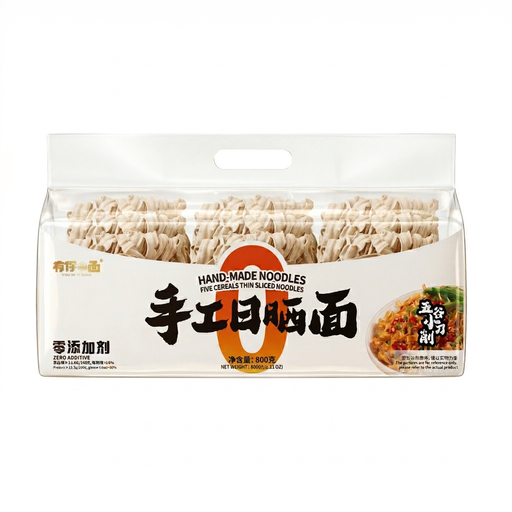
Why they stand out: This variety combines the traditional shape of knife-cut noodles with a multi-grain blend. The addition of buckwheat, corn, sorghum, and soybean flour gives the noodles a more complex nutritional profile and a slightly nutty flavour.
Advantages:
Who are they for? For anyone who appreciates the characteristic bite of Dao Xiao Mian but is looking for a nutritionally enriched alternative to the pure wheat product. Ideal for everyday noodles for stir-fry dishes.
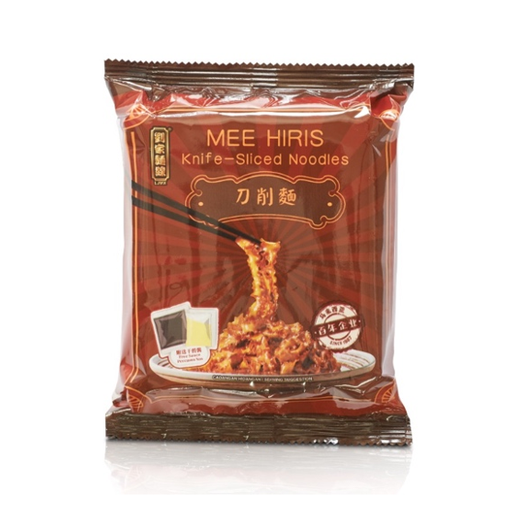
Why they stand out: This product offers the convenience of an instant meal without sacrificing the special noodle shape. The wide, wavy noodles, also known as Mee Hiris, come with a ready-made seasoning sauce, which significantly speeds up preparation.
Advantages:
Who are they for? For professionals, students, or anyone with little time to cook who still wants to enjoy a bowl of authentic-tasting noodles.
If these recommendations don't quite have what you're looking for, or if you simply want to browse, you can find a wider range of products in our category.
? Discover more hand-cut noodles here
Dao Xiao Mian (刀削面) literally means "knife-cut noodles." Traditionally, a large block of dough is held directly over a pot of boiling water, and a chef uses a special knife to shave thin strips of noodles directly into the water. This creates their characteristic shape: thicker in the middle and thinner at the edges. This uneven texture provides a unique, chewy bite and excellent sauce adhesion.
Due to their thickness, wide Asian noodles typically require a longer cooking time than thinner noodle varieties. Cook them in plenty of boiling, salted water. Stir the noodles immediately after adding them to prevent sticking. Refer to the package instructions for the exact cooking time, but it's best to taste a noodle to determine your desired doneness (al dente or softer). After cooking, drain well and toss immediately with your sauce.
The best place to buy authentic, imported handmade noodles is at specialised Asian markets or well-stocked online retailers that focus on Asian foods. Look for product descriptions that mention traditional production methods, origin (e.g., Sichuan, Shanxi), and characteristic features like "sun-dried" or "wide-cut."