
Lieferung heute & morgen

Qualitätsgarantie

Willkommens-Angebote freischalten: KOSTENLOSE Lieferung | Bis zu 80 % RABATT | Kostenlose 30-Tage-JoyPlus-Testphase
App herunterladen
An uneven skin tone, dark spots on the face, or lingering post-acne marks can detract from your complexion. The market for brightening serums is vast, but not every product delivers on its promises. As your Joybuy Product Recommendation Officer, I'll help you understand the key factors for making an informed choice and avoiding common purchasing pitfalls.
Many products promise quick fixes, but the reality is often more complex. Pay attention to these three points to avoid disappointment and unnecessary expense:
To find a suitable product that offers real substance, not just marketing hype, you should focus on the following three parameters.
A single ingredient is rarely the sole solution. Effective formulations combine active ingredients that work on different levels to correct an uneven skin tone. Look for products that cover several of these categories:
A good hyperpigmentation serum might combine a tyrosinase inhibitor with an antioxidant, for example, to both treat existing spots and prevent new ones from forming.
Certain active ingredients, especially pure Vitamin C (L-Ascorbic Acid), are highly unstable and quickly lose their effectiveness when exposed to light and air. A high-quality formulation takes this into account:
A high concentration isn't always better. With active ingredients like retinoids or acids, starting too high can weaken the skin barrier and lead to irritation or even post-inflammatory hyperpigmentation—the very thing you want to avoid. A good brightening serum offers an effective yet well-tolerated concentration. For sensitive skin or beginners, lower concentrations or gentler ingredients like Mandelic Acid or Niacinamide are often the better choice.
Based on the criteria above, we have selected a few products from our range that are suitable for different needs and skin types.
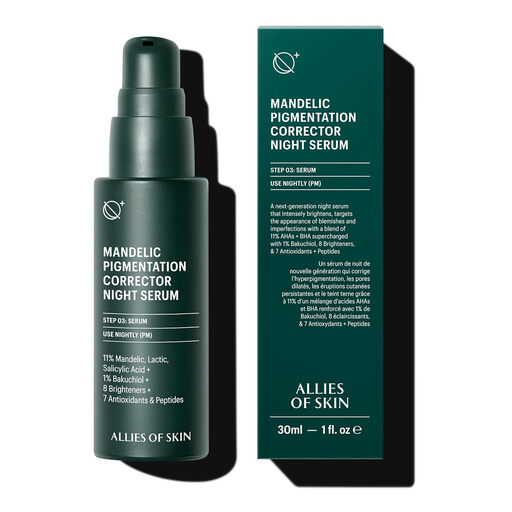
Why This Fits Their Persona: For users who already have experience with active skincare and are looking for a high-performance solution for stubborn dark spots, acne scars, and an uneven skin tone.
This product avoids the trap of oversimplification. It's a complex formula that combines 11% Mandelic, Lactic, and Salicylic Acids with Bakuchiol (a plant-based retinol alternative) and Niacinamide to tackle the problem from multiple angles.
The multi-acid blend provides effective exfoliation, while Bakuchiol promotes cell renewal. Niacinamide and Hyaluronic Acid provide hydration and strengthen the skin barrier to offset potential irritation from the potent acids.
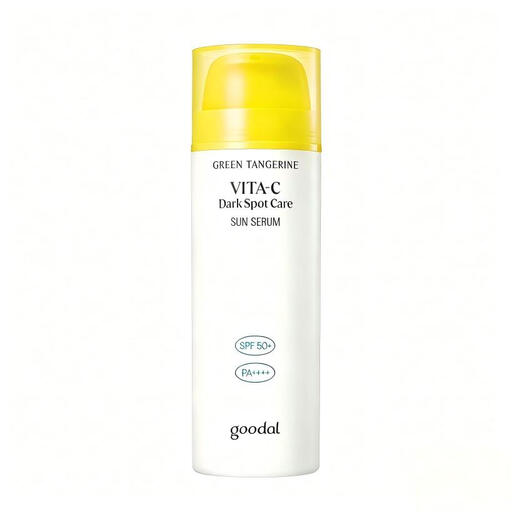
Why This Fits Their Persona: Perfect for pragmatic users who prefer a streamlined morning routine and understand that sunscreen is the most critical step in fighting hyperpigmentation.
This product directly addresses the most common mistake: forgetting sunscreen. It integrates high broad-spectrum protection (SPF50+ PA++++) into a brightening serum, making prevention an integral part of the treatment.
It's a 2-in-1 product that simplifies the morning skincare routine. The lightweight serum texture absorbs quickly without leaving a white cast and combines UV protection with brightening ingredients like Niacinamide and Vitamin C derivatives.
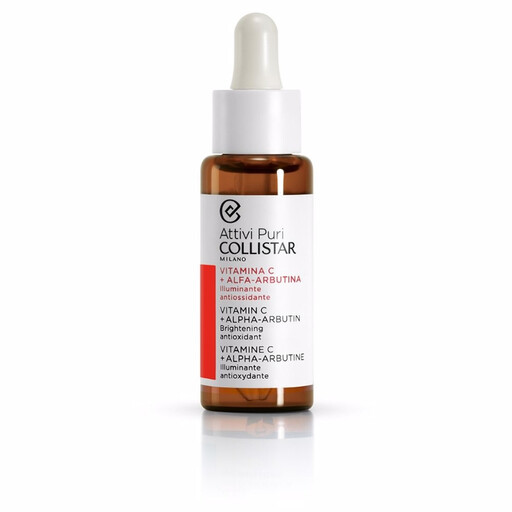
Why This Fits Their Persona: For users who want the brightening and antioxidant benefits of Vitamin C but are looking for a more stable and less irritating alternative to pure L-Ascorbic Acid.
This serum bypasses the stability issue by using 3-O-Ethyl Ascorbic Acid, a highly stable Vitamin C derivative. It also combines this active with Alpha Arbutin, not relying on a single, potentially unstable ingredient.
The formula offers a dual brightening effect by combining Vitamin C and Alpha Arbutin. The light, watery texture absorbs instantly and is excellent for layering under other skincare products and makeup.
We have compiled a complete, up-to-date list of products that fully meet these strict selection criteria and all applicable safety regulations.
Patience and consistent use are key. The skin renews itself approximately every 28 to 40 days. Therefore, the first visible improvements can often be expected after four to eight weeks. More significant results, especially for stubborn spots, may require several months of regular use. Daily application is crucial, especially when combined with sunscreen in the morning.
Yes, but a gradual introduction is advisable to avoid overwhelming the skin. A proven method is to use a Vitamin C serum in the morning (for antioxidant protection) and a retinoid or acid-based product in the evening. Avoid using multiple high-concentration acids or a retinoid and a strong acid peel in the same routine, unless the product is explicitly formulated that way.
Not necessarily. The price of a serum is influenced by many factors, including brand positioning, packaging design, and the cost of research and development for patented technologies. A product's effectiveness ultimately depends on the right combination and concentration of active ingredients for your specific skin condition. Effective formulas that help brighten post-acne marks or correct an uneven skin tone can be found in various price ranges. Focus on the ingredient list and formulation rather than just the price.