
Lieferung heute & morgen

Qualitätsgarantie

Willkommens-Angebote freischalten: KOSTENLOSE Lieferung | Bis zu 80 % RABATT | Kostenlose 30-Tage-JoyPlus-Testphase
App herunterladen
Investing in a front and rear dash cam provides a reassuring sense of security on the road. However, the market is flooded with devices that make bold promises but often fail to deliver in practice. Many drivers invest in a car camera only to find that the recording is useless in the critical moment.
Before you make a decision, it's important to understand the most common pitfalls that can lead to a poor purchase:
To make an informed decision, you should focus on core technical features rather than marketing buzzwords. Many users search online for a "dash cam review" to find guidance. However, the truly relevant criteria are objectively measurable.
A high resolution, like that of a 4K dash cam, is only beneficial if the image sensor can actually process the light information. Look for models with sensors from established manufacturers like Sony (e.g., the STARVIS series). These are known for their high light sensitivity and, in combination with WDR (Wide Dynamic Range) or HDR technology, deliver clear, high-contrast images even in difficult lighting conditions, such as in tunnels or at night. Good dash cam night vision is directly dependent on the quality of the sensor.
A system with a front and rear dash cam (2-channel) is the standard solution for most drivers. It documents events in front of and behind the vehicle, offering comprehensive protection in rear-end collisions or disputed situations. For professional drivers, taxi drivers, or ridesharing, a 3-channel dash cam that also records the vehicle's interior can be useful. Look for a wide viewing angle (e.g., 130° to 170°) to cover multiple lanes of traffic.
A reliable parking mode requires a constant power supply without jeopardizing the vehicle's battery. The standard solution is installation via a hardwire kit, which connects directly to the vehicle's fuse box. Such kits include a battery monitor that cuts power to the dash cam as soon as the car battery's voltage drops to a critical level. This ensures your vehicle remains ready to start at all times.
A dash cam with GPS and Wi-Fi offers significant added value.
Instead of making a one-size-fits-all recommendation, we have identified models tailored to specific requirements and user profiles.
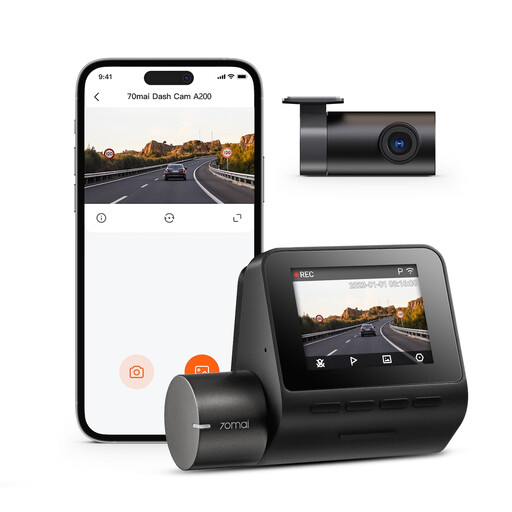
Why this model is a good fit: Ideal for drivers who want reliable and straightforward documentation of traffic events from the front and rear. The focus is on solid image quality day and night, without superfluous features.
This model bypasses the "empty 4K promise" by relying on a proven 1080P resolution with HDR technology. This ensures balanced and clear recordings instead of simulating a uselessly high resolution.
The combination of HDR and what the manufacturer calls "70mai Night Owl Vision" provides above-average image quality in low-light conditions for this price range.
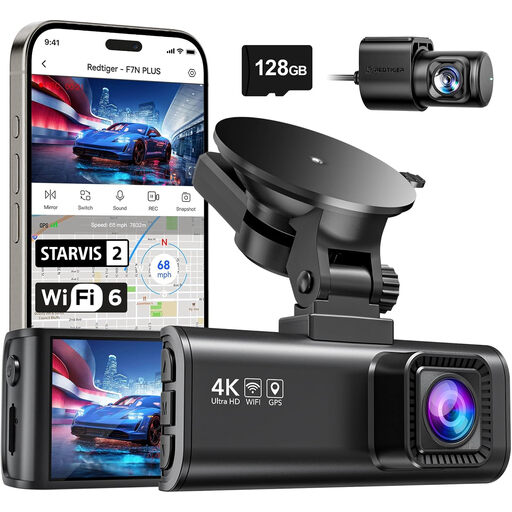
Why this model is a good fit: For drivers who value the highest image quality and modern features. The combination of a 4K front camera, a high-quality sensor, and fast Wi-Fi meets the demands of tech-savvy users.
This model counters the pitfall of poor night vision. According to the manufacturer, it uses a Sony STARVIS 2 sensor, which is specifically designed for high detail fidelity in darkness and enables clear evidence collection.
Equipped with 5.8 GHz Wi-Fi, this model offers significantly faster data transfer to the app than conventional 2.4 GHz models, according to the manufacturer. Videos can be downloaded to your smartphone quickly.
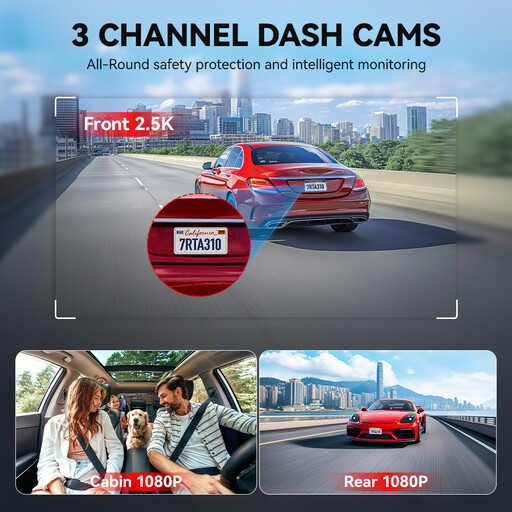
Why this model is a good fit: Perfect for professional use. The 3-channel recording (front, rear, interior) provides complete documentation, which can be crucial for drivers in passenger or goods transport.
This model solves the problem of incomplete coverage. While a 2-channel camera provides no footage of incidents inside the car or at the side windows, the third camera ensures a 360° view of the event.
The interior camera is equipped with infrared LEDs for night vision. This allows for clear recordings of the vehicle's interior even in complete darkness, which is relevant for the safety of both driver and passengers.
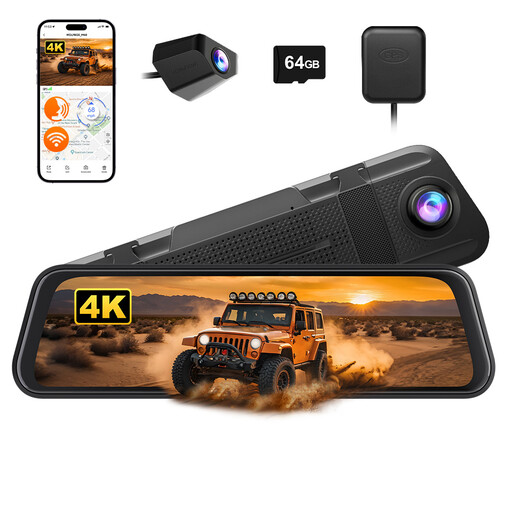
Why this model is a good fit: This **mirror dash cam** replaces or clips over the existing rearview mirror, integrating seamlessly into the interior. Ideal for drivers who prefer a discreet solution without additional devices on the windscreen.
The design prevents a cluttered cockpit and an obstructed view. Instead of a separate device, the dash cam functionality is integrated into a component that is already there.
The large touchscreen not only serves for operation but also functions as a fully-fledged monitor for the reversing camera. This can significantly improve rear visibility, especially in vehicles with a limited rear window.
We have compiled a complete, up-to-date list of products that fully meet these strict selection criteria and comply with German regulations.
Yes, their use is generally permitted but is subject to strict data protection regulations (GDPR). Permanent, indiscriminate recording of public space is not allowed. Modern dash cams solve this problem with a loop recording function, where old footage is continuously overwritten. Only in the event of an incident (e.g., triggered by the G-sensor) is the relevant sequence saved as a write-protected file. Such event-triggered recordings are increasingly being accepted as evidence in court.
For a reliable 24-hour parking mode, installation with a hardwire kit is necessary. This is connected directly to the vehicle's fuse box. It includes a circuit to monitor the battery voltage, which switches off the dash cam before the car battery becomes too depleted. It is recommended to have this installation carried out by a professional workshop to avoid electrical issues.
A high-quality microSD card is essential for recording 4K video. Look for cards with a U3 (UHS Speed Class 3) rating and the High Endurance label. These cards are specifically designed for write-intensive applications like continuous recording in a dash cam and offer a longer lifespan and greater reliability than standard memory cards. A capacity of 128 GB or more is recommended for 4K recordings.