
Lieferung heute & morgen

Qualitätsgarantie

Willkommens-Angebote freischalten: KOSTENLOSE Lieferung | Bis zu 80 % RABATT | Kostenlose 30-Tage-JoyPlus-Testphase
App herunterladen
By: Joybuy Product Recommendation OfficerDate: July 08, 2026
Condensation on the windows, a musty smell in the basement, or the constant worry of mould growth in the bathroom—high humidity is a recurring problem in many homes. An electric dehumidifier can be an effective solution to regulate your indoor climate and protect your home's structure.
This guide serves as a practical reference. We will introduce various models and explain the key criteria you should consider when choosing a dehumidifier, helping you make an informed decision for your specific needs.
Choosing the right unit depends on several factors. Instead of being swayed by marketing promises, it's wise to focus on objective technical specifications.
A dehumidifier's performance is measured in litres per day (L/day). This value describes how much water the unit can extract from the air within 24 hours under standardised conditions (often 30°C and 80% relative humidity).
Modern units offer more than just basic dehumidification. Look for features that make your daily life easier:
A quiet dehumidifier is crucial if the unit will be used in a bedroom or living area. The noise level is measured in decibels (dB). Levels below 40 dB are considered quiet, comparable to a quiet refrigerator.
An energy-efficient dehumidifier helps keep electricity costs low. Models using the eco-friendly R290 refrigerant are often a great choice, as they offer high efficiency with lower energy consumption.
Based on the criteria above, we have compiled a selection of units suitable for different needs and room sizes.
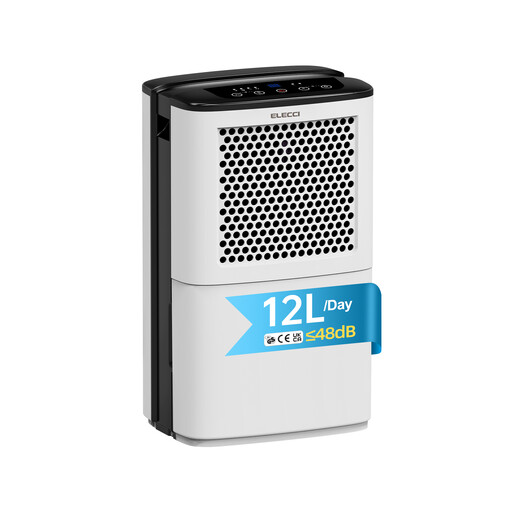
Why this model stands out: The ELECCI 12L/D is a compact and efficient unit, ideal for small to medium-sized rooms. Its strengths lie in its straightforward operation and the option for continuous use.
Benefits:
Who is it for? Users looking for a reliable, easy-to-use solution for bathrooms, bedrooms, or small apartments who also value the option for continuous operation.
Shop the ELECCI 12L/D on Joybuy.de

Why this model stands out: The VINO Smart Dehumidifier combines powerful dehumidification with modern technology. App-based control and an ultra-quiet sleep mode make it a versatile companion for daily life.
Benefits:
Who is it for? Tech-savvy users who value the convenience of remote control, as well as anyone looking for a powerful yet quiet unit for living areas or bedrooms.
Shop the VINO Smart Dehumidifier on Joybuy.de
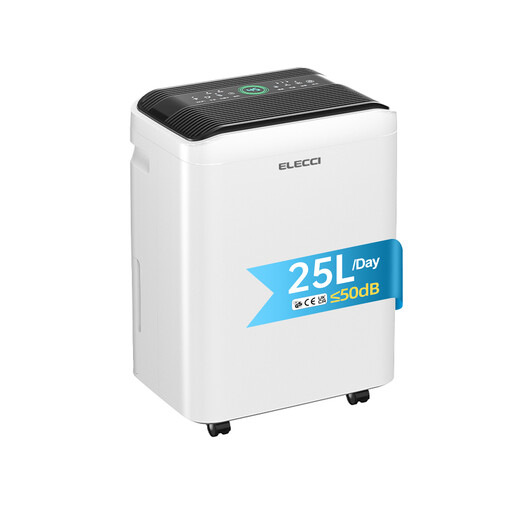
Why this model stands out: With its high dehumidification capacity, the ELECCI 25L/D is designed for demanding tasks. It is a robust choice for large, open-plan living spaces or problematically damp basements.
Benefits:
Who is it for? Homeowners with damp basements, large living areas, or anyone needing a high-performance solution for quickly and effectively reducing high humidity.
Shop the ELECCI 25L/D on Joybuy.de
The selection of dehumidifiers is vast, and everyone's needs are different. If the models featured here don't perfectly match what you're looking for, you can find more options in our category. In particular, units with the efficient R290 refrigerant offer a modern and eco-conscious solution.
Discover More R290 Dehumidifiers on Joybuy.de
Yes, a dehumidifier for mould is an effective preventive measure. Mould spores need high humidity (usually above 60%) to grow. By lowering the air's moisture content to a level of 40–50%, a dehumidifier removes the conditions mould needs to thrive and prevents new growth. However, existing mould must be removed separately.
Power consumption depends on the unit's performance and duration of use. An energy-efficient dehumidifier like the models featured here has a rated power between approx. 200 W and 365 W. For example, if a 200-watt unit runs for four hours a day, it consumes 0.8 kWh. Modern units with a humidistat also automatically switch off once the target humidity is reached, further reducing energy consumption.
For optimal performance, the dehumidifier should be placed as centrally as possible in the room on a level surface. Maintain a clearance of about 30–50 cm from walls and furniture to allow air to circulate freely and to ensure the air intake and outlet are not blocked. In multi-level, open-plan areas, placing it on a lower level (e.g., the ground floor) is often effective, as damp air tends to sink.