
Lieferung heute & morgen

Qualitätsgarantie
App herunterladen
Kategorien
When relative humidity in living spaces persistently exceeds 60%, it creates the ideal conditions for condensation to form on cooler surfaces like windows and exterior walls. This can lead to mould growth and a musty odour, which can compromise the building's structural integrity and negatively impact your well-being. A dehumidifier is an appliance that counteracts this process by specifically extracting moisture from the air to regulate the indoor climate. Choosing the right unit depends on specific technical parameters and its intended application.
Before you buy a dehumidifier, it's wise to analyse your needs based on objective criteria. The following parameters are crucial for making the right choice.
The dehumidification capacity indicates how many litres of water a unit can remove from the air within 24 hours. This figure is typically measured under standardised conditions (e.g., 30°C and 80% relative humidity).
Manufacturers specify the maximum room size for which a unit is designed. This specification is a key guideline to avoid under- or oversizing. An underpowered unit will run constantly at full capacity without reaching the target humidity, while an oversized model will consume unnecessary energy.
The size of the water tank determines how often it needs to be emptied manually. A larger tank offers greater convenience. For continuous operation, such as with a basement dehumidifier, a model with a connection for a drainage hose is advantageous. The condensed water is then channelled directly into a drain, enabling unattended operation.
The operating noise is a critical factor, especially for a dehumidifier for bedrooms or living areas.
Modern dehumidifiers often offer useful additional features that make operation more efficient and convenient:
Based on an analysis of technical specifications and application areas, we present three models with distinct performance profiles.
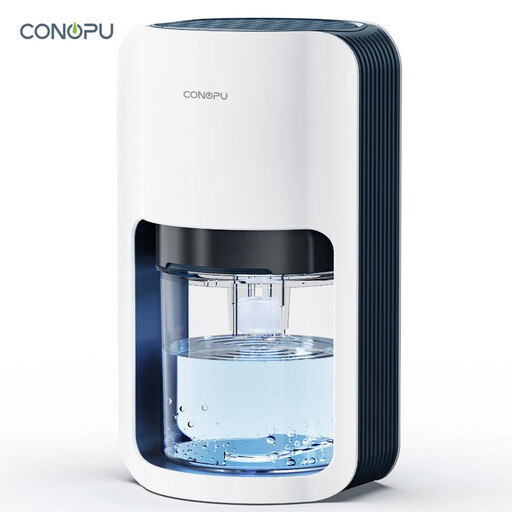
Why we recommend this product: The CONOPU CS06 uses semiconductor technology (the Peltier effect), which enables very quiet, compressor-free operation. Its compact design and low operating noise make it an excellent choice for direct use in living areas and bedrooms.
Advantages:
Who it's for: Individuals looking for a solution for small rooms up to 15 m², such as bedrooms, small bathrooms, or caravans, and for whom exceptionally quiet operation is a priority.
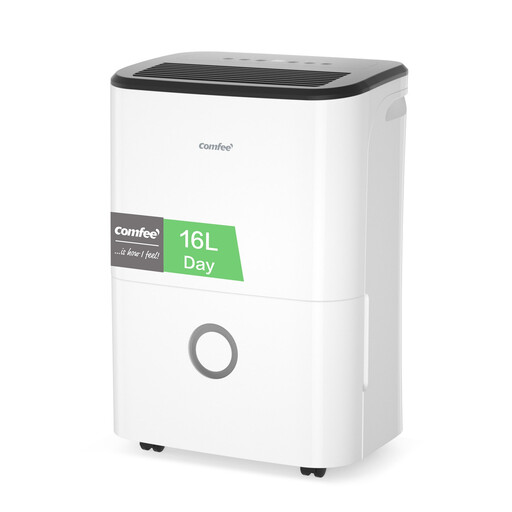
Why we recommend this product: The Comfee MDDF-16DEN7 offers a balanced combination of solid dehumidification performance and practical features for medium-sized living spaces. Its intelligent humidity control automatically maintains the indoor climate within a 45–55% range.
Advantages:
Who it's for: Home and flat owners looking for a reliable all-rounder for medium-sized spaces like living rooms, larger bathrooms, or hobby rooms.
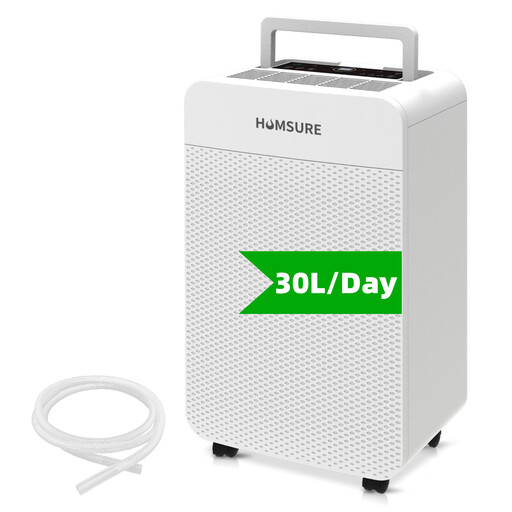
Why we recommend this product: The HUMSURE AP20-801EE is a high-performance compressor unit designed for demanding tasks and large spaces. Its high dehumidification capacity, combined with a large water tank and a continuous drainage option, makes it ideal for non-stop use.
Advantages:
Who it's for: Users dealing with high levels of humidity in large rooms, basements, or laundry rooms who need a powerful, low-maintenance solution for continuous operation.
The products featured here cover common requirement profiles. If none of these models are the right fit for your specific use case, you can find a wider selection in our main category. There, you can filter units by performance, price, and other technical features to find the optimal solution for your indoor climate.
Discover more dehumidifier models in our range.
1. Does a dehumidifier really help against mould? Using a dehumidifier against mould is a preventive measure. Mould spores require high humidity to grow. By consistently keeping the relative humidity below 60%, a dehumidifier removes the conditions mould needs to thrive, thus inhibiting its growth and spread. If mould is already present, it must first be professionally removed.
2. Where is the best place to position an electric dehumidifier? For optimal air circulation, the unit should be placed as freely as possible in the room, with at least 20–30 cm of clearance from walls and furniture. The air intake and outlet vents must not be blocked. In multi-storey homes, a central location, such as a hallway, is recommended to treat the air from several rooms.
3. How long should a dehumidifier run per day? The ideal running time depends on the humidity level, room size, and the unit's performance. Models with an integrated hygrostat operate most efficiently: they run only until the target humidity level is reached and then switch off automatically. This saves energy and ensures a consistently comfortable indoor climate.