
Lieferung heute & morgen

Qualitätsgarantie

Willkommens-Angebote freischalten: KOSTENLOSE Lieferung | Bis zu 80 % RABATT | Kostenlose 30-Tage-JoyPlus-Testphase
App herunterladen
When temperatures rise, the heat in the workplace or home office can significantly impair concentration. A desk fan offers a direct and efficient solution for a refreshing breeze without having to air-condition the entire room. However, the market offers a wide variety of models that differ greatly in performance, noise level, and features.
This guide is here to help. We'll introduce objective criteria to assist you in your selection and present a range of models for different needs—from simple air circulation to devices with additional features.
Before you make a decision, some technical aspects should be considered. These features determine how well a fan fits your specific needs.
A crucial factor, especially for office or bedroom use, is the operating noise level. A quiet fan allows for focused work or undisturbed sleep. The noise level is measured in decibels (dB). Models under 40 dB on the lowest setting are considered quiet. At the same time, sufficient airflow is necessary for effective cooling. Pay attention to the ratio of airflow (often specified in cubic metres per hour or litres per second) to noise level.
The choice of power source affects the device's portability. Traditional models are powered by a mains cable and are suitable for a fixed location. A battery-powered fan, on the other hand, offers maximum flexibility. Such devices can easily be taken from your desk to the balcony or into your next meeting and are usually charged via USB. A small fan also takes up less desk space and is easier to store.
An oscillating fan distributes air more evenly throughout the room with a swivelling motion. This prevents a constant, direct draught on a single spot and provides more pleasant, widespread cooling. Some models also offer additional features like an integrated misting function to increase humidity, various speed settings, or a special sleep mode with a reduced noise level.
Based on the criteria mentioned, we have compiled a selection of devices that cover a range of different needs.

Why we like this model: This model combines the function of a classic fan with an optional misting feature. Its integrated battery and compact design make it a highly portable solution. The LED display, which shows the battery level and mode, is a handy feature for on-the-go use.
Pros:
Who it's for: Ideal for users looking for a flexible desk fan with extra features. The combination of battery power and cooling mist makes it particularly attractive for use in various locations, from the office to the patio.
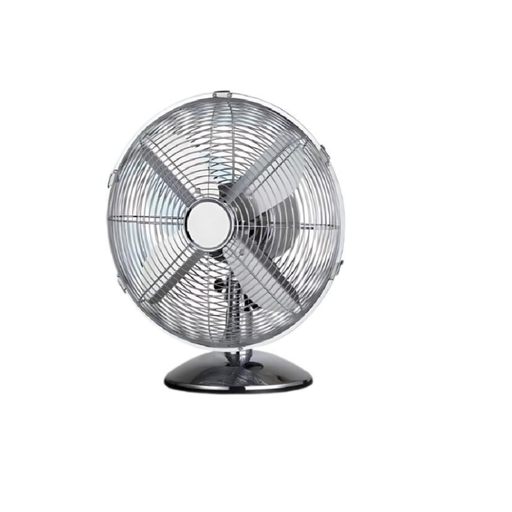
Why we like this model: The AKAI Table Fan focuses on robust construction and high performance. With its all-metal housing and four aluminium blades, it's built for durability. The 35-watt motor provides a powerful airflow that is noticeable even in larger offices or living areas.
Pros:
Who it's for: This model is aimed at buyers who value solid build quality, high performance, and a classic design. It is a reliable choice for anyone who prefers a durable office fan or home fan without digital extras.
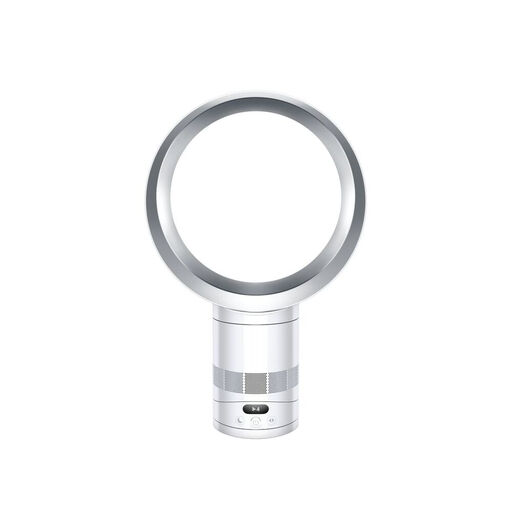
Why we like this model: The Dyson Cool CF1 uses Air Multiplier technology to create a smooth stream of air with no visible blades. This not only increases safety but also makes cleaning significantly easier. The special sleep mode with a noise level of just 29 dB (according to the manufacturer) makes it an excellent choice for the bedroom.
Pros:
Who it's for: Perfect for design-conscious users and for families where safety and exceptionally quiet operation are top priorities. Anyone looking for a modern, safe, and easy-to-clean solution will find a suitable device here.
Didn't find the right model for you among these options? The requirements for a fan can be very individual. Perhaps you need an even more compact device for on the go or a model with specific design features.
Discover our full range of portable fans and find the right cooling solution for your summer.
The power of desk fans varies widely. Small, USB-powered models start at around 5 watts, while powerful mains-powered units can have 30 to 40 watts or more. A higher wattage often means a stronger airflow but can also come with a higher noise level and greater energy consumption. The motor's efficiency and the blade design are just as crucial for the perceived cooling effect.
An oscillating fan has a mechanism that automatically pivots the fan head from side to side. This movement distributes the airflow over a wider area, instead of concentrating it on a single point. The result is a gentler and more pleasant air circulation in the room.
Modern desk fans from established manufacturers are designed for continuous operation and can generally be used safely overnight. Ensure that the device is stable on a flat surface and that no objects are blocking the air intake or outlet. Models with a timer or a special, quiet sleep mode are particularly recommended for night-time use.