
Lieferung heute & morgen

Qualitätsgarantie

Willkommens-Angebote freischalten: KOSTENLOSE Lieferung | Bis zu 80 % RABATT | Kostenlose 30-Tage-JoyPlus-Testphase
App herunterladen
Choosing the right desk is a fundamental decision for creating a productive workspace, whether it's in a home office, a student's room, or a dedicated gaming corner. The market offers a wide variety of models that differ significantly in size, function, and design. This guide will help you identify the features relevant to your individual needs and presents a selection of desks for various use cases.
To make an informed decision, it's helpful to consider a few key aspects. These criteria will help you narrow down the options and find a model that is both functional and a perfect fit for your space.
The correct desk height and size are crucial for a comfortable and healthy posture. A standard office desk often has a fixed height of around 72 to 75 cm. For more personalised adjustment, a height-adjustable desk is a smart option. It allows you to switch between sitting and standing, which can significantly improve workplace ergonomics. Also, ensure there is sufficient desk space. A large desk with a width of 140 cm or more is recommended if you work with multiple monitors or extensive paperwork. The depth should be at least 60 cm to ensure a proper distance from the screen.
Different features are important depending on the intended use. A simple computer desk for the home office desk should have basic cable management to keep things tidy. A specialised gaming desk often goes a step further, offering integrated USB ports, power outlets, LED lighting, and holders for headphones or drinks. For rooms with limited space or to make optimal use of corners, a corner desk can be a highly efficient solution, as it provides a large work surface on a small footprint.
The desk is a central piece of furniture and should blend harmoniously into the room's overall aesthetic. A modern desk is often characterised by clean lines, a minimalist design language, and a combination of materials like metal and engineered wood. The surface finish is also relevant: matte surfaces are less prone to fingerprints, while textured surfaces (e.g., carbon-fibre look on gaming desks) offer a unique tactile feel. Sturdy steel frames ensure durability and stability, especially for models that need to support heavy equipment.
Here is a curated selection of desks that cover different requirements for ergonomics, functionality, and design.
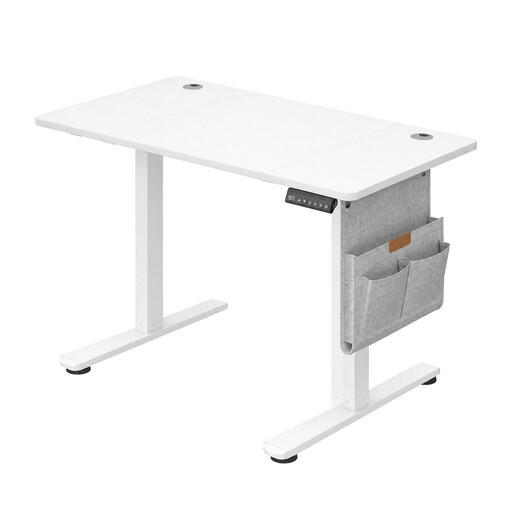
Why It Stands Out: This model focuses on the core function of an ergonomic workspace: flexible height adjustment. The quiet motor and memory function make switching between sitting and standing positions effortless and suitable for daily use.
Advantages:
Who It's For: Professionals and students looking for an ergonomic and functional workspace for their home office who value a clean, minimalist design.
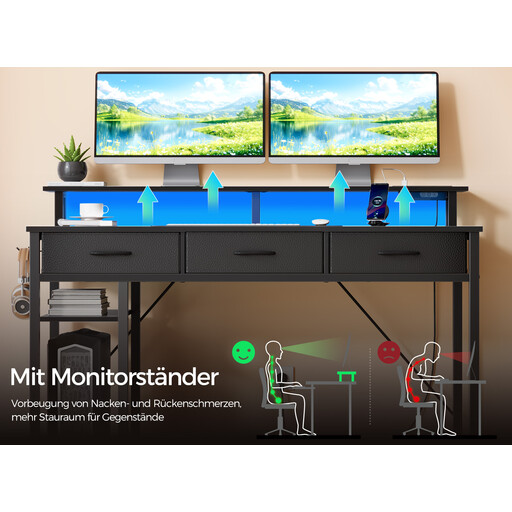
Why It Stands Out: This desk is a comprehensive command centre for gamers and tech-savvy users. It combines a large work surface with an integrated power supply, customisable lighting, and plenty of storage.
Advantages:
Who It's For: Gamers and power users who want a multifunctional workspace with ample storage, integrated tech, and a customisable atmosphere.

Why It Stands Out: With its generous work surface and elegant design in white and gold, this desk makes a bold statement. It serves not only as a workspace but also as a prestigious conference table.
Advantages:
Who It's For: Users who need a prestigious and large desk for their office or home office and value a modern, high-end appearance.
If the models presented don't exactly match your needs or you require a more space-saving alternative, a more compact model might be the right choice. Desks with cleverly integrated storage are a practical solution, especially for smaller apartments or rooms.
Explore our selection of compact computer desks with storage
The ideal desk height depends on your body height. When sitting, your forearms should rest on the desktop at an approximate 90-degree angle while your shoulders remain relaxed. A standard height of 72-75 cm is suitable for many people, but a height-adjustable desk offers the ability to achieve perfect individual customisation and to switch between sitting and standing.
Plan the desk size based on your equipment. For a laptop, a width of 80-100 cm is often sufficient. If you use one or two external monitors, widths from 120 cm to 160 cm are recommended to have enough space for a keyboard, mouse, and notes. A depth of at least 60 cm, or better yet 70-80 cm, ensures a comfortable viewing distance from the monitor.