
Lieferung heute & morgen

Qualitätsgarantie

Willkommens-Angebote freischalten: KOSTENLOSE Lieferung | Bis zu 80 % RABATT | Kostenlose 30-Tage-JoyPlus-Testphase
App herunterladen
Setting up a functional workspace at home—whether for remote work, studying, or gaming—starts with choosing the right desk. With a vast array of models, sizes, and features available, the decision can be complex. This article serves as a guide, presenting objective criteria and a selection of models to help you make an informed choice.
To find a desk that meets your needs, there are a few key aspects to consider.
An ergonomic workspace is crucial for comfort and concentration. The standard height for a desk is typically between 72 and 75 cm, which is suitable for most people when seated. However, if you want to change your working position regularly, you should consider a height-adjustable desk. These models allow for an easy transition between sitting and standing. Before buying, carefully measure the available space in your room to ensure the desk will fit and leave enough room to move around.
A tidy workspace promotes productivity. A desk with shelves and drawers offers integrated storage for documents, office supplies, and tech devices, helping to keep your work surface clear. For making the most of corners, a corner desk is a space-saving solution that also maximises surface area. Consider how much storage you need and whether open shelves or closed drawers are better suited for your purposes.
The material affects not only the desk's durability but also its style. An industrial-style desk, often combining a metal frame with engineered wood, is known for its robustness and modern aesthetic. Pay attention to the material quality and maximum load capacity, especially if you plan to place heavy equipment like multiple monitors or a printer on the computer desk.
Here is a selection of different desk models, each suited for various purposes due to their specific features.
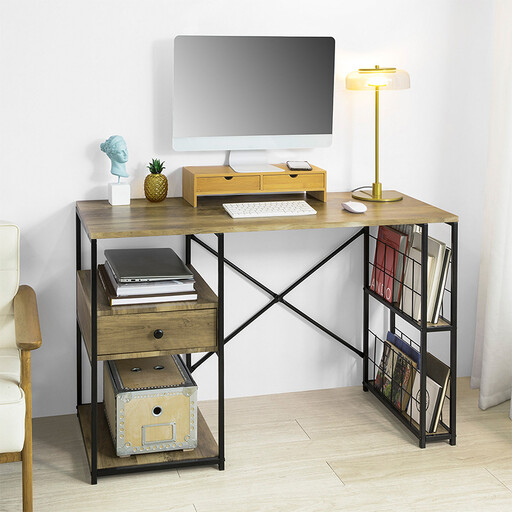
Why it stands out: This model combines a compact work surface with extensive vertical storage. The industrial-style design fits well into modern living and working environments. A key feature is its flexibility: the shelving unit and drawer can be assembled on either the left or right side.
Pros:
Who is it for? This desk is an excellent choice for users looking to set up a fully functional workspace with integrated storage in a limited area, such as a shared apartment or a small flat.

Why it stands out: The L-shaped design of this desk is engineered to make optimal use of corners and create a generous work surface. It offers a thoughtful combination of open and closed storage, making it a comprehensive solution for the home office.
Pros:
Who is it for? Ideal for professionals or gamers who need a large, organised workspace and want to efficiently utilise an unused corner in their room.
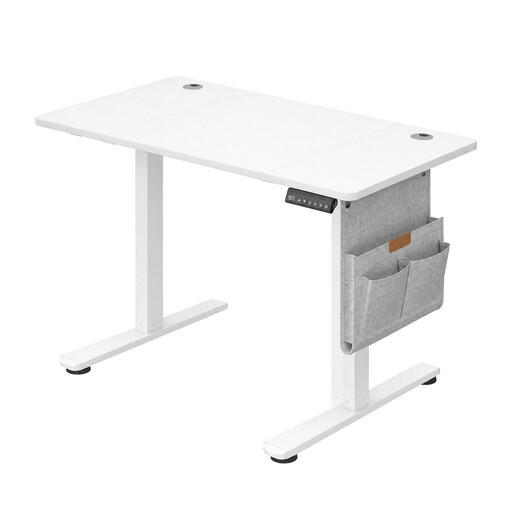
Why it stands out: This model puts ergonomics first. With its electric height adjustment and four memory presets, the working height can be changed quickly and easily to facilitate the switch between sitting and standing.
Pros:
Who is it for? This office desk is designed for individuals who prioritise an ergonomic work environment and want to prevent health issues associated with prolonged sitting. It fits well in modern, minimalist office settings.
The models featured here cover a range of different needs. If you're specifically looking for more designs that combine functionality with a distinctive look, a specialised category might be of interest.
If you are looking for an industrial desk with drawers and shelves, you will find a wider selection in our category. Discover more models here.
The ideal height of a desk depends on your body height. A standard height of 72 to 75 cm is suitable for most people when sitting in a chair. For optimal ergonomics, the desk height should be set so that your forearms can rest on the desktop at a 90-degree angle. A height-adjustable desk offers the greatest flexibility here, as it can be precisely adjusted and also used for working while standing.
The terms are often used interchangeably today. Traditionally, a computer desk was specifically designed for use with a desktop PC and had features like a pull-out keyboard tray or a compartment for the PC tower. Modern desks often already integrate features like cable management, so the lines have blurred. A modern desk is typically a versatile workspace for laptops, writing, and other tasks.
The amount of space required depends on the size of the desk and your work needs. For a compact workspace, a desktop of 120 x 60 cm is often sufficient. If you work with multiple monitors or need a lot of space for documents, widths of 140 cm or 160 cm are recommended. A corner desk can be a great solution for using the space in a room efficiently. You should also plan for about 80-100 cm of space behind the desk for your chair and freedom of movement.