
Lieferung heute & morgen

Qualitätsgarantie

Willkommens-Angebote freischalten: KOSTENLOSE Lieferung | Bis zu 80 % RABATT | Kostenlose 30-Tage-JoyPlus-Testphase
App herunterladen
Setting up a functional workspace or gaming area starts with choosing the right desk. Whether you need a spacious office desk for your home office setup, a feature-rich gaming desk for intense sessions, or a space-saving small desk for a compact apartment, your choice significantly impacts your productivity and well-being. This guide presents objective criteria and a selection of models to help make your decision easier.
Before making a decision, there are a few fundamental aspects to consider. These will help you find a model that not only matches your aesthetic but also meets your functional requirements.
The dimensions of the desk are crucial. The desktop should offer enough space for your monitors, keyboard, mouse, and other work materials. A depth of at least 60 cm is recommended for most setups to ensure a comfortable viewing distance from the screen. The standard height for a PC desk is typically around 72 to 75 cm. This allows most people to maintain an ergonomic sitting posture, with their forearms resting on the desktop at a right angle. Models with a monitor stand can further help to reduce neck strain.
Consider which features are essential for you. A desk with storage, such as drawers or shelves, helps keep your space organised. For unused corners, a corner desk makes optimal use of the space. Those who need flexibility or live in a small apartment will benefit from a folding desk, which can be easily stored away when not in use. Specialised gaming desks often offer additional features like integrated USB ports, power outlets, or LED lighting.
Stability is a key quality indicator. A powder-coated steel frame provides a solid base and excellent durability. The desktop is often made from engineered wood like MDF or particleboard (PB), coated with a durable finish. Pay attention to the manufacturer's specified maximum load capacity, especially if you plan to place heavy equipment like multiple monitors or a large PC tower on it. Additional reinforcements, such as an X-brace on the back, can further enhance the computer desk's stability.
Based on the criteria above, we've curated a selection of desks that cater to various needs—from a multifunctional gaming setup to a space-saving home office solution.
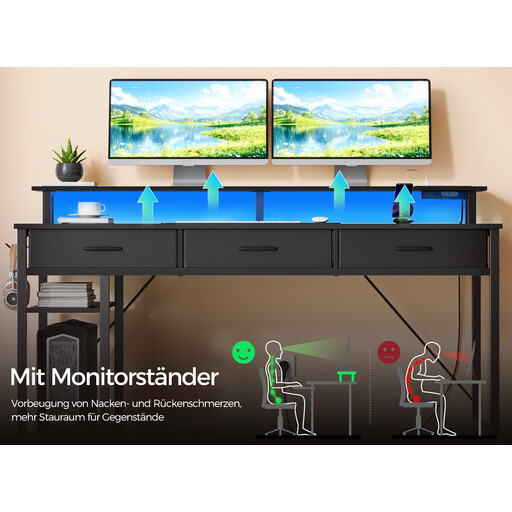
Why it stands out: This model is designed as a reversible corner desk and combines numerous features into one piece of furniture. The integrated charging station with two power outlets and two USB ports allows for convenient device charging right at your workspace. The app-controlled RGB LED lighting creates a customisable atmosphere for gaming or focused work.
Benefits:
Who is it for? This model is aimed at gamers and home office professionals looking for a multifunctional workspace with integrated tech, plenty of storage, and customisable aesthetics.
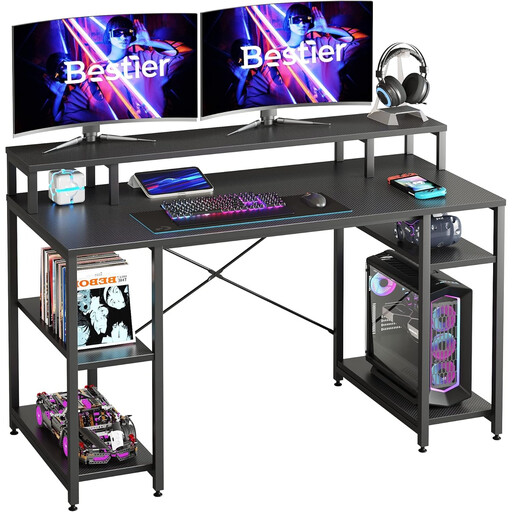
Why it stands out: With a width of 140 cm, the Bestier desk offers an exceptionally large work surface, ideal for setups with dual monitors and other accessories. The metal frame construction with an X-brace ensures high stability, while the adjustable shelves allow for flexible storage of a PC tower, printer, or files.
Benefits:
Who is it for? Ideal for users who need a large, uncluttered workspace, whether for an extensive gaming setup, creative work, or a professional home office with multiple screens.
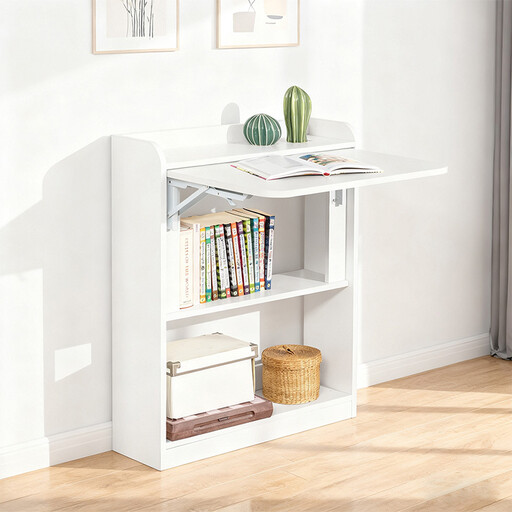
Why it stands out: This folding desk is a smart solution for small apartments or rooms with limited space. When not in use, the tabletop can be easily folded up, reducing the desk's depth to just 20 cm. Despite its compact dimensions, it offers practical storage with three integrated compartments.
Benefits:
Who is it for? Perfect for students, studio apartment dwellers, or anyone who needs a temporary yet fully functional workspace that blends seamlessly into their living area.
The models featured here cover a broad spectrum. However, if you're looking for more specific solutions, such as a computer desk with a shelf perfectly sized for your PC tower, other alternatives are available.
Explore our extended selection and find the model that perfectly suits your needs. ? Explore the Desk with PC Shelf category here
1. How high should a desk be? For an ergonomic posture, the desk height should allow your forearms to rest on the tabletop at a 90-degree angle with your shoulders relaxed. A standard height of about 72-75 cm is suitable for most people. Height-adjustable desks offer the most flexibility in this regard.
2. What is the difference between a gaming desk and a regular office desk? A gaming desk is often tailored to the specific needs of gamers. This includes a larger and deeper tabletop for large mousepads, a robust construction for heavy equipment, integrated cable management, and extra features like cup holders, headphone hooks, or RGB lighting. A classic office desk typically focuses on a minimalist aesthetic and functional storage.
3. How much weight can a desk support? The maximum load capacity varies greatly depending on the model and construction. For example, a small folding desk like the SoBuy model can support up to 35 kg, while sturdier models with steel frames can often hold 50 kg or more. Always check the manufacturer's specifications to ensure the desk is suitable for your equipment.