
Lieferung heute & morgen

Qualitätsgarantie
App herunterladen
Kategorien
Choosing your first digital camera requires balancing technical specifications against your intended use. Parameters like sensor size, resolution, lens type, and extra features are crucial in determining a model's suitability for photography, vlogging, or everyday use. This article analyses the key criteria and presents a selection of cameras for beginners that cover a range of different needs.
The decision for a beginner's camera should be based on objective technical features. The following points provide a guide for making your selection.
Image resolution is measured in megapixels (MP). A higher megapixel count allows for larger prints and more room for cropping in post-processing. For most applications, 12 to 24 MP is already sufficient.
For video resolution, a 4K digital camera (3840 x 2160 pixels) has become the standard. Some models already offer 5K resolution, which provides even more detail and flexibility in video editing. For a beginner's vlogging camera, a high video resolution combined with a frame rate of at least 30 frames per second (fps) is important.
A tilting or articulating screen makes it easier to shoot from unusual angles and is an essential feature for vloggers filming themselves. Ports for an external microphone, a hot shoe for accessories, and Wi-Fi connectivity for quick image transfer are other features that enhance a camera's practical usability.
The following models have been selected for beginners based on their technical specifications and feature sets.
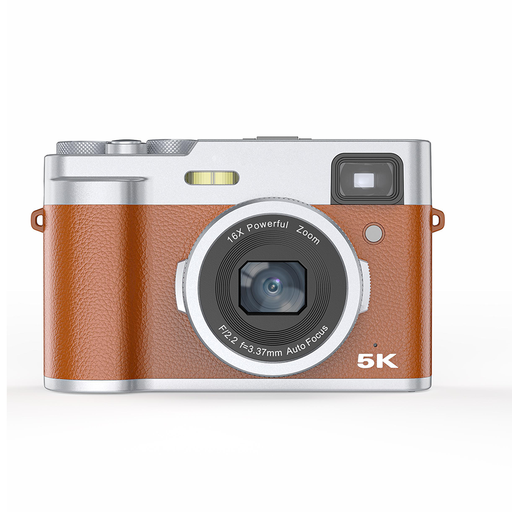
Product Feature Analysis: This model combines a retro aesthetic with modern features in a compact body. Equipped with both front and rear cameras and supporting 5K video resolution, it stands out as a versatile tool. The integrated optical viewfinder offers a traditional alternative to the screen, while the hot shoe allows for expansion with external flashes.
Advantages:
Who it's for: This model is aimed at students, teenagers, and beginners looking for an all-in-one compact camera with a broad feature set and a distinctive design. The dual-camera configuration and microphone port are particularly interesting for aspiring vloggers.
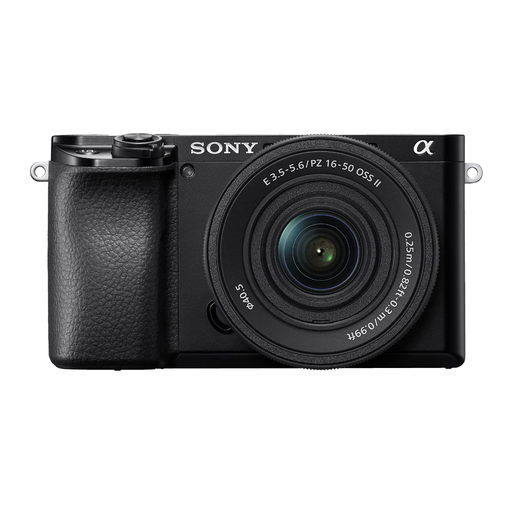
Product Feature Analysis: The Sony Alpha 6100 is a beginner's mirrorless camera that stands out with its large APS-C sensor and a highly advanced autofocus system. The 0.02-second autofocus response time and real-time tracking with eye detection ensure reliable focus tracking. The ability to change lenses offers long-term flexibility.
Advantages:
Who it's for: This camera is designed for ambitious beginners, content creators, and vloggers who value high image quality, top-tier autofocus, and the expandability offered by interchangeable lenses.
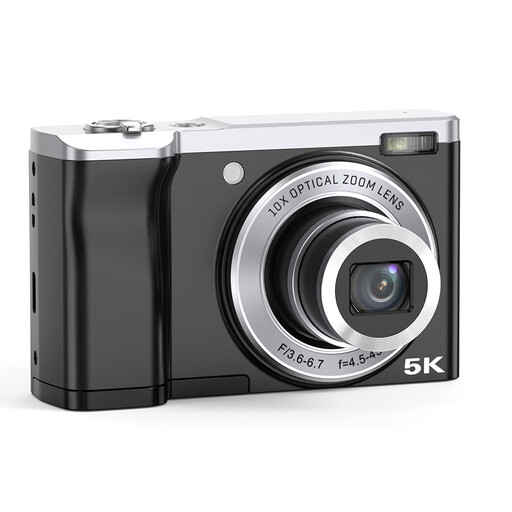
Product Feature Analysis: The standout feature of this model is its 10x optical zoom. Unlike digital zoom, optical zoom allows you to get closer to subjects without any loss of quality. Combined with 5K video resolution and high photo resolution, this camera offers great flexibility for various shooting situations in a compact form factor.
Advantages:
Who it's for: This device is suitable for beginners looking for a straightforward camera with a powerful zoom for travel, events, or nature photography. The optical zoom makes it a flexible alternative to cameras with fixed focal length lenses.
The models presented cover a range of use cases. If you are specifically looking for cameras with interchangeable lenses to ensure maximum flexibility for your photographic journey, our mirrorless digital cameras category offers a wider selection of models and matching accessories.
1. What is more important for a beginner: a compact camera or a mirrorless camera? The choice depends on your individual goals. A compact camera is ideal for users who want a simple, lightweight, all-in-one solution for everyday use, travel, or vlogging. A mirrorless camera is suitable for beginners who want to delve deeper into photography, use different lenses, and aim for maximum image quality.
2. As a beginner, do I need 4K or 5K video capability? A 4K digital camera is more than sufficient for most applications, including posting on social media and YouTube, and offers a high level of detail. 5K resolution provides additional leeway for video editing (e.g., cropping in or stabilising in post), but it is not essential for getting started.
3. How many megapixels should a good beginner's camera have? The megapixel count alone is not the sole indicator of quality. Cameras with 20 to 24 megapixels already offer excellent image quality for large prints and for cropping. More important factors are the sensor size, the quality of the lens, and the camera's image processing.